
Quick answer
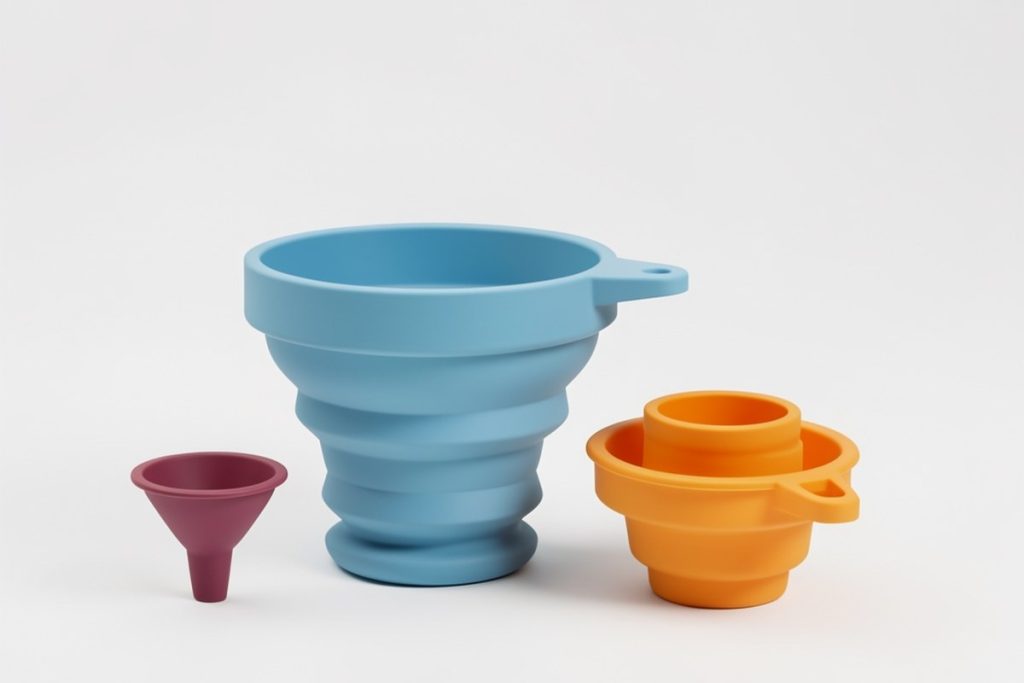
For filling small bottles with oils, sauces, or home preserves, a food-grade silicone funnel set with multiple sizes and a collapsible design is the most practical choice. Look for BPA-free materials, stable rims, and dishwasher-safe construction. The 3 Size Kitchen Funnel Set offers these features at a reasonable entry point for most home cooks.
Key takeaways
- Food-grade silicone funnels flex to fit small bottle openings better than rigid metal or plastic alternatives.
- A three-size set covers everything from vanilla extract bottles to wide-mouth mason jars.
- Collapsible designs store flat and resist trapping moisture, unlike nested stainless-steel sets.
- Dishwasher-safe silicone simplifies cleanup after transferring sticky jams, honey, or infused oils.
- Verify FDA-compliant materials under 21 CFR 177.2600 before using funnels for hot liquids or repeated food contact.
Why a Dedicated Funnel Set Belongs in Every Kitchen
Transferring liquids into narrow bottles without spills sounds simple until you try it with a spoon. A quality funnel set eliminates waste, keeps counters clean, and reduces the risk of contamination from repeated pouring. For home cooks who bottle their own hot sauce, infused vinegar, or herbal tinctures, the right funnel is not a luxury—it is a precision tool. Unlike single-piece hardware-store funnels, kitchen-specific sets are sized for standard food bottle necks and made from materials that tolerate acids, oils, and temperature shifts without degrading. Home preservers especially benefit from dedicated tools; even a small spill can compromise jar seals or attract pests in pantry storage. Investing in a purpose-built set pays for itself quickly through reduced food waste and fewer cleanup sessions.
What Makes a Funnel Set Worth Buying
Before adding any funnel to your cart, evaluate these core attributes. Material safety comes first. Food-grade silicone certified under FDA regulations resists staining, does not leach chemicals into hot liquids, and withstands temperatures well above boiling. Next, consider the rim and spout design. A wide, stable rim prevents tipping when you set the funnel into a bottle, while a narrow spout threads easily into small extract and tincture openings. The wall thickness matters too; thin funnels collapse under the weight of honey or thick barbecue sauce, whereas reinforced silicone holds its shape without being rigid. Finally, check for a hanging loop or collapsible stem. These small details determine whether the set lives in your drawer or stays buried in a cluttered tool bucket.
Silicone vs. Metal vs. Plastic: Material Comparison
Not all funnels perform equally in home kitchens. The table below breaks down how common materials compare for everyday bottling tasks.
| Feature | Food-Grade Silicone | Stainless Steel | Hard Plastic |
|---|---|---|---|
| Flexibility for small necks | Excellent; conforms to opening | None; fixed diameter | None; may crack if forced |
| Heat tolerance | Up to 450°F or higher | Very high | Varies; often warps above 200°F |
| Storage footprint | Collapsible or fold-flat | Bulky; nests poorly | Moderate |
| Dishwasher safe | Yes; resists odor retention | Yes | Sometimes; retains garlic or oil odors |
| Long-term durability | Resists tearing if reinforced | Dents but lasts decades | Prone to staining and cracking |
For most home bottling jobs, silicone earns the top spot because it bridges the gap between durability and flexibility. You can press the spout gently into an irregular bottle opening without chipping glass or scratching counters. Stainless steel excels in commercial kitchens where sterilization is critical, yet its bulk makes it impractical for casual home use. Hard plastic is inexpensive, but heat sensitivity and odor retention make it a poor long-term investment.
Size Matters: Matching Funnels to Bottles
A common frustration with single funnels is mismatch. A canning funnel dwarfs a two-ounce bitters bottle, while a tiny perfume funnel takes forever to transfer a pint of simple syrup. Most versatile sets include three sizes. The smallest spout fits droppers, travel bottles, and spice jars. The medium size handles standard vinegar, oil, and sauce bottles with ease. The largest channels soup, marinade, or preserves into wide-mouth mason jars. When all three nest or collapse together, you sacrifice no drawer space for the convenience. Before purchasing, measure the inner diameter of the bottles you use most often. A good rule of thumb is to choose a funnel spout at least one-quarter inch narrower than the bottle opening so air can escape while liquid flows.
Cleaning, Drying, and Safety Standards
Kitchen funnels live in contact with food, so hygiene is non-negotiable. Smooth, non-porous silicone surfaces do not harbor bacteria the way scratched plastic can, but they still require thorough cleaning after each use. Dishwasher-safe sets simplify this process; place them on the top rack away from heating elements to prevent surface degradation. If washing by hand, use hot water and a mild detergent, then invert the funnels completely so water drains from the stem. Trapped moisture breeds mildew, especially in collapsible models with ribbed interiors. From a regulatory standpoint, food-contact silicone sold in the United States should comply with 21 CFR 177.2600, the FDA standard for rubber articles intended for repeated use. While manufacturers often advertise “food grade” or “BPA free,” the absence of a specific regulatory citation does not guarantee compliance. When in doubt, request a certificate of analysis or choose products from transparent brands that disclose testing protocols.
A Balanced Recommendation for Home Cooks
If you want a straightforward set that covers most home bottling scenarios, the 3 Size Kitchen Funnel Set, 2026 Upgraded Funnels for Kitchen Use Filling Bottles is worth considering. It uses food-grade silicone, includes three nested sizes, and features a collapsible frame that stores flat in crowded drawers. We do not claim it outperforms every premium brand, nor have we conducted independent lab testing on its heat tolerance. However, its specifications align with the safety and usability criteria outlined in this guide, and it sits at a price point that suits casual home cooks and hobby preservers alike. If you bottle only once a year, it still costs less than the spilled olive oil it prevents. For professionals or high-volume canners, heavier stainless-steel options may still make sense.
Spill-Free Bottling Checklist
Use this quick checklist before your next kitchen transfer:
- Match funnel spout diameter to bottle opening, leaving air-gap room.
- Secure the bottle on a non-slip surface or silicone mat.
- Pour slowly in a steady stream to avoid airlocks and back-splash.
- Wipe the funnel rim immediately after use to prevent sticky residue buildup.
- Dry completely upright before collapsing or nesting for storage.
These habits take seconds but extend the life of your tools and keep your pantry shelves clean.
Final Thoughts
The best kitchen funnel set is the one you actually use. Silicone collapsible models remove the storage excuse, while three-size kits remove the “wrong tool” frustration. Whether you are decanting bulk oil, packaging holiday infused vinegar gifts, or simply refilling a soap dispenser, a dedicated funnel set turns a messy chore into a one-pour task. Prioritize food-grade certification, flexible storage, and easy cleaning, and you will reach for your funnels more often than you expect.
Sources
- FDA Food Code 2022 — U.S. Food and Drug Administration guidelines for food-contact surfaces and safe food handling in retail and home environments.
- 21 CFR 177.2600 — FDA regulation specifying requirements for rubber articles intended for repeated use in contact with food.
Last reviewed: 2026-08-10