
Quick answer
A useful travel self-care kit for women should cover your normal routine, one unexpected delay, and a small comfort need without filling your entire bag. Start with essential personal-care items, prescription medicines, menstrual products if relevant, hair and skin basics, and one calming or sleep-support item. Pack duplicates only when replacing them would be difficult during the trip.
Key takeaways
- Build the kit around situations you are likely to face, not an imagined emergency.
- Separate daily essentials from backup items so the important things remain easy to reach.
- Use travel-size containers only for products you already know work well for you.
- Review medicines, liquids, and weather-specific items before every trip.
By Dr. Amara Okafor, Empowerment Psychologist
Why a small self-care kit is worth packing
Travel often creates tiny problems rather than dramatic ones: a delayed flight, a forgotten hair tie, an unexpected period, dry skin after a long day, or a hotel room that does not feel comfortable. Each issue is manageable on its own, but several at once can make you feel distracted and underprepared.
A compact self-care kit gives you a reliable baseline. It is not about carrying every product you own or preparing for every possible inconvenience. It is about reducing avoidable decisions when you are tired, rushed, or away from your usual routines.
The best kit is personal. Someone traveling for a conference may prioritize deodorant, hair tools, and a stain-removal option. Someone visiting family may need menstrual products, medication, and sleep comforts. A parent, frequent flyer, or traveler with sensitive skin may need a different setup entirely.
Start with four realistic travel situations
Before buying containers or adding products, picture the moments when your kit will help. This keeps it useful instead of turning it into a miniature bathroom cabinet.
| Situation | Useful items to consider |
|---|---|
| Normal daily routine | Toothbrush, toothpaste, deodorant, skincare basics, hair accessories, and menstrual products if needed |
| Transit or a long delay | Hand sanitizer, tissues, lip balm, medication, a small snack, and an easy-to-reach comfort item |
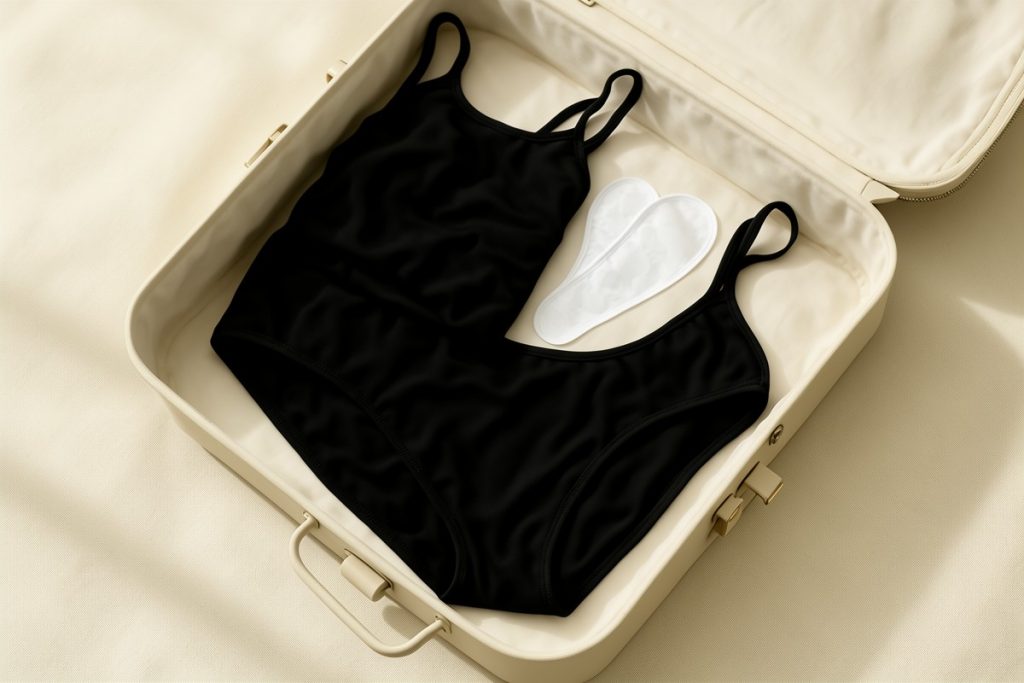
| Unexpected clothing or hygiene issue | Stain-removal wipes, a small comb, spare underwear, safety pins, and a compact laundry bag |
| Sleep or decompression | Sleep mask, earplugs, moisturizer, familiar tea, or another small non-electronic calming item |
You do not need every item in the table. Choose what matches your destination, transportation, health needs, and schedule.
Pack essentials first, then add one layer of backup
Use a two-level system. The first layer contains items you would genuinely struggle to replace quickly. This may include prescription medicine, contact-lens supplies, menstrual products that suit you, glasses, or a specific skincare product for sensitive skin.
The second layer contains conveniences. These might include a spare hair tie, small brush, tissues, blister protection, a stain-removal wipe, or a sleep mask. Convenience items should earn their space by solving a likely problem, not merely by being small.
Keep medication in its original labeled packaging when practical, and follow the instructions provided by your clinician or pharmacist. Do not place essential medication in checked luggage if losing access to it would create a health risk. For prescription questions, controlled substances, or international travel, check the rules for your destination before leaving.
For toiletries, use products you have already tolerated. A trip is a poor time to test a new exfoliant, fragrance, hair treatment, or supplement. Small containers are helpful, but the goal is familiar and sufficient—not maximum variety.
Make the kit easy to use in real life
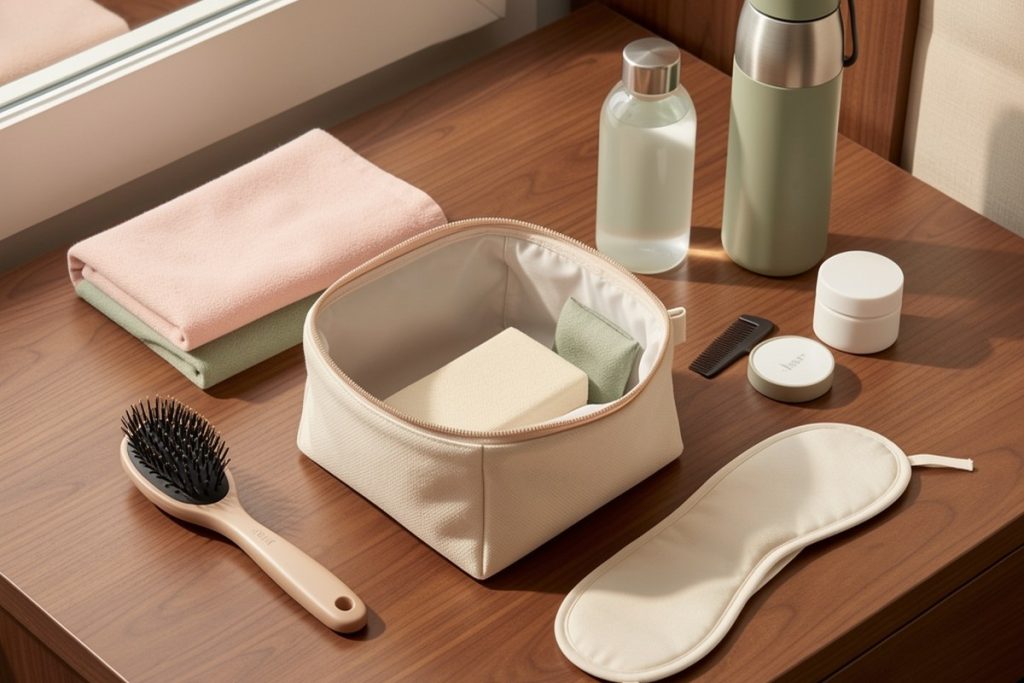
A kit can be perfectly packed and still fail if you have to empty your suitcase to find one item. Choose a soft, washable pouch or organizer with enough structure to keep small pieces together. Transparent sections can make contents easier to locate, while a darker outer material may hide everyday marks.
Group items by action rather than by product type. One section might hold “freshen up” items, another “health,” and another “comfort.” If you prefer fewer categories, place the most important items in an outer pocket and backups deeper inside.
Keep the kit compact enough to move between a carry-on and a personal bag. During transit, you may want tissues, lip balm, medication, or menstrual products without opening your main luggage. A small pouch that can be lifted out quickly is more practical than a large organizer that stays buried.
DIY packing or a preassembled kit?
DIY packing is best when you have specific preferences, allergies, medication needs, or products that must be included. It also lets you avoid carrying items you will never use. The downside is that you must remember the small basics and replace them when they run out.
A preassembled option can save time when your needs are straightforward. The Convenience Kits International option may be worth considering as a starting point for a general travel routine, but check the current listing carefully before buying. Confirm the exact contents, sizes, materials, and whether the included items suit your preferences. It should supplement personal essentials—not replace prescription medicines or products you know you need.
A simple compromise is to use a preassembled kit for ordinary toiletries or convenience items, then add your own health, menstrual, sensory, and comfort essentials. This gives you a repeatable base without assuming one kit works for every woman or every destination.
A five-minute checklist before you leave
- Replace: Remove anything expired, leaking, empty, or damaged.
- Personalize: Add prescription medicine, glasses supplies, menstrual products, or skin-care items that are specific to you.
- Check the forecast: Add sunscreen, lip protection, moisturizer, hair ties, or cold-weather accessories according to the destination.
- Review transport rules: Check current airline and security requirements for liquids, gels, aerosols, and medical items.
- Test the closure: Zip the pouch fully and place it inside a waterproof bag if a spill could damage clothing or electronics.
For air travel, separate liquids and gels according to the current security requirements where you are departing. Rules can vary by country, airport, and type of item, so check the relevant authority instead of relying on an old packing list.
Refresh the kit after every trip
When you return, take two minutes to reset the pouch. Dispose of used items, wash the organizer if needed, replace anything you borrowed from it, and remove products that did not suit the trip. If you had to buy something unexpectedly, add it to the next version of your kit only if the problem is likely to happen again.
It is also useful to keep a short note in your phone listing the essentials you routinely forget. The list might include medication, charging equipment, glasses, menstrual products, or a specific hygiene item. The aim is not perfect preparation. It is building a repeatable system that makes travel feel less mentally crowded.
Last reviewed: 2026-08-21
Sources
- Pack Smart — Centers for Disease Control and Prevention
- Liquids Rule — Transportation Security Administration