

Quick answer
If a concert, sports event, transit trip, or public gathering changes suddenly, do not act on a forwarded post alone. Check the official alert, the venue or agency’s verified channel, and practical instructions from local emergency management. Before leaving, set a meeting point, save essential contacts, and make sure your phone can stay powered long enough to receive updates.
Key takeaways
- Use official alerts and the venue or agency’s verified updates before trusting social media summaries.
- Decide in advance where your group will reunite if mobile service becomes unreliable.
- Save key contacts, directions, tickets, and transport details before arriving.
- Carry a charging solution that matches your devices, but never treat a cable as a substitute for a power source.
Why sudden event changes are difficult to interpret
A public event can change quickly for many reasons: severe weather, a transport disruption, a security concern, a venue problem, or a nearby emergency. The first message you see may be incomplete, delayed, or written for a different location. A post saying an event is “cancelled,” for example, might refer to one session, one entrance, or an earlier update.
The practical challenge is not simply finding information. It is separating an official instruction from commentary, speculation, or an old screenshot. Your goal is to answer three questions in order:
- What has actually changed?
- Does it affect my location and plans?
- What action is being requested now?
If an official alert tells you to evacuate, shelter, or avoid an area, follow that instruction immediately. Verification is useful when time allows, but it should not become a reason to delay a safety action.
Use a three-source check before changing plans
When there is no immediate danger, compare information from sources with different responsibilities. The official alert tells you about a public hazard or emergency instruction. The venue, transit operator, school, employer, or event organizer usually provides operational details. Local emergency management can provide broader guidance about roads, shelters, weather, or neighborhood impacts.
| Source | Best for | What to confirm |
|---|---|---|
| Official emergency alert | Urgent safety instructions | Location, threat, time, and required action |
| Venue or agency channel | Cancellation, delay, entry, and refund information | Whether the update applies to your event or route |
| Local emergency management | Area-wide conditions | Road closures, shelter guidance, and wider restrictions |
Do not treat the number of reposts as proof. A widely shared claim can still be wrong, and an official update may initially receive little attention. Look for the agency’s own website, alert system, or verified account rather than relying on a screenshot that removes the original time, location, or source.
Build a 30-minute event disruption plan
You do not need a complicated emergency binder to make a public outing more resilient. A short preparation routine is enough for many ordinary disruptions.
- Save the essentials: Keep the venue address, reservation details, transport information, and important phone numbers available offline.
- Choose a meeting point: Pick one location outside the venue and one backup location away from the immediate area. Make both specific enough that someone can find them without calling.
- Agree on a message: Decide who will contact the group and what information matters: current location, intended destination, and whether anyone needs help.
- Check routes: Know at least one walking option and one alternative transport option. Do not assume the route you used to arrive will remain open.
- Prepare essential needs: Carry required medication, identification, water, and any accessibility items that would be difficult to replace quickly.
- Protect battery life: Charge devices before leaving and reduce unnecessary use if an extended disruption seems possible.
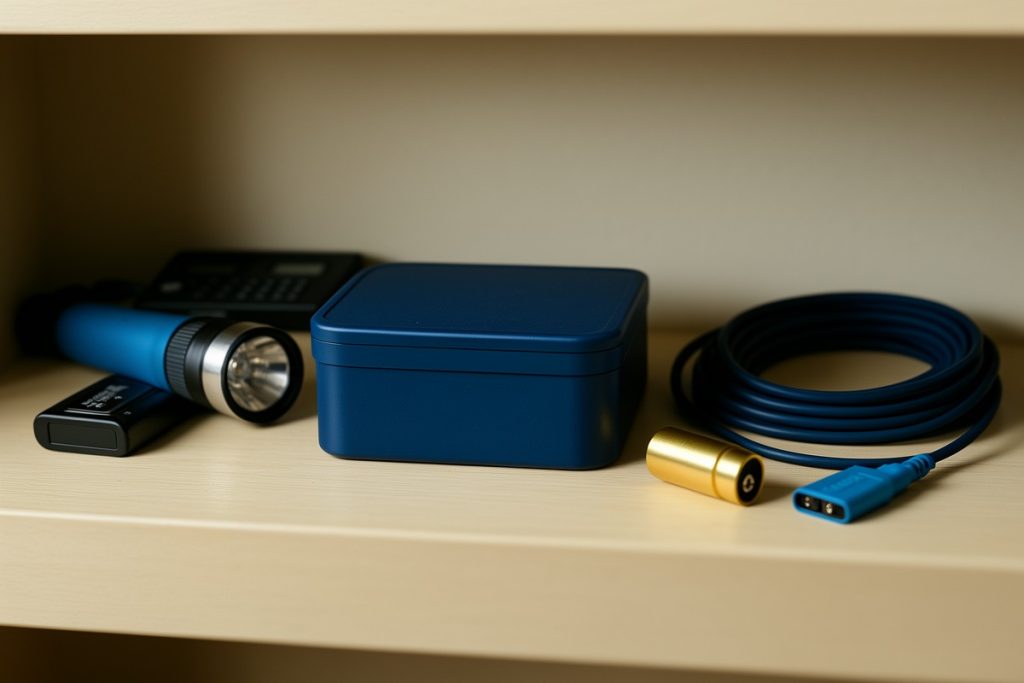
For people carrying several connector types, the listed STATIK 360 Pro Universal Magnetic Charging Cable may be a convenient single-cable option because its listing identifies USB-C, Micro-USB, USB-A adapter support and up to 100W charging. Check your device’s connector and power requirements first; the cable itself does not provide electricity, and a compatible wall adapter or power bank is still necessary.
What to do when an alert arrives
Read the entire alert before forwarding it. Identify the named area, the time it was issued, and whether it asks you to move, stay put, avoid a route, or monitor updates. Then compare it with the venue or transport operator’s current instructions.
If the message is unclear, use the safest reasonable interpretation. For example, do not enter a closed station simply because your ticket still works, and do not travel toward a venue to “see what is happening” when authorities have asked people to avoid the area. If you are already inside a venue, follow staff instructions unless they conflict with a direct emergency order from authorities; in that case, prioritize the official safety instruction.
After deciding what to do, tell your group the plan in one short message. Include where you are, where you are going, and when you will check in again. A clear update is more useful than a long explanation that may be missed during a stressful moment.
How to spot a misleading event update
Be cautious when a post has no date, location, named source, or link to an original statement. Be especially skeptical of language such as “share this now,” “confirmed by a friend,” or “they are not telling you.” Those phrases create urgency without providing evidence.
Older images and videos are another common problem. Weather, crowds, damaged infrastructure, or police activity may be real but unrelated to the current event. Before acting on visual material, check when it was posted, where it was recorded, and whether an official source has addressed it.
A useful rule is to separate facts from interpretation. “The venue says doors are closed” is a fact about an announcement. “The event will definitely be cancelled for the week” is an interpretation unless the organizer confirms it.
Keep your plan usable under stress
The best plan is short enough to remember. Write down three contacts, two meeting points, one transport alternative, and the official sources you will check. Make sure the people in your group know the plan before the event begins, especially children, older adults, or anyone who may need additional assistance.
Review the plan whenever the destination, weather, transport arrangements, or group changes. This small habit reduces the chance that everyone will make a different assumption when information becomes fragmented. It also lets you focus on the actual decision—leave, wait, reroute, or seek assistance—instead of trying to reconstruct basic details from memory.
For general emergency planning, Ready.gov recommends making a household plan and identifying ways to receive emergency information. FEMA’s Integrated Public Alert and Warning System explains how authorized alerts can reach the public through participating channels. Those systems are useful starting points, but local instructions remain the most relevant when an event is happening in a specific area.
Last reviewed: 2026-09-11