
Quick answer
The best garbage disposal cleaner depends on the problem you are trying to solve. For routine odor and light residue, choose a purpose-made foaming cleaner and follow its label exactly. Flush the disposal with cold water, avoid putting your hands inside, and treat persistent smells, slow drainage, leaks, or grinding noises as maintenance problems rather than signs that you need more cleaner.
Key takeaways
- Disposal cleaner is mainly for odor and surface residue, not clogs, leaks, or mechanical faults.
- Foaming packets can reach areas that a quick water rinse may miss, but they do not replace regular cleaning.
- Never combine cleaning products or reach into a disposal; follow the appliance and product instructions.
- A citrus scent can make the kitchen smell fresher, but scent alone does not prove deeper cleaning.
By Nate Cooper, Value-Driven Gear Expert
Last reviewed: 2026-10-09
What a garbage disposal cleaner actually does
A disposal collects more than the food scraps that pass through its grinding chamber. Small particles can remain beneath the splash guard, around the upper chamber, and along surfaces that are difficult to see. Over time, that residue can create an unpleasant smell, especially when the disposal is used infrequently or flushed with too little water.
A dedicated cleaner is designed to make routine cleaning easier. Many products use foaming action to spread a cleaning solution through the chamber while adding fragrance. That makes them useful for maintenance between deeper inspections, but the category has limits. A cleaner will not repair a leaking seal, free a jammed impeller, remove a utensil, or correct a drain line that is backing up.
It is also worth separating odor control from sanitation claims. A pleasant lemon scent can temporarily mask an odor, while a cleaner may also loosen some residue. Unless a product provides specific, independently verifiable testing, do not assume it disinfects every internal surface or eliminates every possible source of odor.
How to choose the right disposal cleaner
Start with the problem, not the most impressive wording on the package. For ordinary kitchen odor, a purpose-made packet or tablet is convenient because the dose is already portioned. For occasional residue, a product that creates foam may be more useful than a quick rinse because it can contact the sides of the chamber and the underside of the splash guard.
| Your problem | What to look for | What to expect |
|---|---|---|
| Routine stale odor | Purpose-made cleaner with a scent you tolerate | Freshening and routine residue removal |
| Visible food residue | Foaming action and clear usage instructions | Some loosening of accessible buildup |
| Slow draining | Inspection or plumbing advice, not more cleaner | A cleaner may not solve the obstruction |
| Grinding, humming, or leaking | Manual troubleshooting or professional repair | Stop using the unit until the fault is addressed |
Check compatibility before buying. Read the cleaner’s instructions and your disposal manufacturer’s guidance, particularly if your unit has unusual components, a septic setup, or a special cleaning recommendation. Never mix products, and do not improvise with concentrated chemicals simply because a stronger solution seems faster.
A practical cleaning routine
For a safe and repeatable routine, work in this order:
- Remove obvious debris safely. Turn the disposal off. If something appears lodged inside, use long tongs only when the unit cannot start accidentally. Never put your fingers into the opening, even when the switch is off.
- Flush with cold water. Run cold water before, during, and briefly after normal disposal use. Cold water helps carry food particles through the drain, while hot water can soften fats that may later cool farther down the pipe.
- Use the cleaner exactly as directed. Place the recommended amount into the disposal and follow the stated water, run-time, and waiting instructions. More product is not automatically more effective.
- Rinse thoroughly. Run water for the period specified on the label. If the smell returns immediately, look for a dirty splash guard, trapped debris, drain issue, or plumbing problem rather than repeatedly increasing the dose.
- Make it occasional maintenance. Use a cleaner only as often as the label recommends and as your household needs. Frequent odor usually points to a routine problem worth investigating.
Where Glisten fits
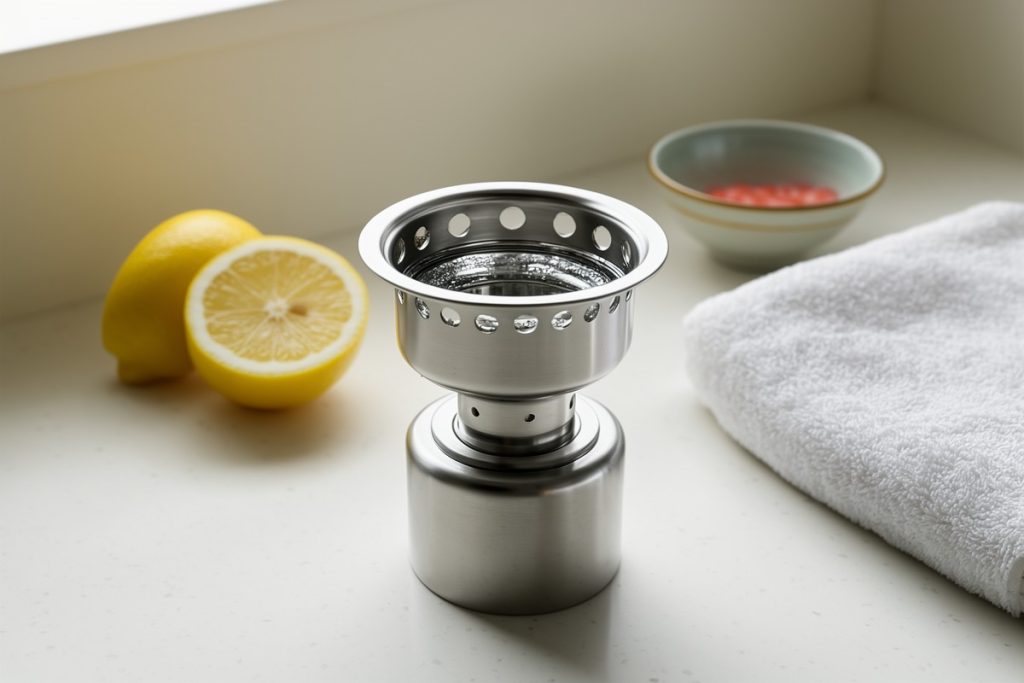
For shoppers specifically looking for a packet-style option for routine odor and buildup maintenance, Glisten Garbage Disposer Cleaner, Lemon Scent Odor Eliminator, 4 Packets is a reasonable product to compare. Its listing describes lemon scent, foaming action, regular-use maintenance, and use intended to help remove buildup and protect disposal surfaces and blades.
That description makes it a better fit for a reader whose main complaint is an unpleasant-smelling disposal—not someone dealing with a jam, leak, slow drain, or failing motor. The available product information does not establish that it will fix plumbing problems, restore damaged parts, or extend the life of every disposal. I have not independently tested it, so treat those features as listing claims and follow the package directions rather than assuming a guaranteed result.
The four-packet format may also suit households that prefer a measured, occasional treatment instead of mixing household ingredients. The tradeoff is that a purpose-made cleaner adds an ongoing consumable cost, while basic maintenance habits such as flushing with water and cleaning the splash guard address some odor sources without a separate product.
Simple habits that reduce disposal odor
Cleaner works best when it supports good disposal habits. Run a strong flow of cold water while grinding suitable food scraps, then keep the water running briefly afterward. Avoid treating the disposal as a general trash can: large bones, fibrous peels, grease, oil, and nonfood objects can contribute to jams or drain problems. Your appliance manual should take priority because accepted materials vary by model.
Clean the removable splash guard according to the manufacturer’s instructions if it can be removed safely. That part often collects residue that a product moving through the chamber may not fully address. Also check whether your household can compost food scraps or use a local collection program. The U.S. Environmental Protection Agency notes that food scraps can be composted at home or through community programs, while food-scrap pre-processing appliances do not create finished compost by themselves.
When to stop cleaning and investigate
A recurring odor after careful cleaning deserves a closer look. Check for residue beneath the splash guard, standing water, a blocked drain, or food trapped where it should not be. A disposal that hums without grinding, trips a breaker, drains slowly, leaks from underneath, or produces a new grinding sound should not be “treated” with more cleaner. Turn it off and consult the owner’s manual or a qualified plumber.
In short, choose a disposal cleaner as a maintenance tool, not a repair product. A foaming packet can be convenient for routine odor control, but the best value comes from matching it to a specific problem and combining it with safe operation, adequate water flow, and prompt attention to mechanical symptoms.