
Quick answer
Essential oils may help some people create a calming bedtime cue, but they are not a proven treatment for insomnia. Start with one familiar scent and a low-exposure method, such as a drop on an aroma stone or tissue. Keep oil off your skin and away from children and pets, and stop if you develop irritation, headache, coughing, or breathing symptoms.
Key takeaways
- Lavender is commonly studied for relaxation, but benefits are variable and usually modest.
- Test one scent at a time so you can tell whether it actually suits you.
- Never ingest essential oils or apply them undiluted to your skin.
- Track sleep for several nights instead of judging the routine after one use.
By Dr. Priya Sharma, Evidence-Based Health Expert
What essential oils can—and cannot—do for sleep
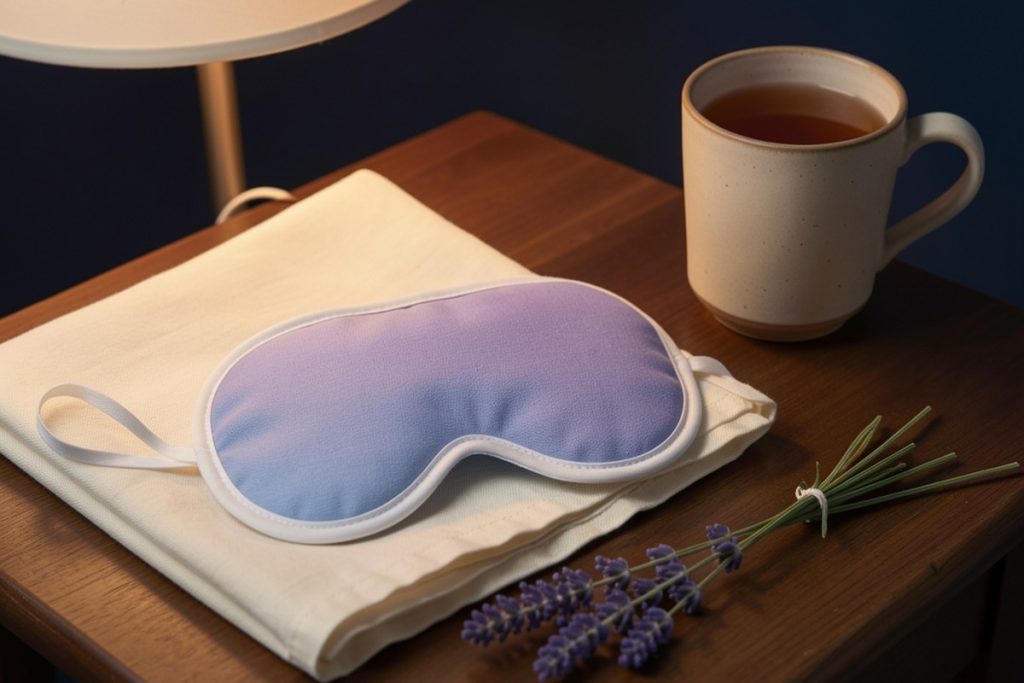
A familiar scent can become part of a calming pre-bed routine. Repeating the same quiet steps each night may help signal that it is time to slow down, especially when the routine also includes dimmer light, less phone use, and a consistent bedtime. The scent itself, however, is not a guaranteed sleep treatment.
Lavender has received the most attention in aromatherapy research, but the evidence is mixed. Some people report feeling more relaxed or sleeping better, while others notice no meaningful difference. The National Center for Complementary and Integrative Health also notes that research on aromatherapy has limitations, including small studies and inconsistent methods. Treat essential oils as an optional comfort tool, not a substitute for evaluating ongoing sleep problems.
Your response matters. A scent that feels soothing to one person may cause a headache, nausea, or alertness in another. Peppermint, eucalyptus, citrus, and floral oils all have distinct smells, so there is no universally “best” essential oil for bedtime.
Build a simple, low-exposure bedtime routine
The safest starting point is to keep the amount of oil small and prevent direct contact with your body. Choose one scent, use one delivery method, and pair it with a routine you can repeat without much effort.
| Method | Why it may work for a trial | Safety checkpoint |
|---|---|---|
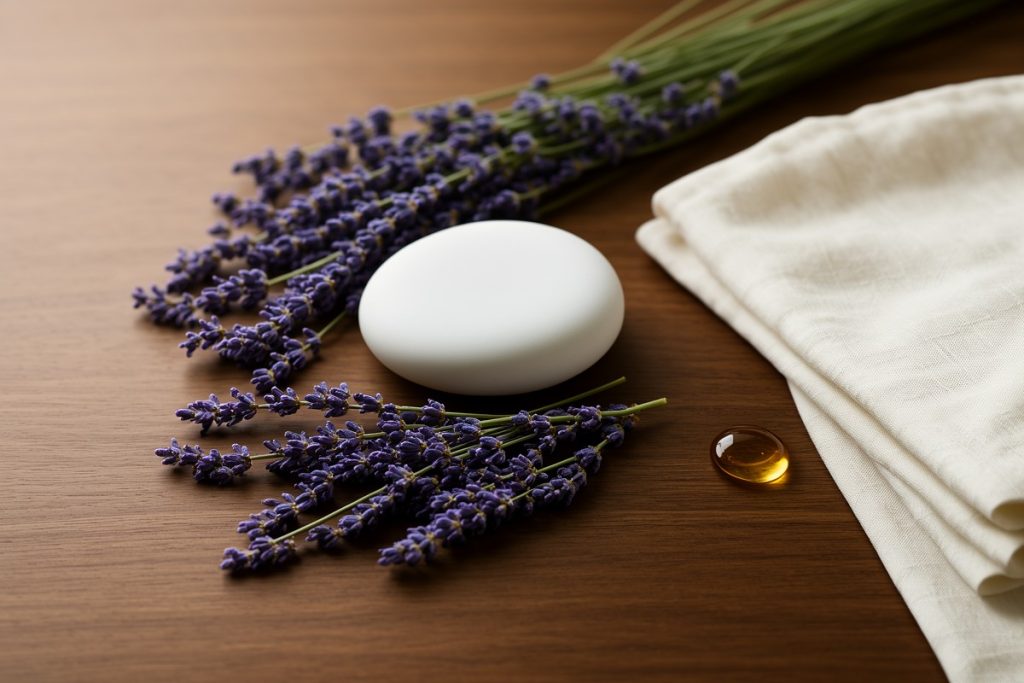
| Aroma stone or passive ceramic diffuser | Provides a gentle scent without requiring a powered device | Use only as directed and keep it away from children and pets |
| One drop on a tissue nearby | Simple, inexpensive, and easy to stop immediately | Keep the tissue away from your face, bedding, and bare skin |
| Personal inhaler | Limits the scent to a brief, controlled session | Follow the inhaler’s instructions and stop if breathing feels uncomfortable |
Try the scent for a short period before bed rather than leaving it beside you all night. Keep the room ventilated, particularly if you are sensitive to fragrance. Do not place undiluted oil on your pillow, sleep mask, or skin; contact can cause irritation, and oils can transfer to your eyes or mouth while you move in bed.
Use a seven-night test instead of guessing
A short, consistent experiment can tell you more than a single promising night. For three nights, note your usual bedtime, approximate time needed to fall asleep, number of awakenings, and how rested you feel in the morning. You do not need perfect measurements; simple estimates are enough.
Then choose one scent and use it in the same way for the next four nights. Keep other bedtime factors as steady as practical. Record the same four measures, along with any headache, congestion, coughing, skin discomfort, or next-day grogginess.
At the end, ask a practical question: did the routine produce a noticeable benefit that was worth continuing? If the answer is no, stop. There is no reason to keep using an oil simply because it is marketed for relaxation. If the scent helps you unwind but does not change your sleep, it may still have a place as a pleasant ritual—but keep your expectations realistic.
Choosing an essential-oil set without overbuying
A variety pack can help you discover which scents you tolerate, but owning more oils does not make the routine more effective. More choices can also make it harder to identify what caused a reaction. Start with one oil, avoid blending at first, and store the remaining bottles securely.
For readers who want several familiar options in one purchase, the Cliganic Organic Essential Oils Set (Top 5 – The Classics) includes peppermint, lavender, eucalyptus, lemongrass, and orange. That range may be convenient for preference testing, but the set is not a sleep treatment, and its “organic” or “pure” labeling does not make any oil risk-free. Check the ingredient information and intended-use directions before opening it, and do not assume every oil is appropriate for topical use or ingestion.
Know when to stop or seek medical advice
Stop using an oil if you develop a rash, burning, eye irritation, headache, nausea, wheezing, coughing, or shortness of breath. Move to fresh air if a strong scent makes you feel unwell. Essential oils should not be swallowed, and they should be kept in a closed location that children and pets cannot reach. If someone swallows an oil, contact a local poison center or emergency service for advice rather than waiting for symptoms.
Ask a clinician before using aromatherapy if you are pregnant or breastfeeding, have asthma or significant fragrance sensitivity, have a seizure disorder, or take medicines that could interact with products you plan to use. Extra caution is also sensible when introducing any scented product around a child, older adult, or person with respiratory disease.
Finally, do not use aromatherapy to postpone help for persistent insomnia. Talk with a healthcare professional if poor sleep continues, affects daytime functioning, or comes with loud snoring, gasping, unusual leg sensations, severe anxiety, or depressed mood. A bedtime scent may support a routine, but it should not obscure a sleep or health problem that needs proper assessment.
Last reviewed: 2026-10-09