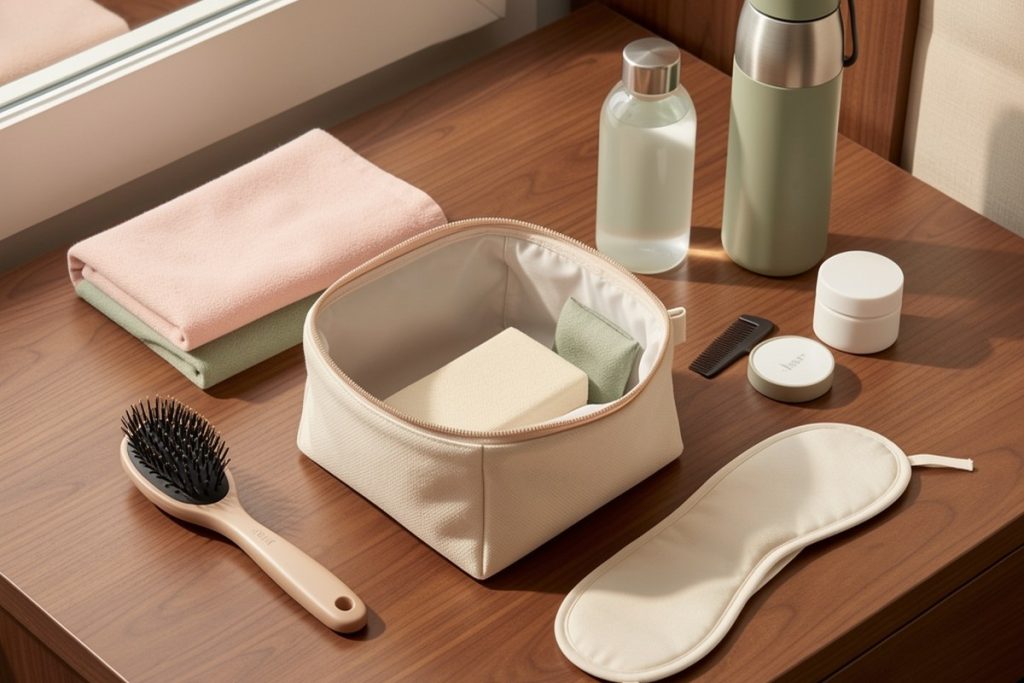


You do not need a two-hour ritual or a perfectly aesthetic bathroom to wind down after a long day. If you have been cycling through intense skincare routines, sleep supplements, and meditation apps only to still feel wired at midnight, the problem is not you. It is the pressure to do too much. The most effective evening routine is short, predictable, and built around one idea: teaching your nervous system that the day is done.
The short answer: An effective evening routine needs three things only. First, a hard boundary that tells your brain work is over. Second, a brief physical transition to release tension from your body. Third, a single calming ritual that occupies your mind without a screen. If you do nothing else, start there. Everything below is simply how to make those three steps fit your real life.
Too many women treat rest like another item to optimize. They stack habits until the routine itself becomes stressful. If your wind-down feels like work, it is not actually winding you down. Simplicity wins because consistency matters more than intensity.
Why Your Current Routine Keeps You Wired
Many women try to relax by cramming in more tasks: an elaborate skincare lineup, planning tomorrow down to the minute, or scrolling through a feed that pretends to be downtime. These activities keep your brain in planning or performing mode. True rest requires a downshift, not an exchange of one to-do list for another.
The other common mistake is going straight from productivity to bed with no transition. Your brain needs a landing strip. Without one, you carry the mental momentum of emails, deadlines, and notifications straight into your pillow. The result is that exhausted-but-racing feeling that keeps you staring at the ceiling.
Evening routines fail when they are treated as optional luxuries rather than functional boundaries. You would not skip brushing your teeth because you were tired. Think of your wind-down the same way. It is basic maintenance, not self-indulgence.
Phase 1: Create a Hard Stop for Your Day
Pick a time—ideally 30 to 60 minutes before bed—and declare it your closing hour. This is not when you get in bed. This is when you stop answering messages, checking tomorrow’s calendar, and doing one last chore. You are allowed to leave the dishes in the sink. The laundry will still be there in the morning, and you will handle it better after actual sleep.
Make the boundary physical. Change out of your work clothes, even if they are leggings and a sweater. Put your laptop in a drawer or close the door to your workspace. If you work from home, this step is non-negotiable. Your environment needs to look different at 9:00 p.m. than it does at 2:00 p.m. Those visual cues matter more than you think.
Phase 2: Move Tension Out of Your Body
You do not need a yoga class. Five minutes of movement is enough. Stretch your hips and shoulders, roll your neck, or take a short walk around your living room. The goal is to notice where you are holding stress and let it go. If you spend your day sitting, your body stores tension whether you feel it or not. A quick release tells your muscles it is safe to rest.
Avoid high-intensity workouts here. Vigorous exercise too close to bedtime can raise your core temperature and cortisol, which works against sleep. Keep it slow and intuitive. Think of this as shaking out the day rather than training for anything.
Phase 3: Give Your Mind a Single Point of Focus
Once your body is calmer, your mind still needs a job. Without one, it will return to rumination. The best pre-sleep activities are repetitive, low-stakes, and offline. Reading fiction works better than self-help or news because it distracts your problem-solving brain without demanding real-world action. Gentle journaling or a simple breathing pattern also work because they demand just enough attention to crowd out worry.
This is also where a small physical tool can help. Placing an eye pillow over your eyes for ten minutes blocks light and adds gentle pressure that encourages stillness. If you want to try one, the ASUTRA eye pillow is a useful option to keep on your nightstand. You do not need any special equipment to relax, but a tactile cue like this can reinforce the habit when your mind refuses to slow down on its own.
Helpful Habits vs. Hype: What to Include
Not everything marketed as relaxing actually helps you wind down. Here is a quick comparison of common evening habits so you can choose what deserves your time.
| Habit | Why It Can Help | When to Skip It |
|---|---|---|
| Setting a work cutoff time | Creates a clear mental boundary | If it causes anxiety; use a soft cue like music instead |
| Gentle stretching | Releases physical tension | Right before bed if it feels like another task |
| Reading paper books | Occupies the mind without blue light | If you tend to get sucked into cliffhangers |
| Eye pillow | Blocks light and applies calming pressure | If you dislike pressure on your face or eyes |
| Warm shower or bath | Drop in body temperature afterward signals sleep | If it wakes you up or takes too much energy |
| Journaling | Downloads worries so you do not take them to bed | If you end up problem-solving instead of venting |
The Realistic Evening Routine Checklist
Use this as a template, not a rulebook. Your routine should take 20 to 30 minutes, not 90. Pick the steps that feel doable tonight and ignore the rest.
- Set a closing time. No more tasks, emails, or planning after this point.
- Change your clothes. Even if it is just into a different soft shirt.
- Dim the lights. Lower overhead lights and turn on lamps.
- Move for five minutes. Stretch, sway, or walk slowly around your space.
- Pick one screen-free activity. Paper book, sketchpad, or breathing exercise.
- Use a tactile cue if needed. An eye pillow, cozy blanket, or warm drink.
- Write tomorrow’s top priority. One sentence only. Then close the notebook.
- Put your phone out of reach. Alarm across the room counts as a bonus.
How to Make It Stick Without Guilt
The biggest threat to your evening routine is all-or-nothing thinking. If you get home late and only manage to change your clothes and dim the lights, that still counts. A routine is not a performance. It is a repeated signal to your body that you are safe and the day is complete. Missing one night does not erase the benefits of the nights you followed through.
Start with one phase only. Most women see the biggest difference from creating a hard work boundary, because it prevents the evening from becoming an extension of the afternoon. Once that feels automatic, add the movement or the screen-free ritual. Build slowly. The goal is not to become the most disciplined person you know. It is to actually get the rest you have already earned.
If you find yourself stuck in a cycle of overwork and collapse, consider your evening routine an act of self-respect rather than another goal to chase. Rest is not the reward for productivity. It is the foundation of it.
Last reviewed: 2026-08-05