
Quick answer
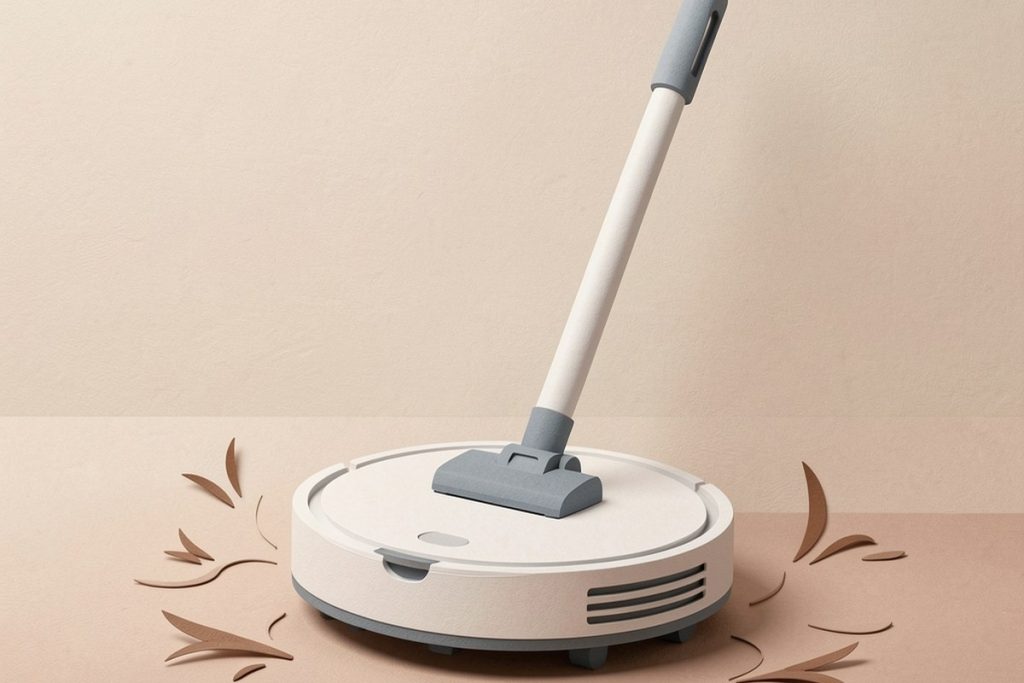
Robot vacuums excel at daily maintenance and hard floors, while upright vacuums deliver deeper suction for thick carpets and large debris. For busy households with mixed flooring, a robot vacuum reduces manual labor significantly but may not fully replace a traditional unit for weekly deep cleans. The best choice depends on your floor types, schedule, and cleaning priorities.
Key takeaways
- Robot vacuums maintain cleanliness through automated daily runs but generally offer lower suction power than upright models.
- Upright vacuums remain superior for deep-cleaning thick carpets, large debris, and upholstery attachments.
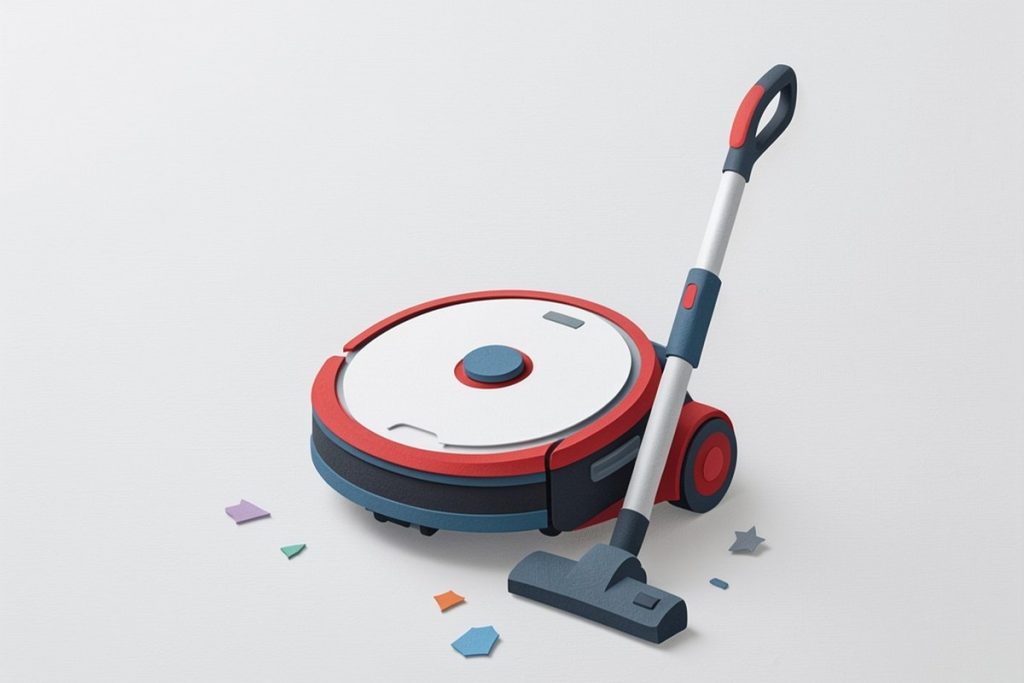
- For mixed flooring and busy lifestyles, combining both yields the best results: daily robot maintenance plus weekly upright deep cleaning.
- Slim robot models clean under furniture where most upright vacuums cannot reach.
- Consider noise levels and scheduling flexibility when choosing between automation and manual cleaning power.
Suction power and deep-cleaning performance
When comparing cleaning ability, suction metrics differ between categories and can mislead shoppers who read numbers without context. Upright vacuums traditionally measure airflow in air watts, with many corded models exceeding 100 to 200 AW. That metric translates to aggressive agitation from motorized brush rolls and strong lift for embedded pet hair, cereal, and grit buried in thick pile carpet. The physical design also allows for wider intake paths and heavier brush bars that separate carpet fibers to release trapped allergens.
Robot vacuums typically cite static pressure in Pascals, commonly ranging from 1,000 to 2,500 Pa for mainstream models. While respectable for a compact battery-powered device, that pressure does not always equate to equivalent soil removal on dense carpeting. The smaller form factor limits brush roll size and motor capacity, and the unit’s weight is lighter, which reduces downward pressure on the floor surface. In standardized carpet cleaning tests, uprights consistently extract more fine particulate per pass than autonomous disks.
On hard floors, the performance gap narrows dramatically. Robot units glide steadily across flat surfaces, using side brushes and suction inlets to pick up fine dust, crumbs, and surface debris without the bulk of pushing a full-sized upright. In repeated daily cycles, a well-designed robot can match or even exceed the aggregate debris collection of a manual vacuum simply because it runs more frequently. The limitation appears when facing large particle spills—think broken crackers or cat litter piles—where the small inlet and dustbin can clog or scatter debris. For a weekly restorative clean, especially on medium-pile carpet, the upright’s larger motor, wider cleaning path, and stronger airflow still provide superior agitation and extraction.
Navigation, coverage, and everyday convenience
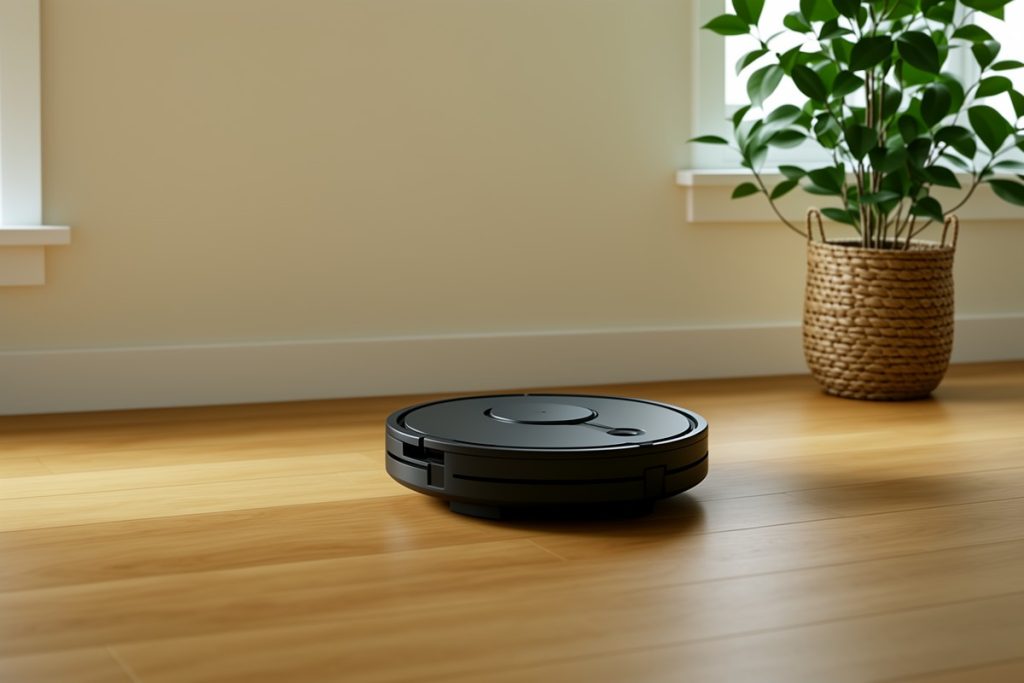
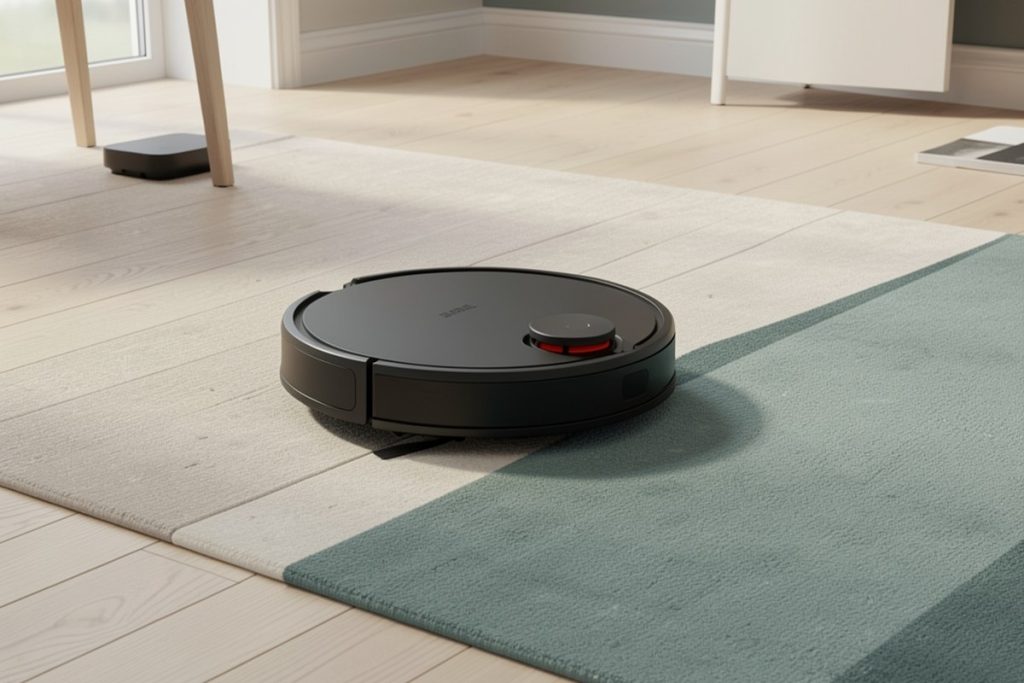
This is the domain where robot vacuums fundamentally change household routines. Once scheduled through a companion app or onboard buttons, they operate while you work, cook, or sleep, requiring no supervision beyond occasional bin emptying. Slim profiles—some measuring under three inches in height—allow them to travel beneath sofas, beds, and cabinets that uprights simply cannot access. Those hidden zones accumulate surprising amounts of dust and pet hair over time, making low-clearance reach a genuine advantage for allergy sufferers.
For example, the eufy 11S MAX Robot Vacuum Cleaner is engineered for hard floors to medium-pile carpets, offers quiet operation, and returns to its charging dock automatically when battery runs low. That level of autonomy frees households from the psychological burden of daily tidying. You arrive home to floors that have already been serviced, rather than facing a weekend chore list.
Upright vacuums, by contrast, demand your physical presence and effort. Their advantage lies in immediacy and versatility. A spilled bag of rice, a shattered ornament, or a trail of grass clippings from a soccer cleat is addressed in seconds with a corded or cordless stick unit. Uprights also offer substantially larger dustbins—often two to four liters versus a robot’s 0.5 to 0.6 liters—and versatile onboard tools like crevice nozzles, dusting brushes, and upholstery attachments that most disk-shaped robots lack entirely. If you need to clean stairs, drapes, or car interiors, the upright ecosystem is irreplaceable.
Noise, maintenance, and long-term ownership costs
Decibel levels matter more than many buyers initially realize, especially if you clean while taking video calls, watching films, or with napping children in the home. Most robot vacuums emit roughly 55 to 65 decibels during operation, comparable to a quiet conversation or background music. Many full-sized uprights, particularly high-performance bagless models with high-RPM motors, operate closer to 70 to 80 decibels—similar to a busy freeway or a garbage disposal. The quieter hum of a robot allows it to run during a work-from-home lunch break or overnight in an adjacent room without derailing concentration or sleep.
Maintenance profiles diverge significantly. Robot vacuums require consistent attention to sensors, charging contacts, caster wheels, and small dustbins that can fill quickly in high-traffic homes. Hair wraps around tiny brush bearings and must be cut away regularly to prevent motor strain. Their lithium-ion batteries degrade over a two-to-four-year lifespan, eventually necessitating replacement to maintain adequate runtime. Upright vacuums have fewer electronic failure points but carry their own rituals: belt replacements every six to twelve months, filter swaps, and—if bagged—the recurring cost of replacement bags. Over a five-year ownership window, the total cost of ownership often lands in a similar range, though the robot demands more frequent micro-interactions while the upright asks for occasional, more involved servicing.
Side-by-side comparison
| Feature | Robot Vacuum | Upright Vacuum |
|---|---|---|
| Best use case | Daily maintenance, hard floors, under furniture | Weekly deep cleans, thick carpets, large debris |
| Typical suction | 1,000–2,500 Pa | 100–200+ air watts |
| Noise level | 55–65 dB | 70–80 dB |
| Dustbin capacity | 0.5–0.6 liters | 2–4 liters |
| Scheduling | Fully automated | Manual operation only |
| Reach under furniture | Under 3 inches clearance | Limited by nozzle height |
Which should you buy?
Your ideal cleaning setup depends on your home’s flooring mix, your tolerance for housework, and your budget. Rather than viewing the choice as mutually exclusive, consider the specific problems each format solves best. Here is a practical checklist to guide your decision:
- Choose a robot vacuum if: Your home is mostly hard flooring or low-pile carpet; you want daily cleaning without lifting a finger; you value quiet, automated operation that respects work-from-home boundaries; and you need regular cleaning under low-clearance furniture like platform beds and entertainment centers.
- Choose an upright vacuum if: You have thick, high-pile carpets or large area rugs; you frequently clean substantial messes, pet hair, and heavy debris; you prefer fewer electronic maintenance tasks and longer intervals between servicing; and you want versatile attachments for stairs, drapes, mattresses, and vehicle interiors.
- Consider owning both if: You have mixed flooring and want the robot to preserve baseline cleanliness throughout the week while the upright tackles intensive restorative sessions on weekends. This hybrid approach often delivers the cleanest outcomes with the least daily effort.
If you live in a compact apartment with sealed hardwood and a few low-pile area rugs, a slim robot may handle nearly all of your routine needs, leaving only occasional spot treatment for the upright. If you share space with multiple shedding pets and deep shag carpeting, an upright remains the indispensable workhorse. For the average suburban household with children, hard kitchen floors, and carpeted bedrooms, the smartest long-term strategy is usually division of labor: automation for frequency, and manual power for depth.
Sources
Last reviewed: 2026-08-10