
Quick answer
During a fast-moving emergency, do not treat the first post you see as the full story. Identify the claim, check when and where it originated, compare it with official updates and reputable local reporting, then act only on information that is specific and current. Keep a simple backup plan for power, connectivity, and alerts so you can verify information when networks are strained.
Key takeaways
- Start with the agency responsible for the situation, such as local emergency management, weather officials, or public safety authorities.
- Check the timestamp, location, original source, and wording before sharing a dramatic claim.
- Use two independent, credible sources when an update could change your travel, health, safety, or financial decision.
- Prepare backup power, radio access, and organized cables before an emergency—not while information is moving fastest.
Why breaking news becomes difficult to verify
In the first hours of a wildfire, severe storm, infrastructure failure, public safety incident, or geopolitical event, information rarely arrives in a neat sequence. One post may describe what happened, another may show an older image, and an official statement may confirm only part of the situation.
The problem is not always deliberate deception. Early reports can be incomplete, eyewitnesses may be describing different locations, and agencies may update their guidance as conditions change. Social platforms also remove important context: a video can be real but several years old, or accurate in one neighborhood but misleading when applied to an entire region.
A useful reader separates three questions:
- What is known? Look for confirmed facts supported by a named authority or multiple credible reports.
- What is changing? Note evacuation zones, road closures, service interruptions, casualty figures, and other details that may be revised.
- What should I do? Follow actionable instructions from the agency with responsibility for the risk, not the most confident commentator.
Use a source ladder instead of one viral post
Not every source serves the same purpose. A local emergency-management office may provide evacuation instructions, while a newsroom may explain the broader context. An eyewitness can offer useful observations, but usually cannot establish the full scale, cause, or official response.
| Source | Best use | Important limitation |
|---|---|---|
| Official agency | Warnings, closures, shelters, and instructions | May provide limited background or update slowly |
| Reputable local newsroom | On-the-ground context and interviews | Early details can still change |
| Established national newsroom | Verified chronology and wider impact | May have less detail about your exact location |
| Social post or eyewitness | Possible leads and firsthand observations | Identity, date, location, and context may be unclear |
For a decision that affects immediate safety, place the official source first. For understanding what the event means, compare that update with responsible reporting that identifies its sources and distinguishes confirmed information from developing details.
A five-minute breaking-news verification routine
When a claim matters, use the same short process every time. A repeatable method is more dependable than relying on memory or intuition.
- State the claim plainly. Replace “things are getting worse” with a specific statement such as “the bridge is closed” or “an evacuation order covers this district.”
- Find the original source. Follow links back to the agency, reporter, witness, or document that first made the claim. A repost is not independent confirmation.
- Check time and place. Confirm the publication date, update time, location, and whether the information applies to your area. Be cautious when a post uses words such as “today” without a visible date.
- Look for corroboration. Search for a second credible source that reached the same conclusion independently. Two accounts repeating one unsourced post are still one lead.
- Separate fact from prediction. Mark what is confirmed, what is suspected, and what may happen next. Predictions should not be presented as current conditions.
- Recheck before acting. If the decision is not urgent, wait for a new official update. If it is urgent, follow the latest direct instruction from the responsible authority.
Practical checklist: Before sharing, ask: Is it current? Is the location clear? Is the source identifiable? Does an accountable authority confirm it? Could sharing it create panic or send someone toward danger?
Build an information backup plan before the event
Verification depends on access. During a power outage or network disruption, a phone with a low battery can turn a simple fact-check into a difficult task. A modest backup plan should cover alerts, power, and the physical items that help you connect devices.
Federal emergency-preparedness guidance recommends keeping basics such as water, food, a flashlight, first-aid supplies, and a battery-powered or hand-crank radio. The exact contents should reflect your household, location, medical needs, and likely hazards. Store the kit where everyone can find it, and check batteries and charging equipment periodically.
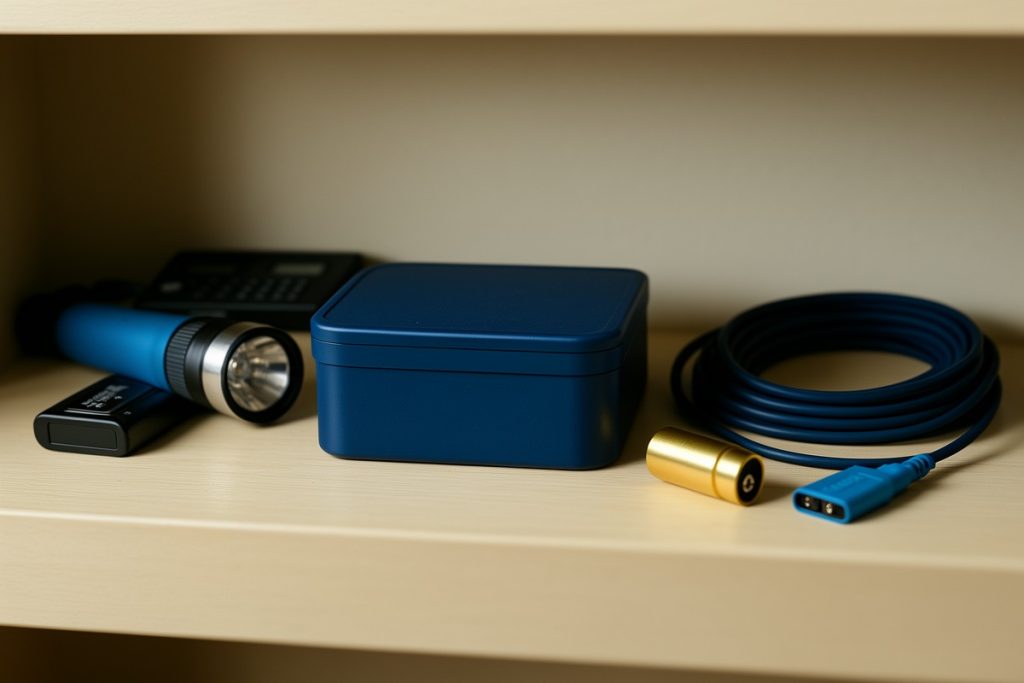
For cable organization, the ZALUJMUS Multifunctional Data Cable Storage Box Adaptor may be a practical optional accessory for readers who carry USB-C and Micro-USB cables and want them together in one place. Its listed purpose is cable storage and data transfer for compatible devices; it is not a power bank, radio, internet connection, or guarantee that every cable or device will work together. Check your devices and cable types before buying.
Keep the essentials usable without an app: save local emergency numbers, know where official alerts are published, and consider a radio appropriate for your area. The National Weather Service’s NOAA Weather Radio network can provide official weather warnings, watches, and forecasts in supported locations. It should complement—not replace—local instructions and other alert channels.
How to communicate an update responsibly
Sharing useful information is different from forwarding everything quickly. Lead with the source and time: “The county emergency office posted an evacuation update at 3:10 p.m.” Then describe what the notice actually says. Avoid adding an unverified cause, casualty figure, route recommendation, or forecast.
If details are uncertain, say so directly. “I have not found confirmation” is more helpful than confidently repeating a rumor. If a post appears false or outdated, correct it with the current primary source rather than amplifying the original claim in a way that gives it more reach.
Be especially careful with images and videos. Reverse-image tools can help, but they are not proof by themselves. Look for geographic clues, weather conditions, landmarks, and earlier uploads, then compare those details with official timelines. A genuine image can still be used with a false caption.
Know when not to wait for more information
Verification is valuable, but it should not become an excuse to ignore a clear warning. If emergency officials instruct residents to evacuate, shelter, avoid an area, or seek medical help, follow the instruction while checking for updates when it is safe to do so.
Use judgment about the cost of delay. A decision involving immediate physical danger calls for prompt action. A decision about reposting, travel planning, or interpreting the wider significance of an event usually allows more time for confirmation. The goal is not perfect certainty; it is making the safest reasonable decision with the best available evidence.
Reliable current-events literacy is therefore both a media skill and a preparedness skill. Know which agencies cover your area, keep access to more than one alert channel, maintain a charged and organized setup, and slow down long enough to distinguish a verified update from a compelling guess.
Last reviewed: 2026-09-04