
Quick answer
A waterless diffuser can make a large room smell more consistent, but it should be the finishing step—not a substitute for ventilation or cleaning. Remove the odor source, air out the space, choose one mild fragrance, and run the device at its lowest useful setting for short periods. Stop if anyone develops headache, coughing, wheezing, nausea, or irritation.
Key takeaways
- Improve ventilation and remove odor sources before adding fragrance.
- Waterless means no reservoir or visible mist; it does not mean risk-free.
- Use one fragrance sparingly, away from sleeping areas, food, vents, children, and pets.
- The AirScent Waterless Diffuser is designed for ambient scenting, not air purification or medical treatment.
Start with the room, not the diffuser
A persistent smell is usually information. Damp materials, cooking residue, a full trash bin, dirty upholstery, poor airflow, or a nearby drain may be contributing. Fragrance can cover that signal temporarily while the underlying source remains.
Before buying or switching on a diffuser, inspect the room. Empty waste containers, clean washable fabrics, wipe kitchen surfaces, check for moisture, and air out the space when outdoor conditions allow. Use kitchen and bathroom exhaust fans, and keep supply and return vents clear. If you suspect mold, sewage, combustion fumes, or another serious indoor-air problem, address the source instead of masking it.
The Environmental Protection Agency identifies source control and ventilation as key ways to improve indoor air quality. That makes scenting more useful: you are adding a finishing touch to a reasonably clean, ventilated room, not asking fragrance to make unhealthy air healthy.
What makes waterless scenting different?
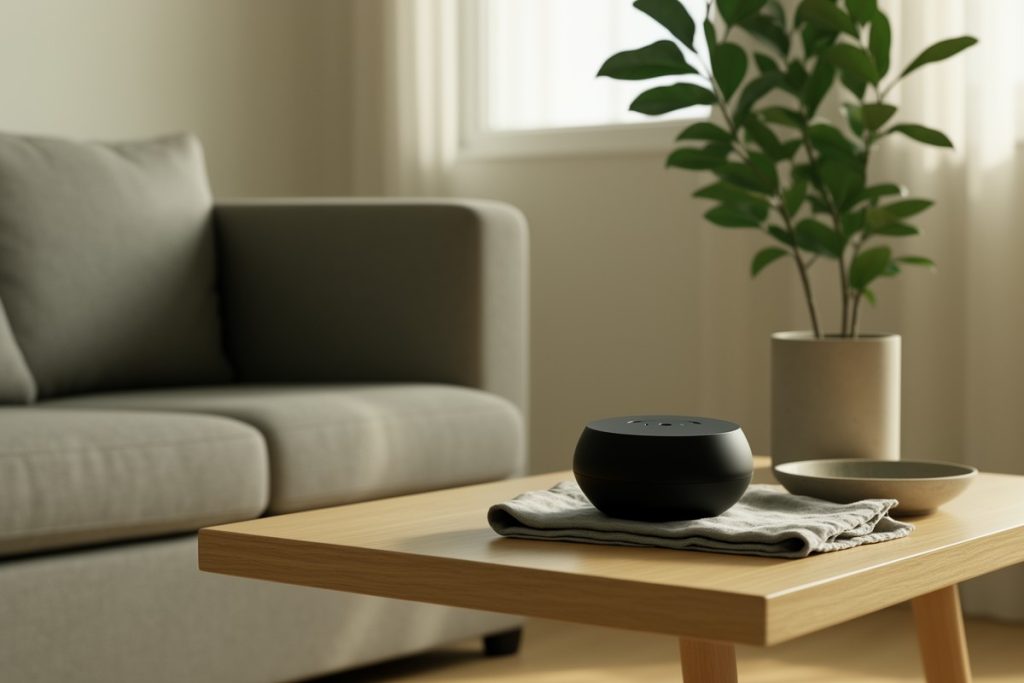
A water-based diffuser mixes scented liquid with water, while a waterless or cold-air model is designed to distribute fragrance oil without a water reservoir. That may suit a large living room, entryway, office, or spa-style space where you want ambient fragrance without adding visible moisture or refilling a tank.
There are limits, however. Waterless does not automatically mean wider coverage, lower oil use, cleaner air, or better health outcomes. The device is still dispersing a scented substance into an occupied environment, so placement, intensity, ventilation, and the people sharing the space all matter.
The AirScent Waterless Diffuser is an option to consider when the specific goal is water-free ambient fragrance. The supplied listing describes it as a cold-air scent diffuser for homes, offices, hotels, and spas, and states that fragrance is not included. Treat it as a scenting appliance—not a humidifier, air purifier, or treatment for stress, insomnia, asthma, or allergies. Check that the oil you plan to use is compatible and follow the device’s instructions.
How to scent a large room gently
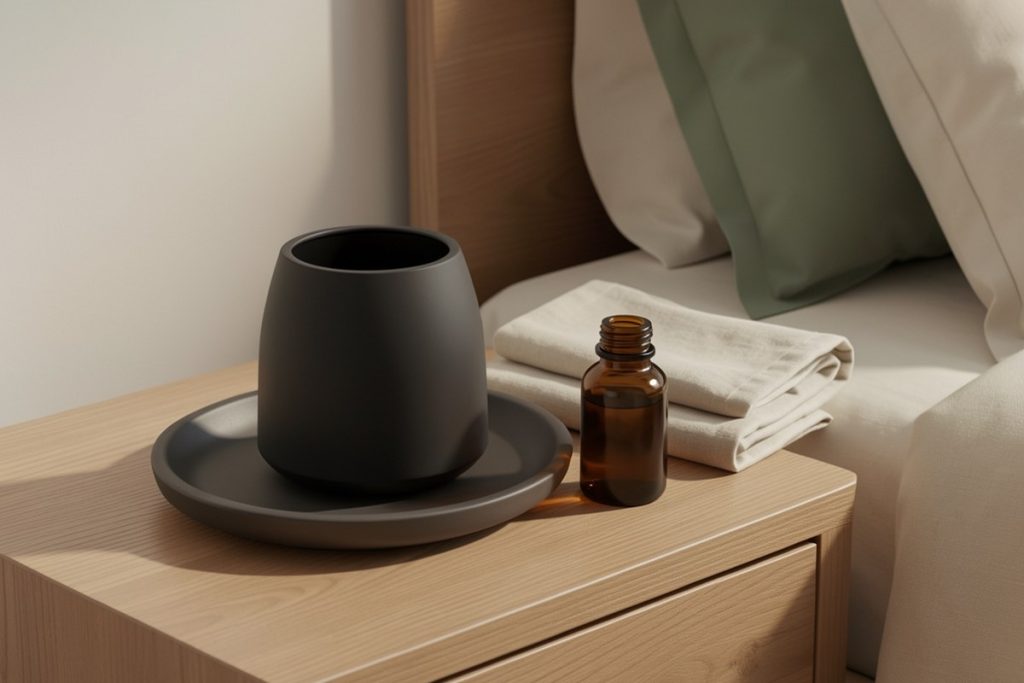
Placement is the first practical decision. Set the diffuser on a stable, open surface with room for air to move around it. Avoid cabinets, enclosed shelves, direct contact with wood finishes, painted surfaces, fabrics, food, and anything a child or pet could knock over.
Do not place it directly beside a sofa, pillow, desk chair, or air intake. A concentrated stream may be unpleasant even when the room’s overall scent seems mild. A location with natural air circulation is usually more comfortable than positioning the device close to someone’s face.
Then use a slow ramp-up:
- Choose one fragrance. Mixing several oils makes it difficult to identify which one is irritating or simply too strong.
- Begin at the lowest output or shortest available run time. More fragrance is not automatically better coverage.
- Leave the room and return later. Assess the scent near the doorway and in the far corner, not only next to the device.
- Adjust gradually. Increase duration only if the scent disappears immediately and nobody feels uncomfortable.
- Schedule unscented breaks. Constant exposure can make regular occupants stop noticing intensity, while visitors may experience it as overpowering.
Room size is only one factor. Ceiling height, open doorways, fans, heating and cooling systems, and soft furnishings all affect how fragrance travels. One centrally placed unit may be enough. Adding another should be a last resort, especially in a shared home or workplace.
Match the solution to the problem
| What you want to solve | Best first move | Does fragrance fit? |
|---|---|---|
| Cooking or trash odor | Remove the source and ventilate | Only as a brief finishing step |
| Stale air | Improve outdoor-air exchange and airflow | Possibly, at low intensity |
| Dry air | Measure humidity and use an appropriate humidifier | No; fragrance adds no needed moisture |
| Allergy or asthma symptoms | Follow a clinician’s plan and reduce triggers | Do not use fragrance as treatment |
| Wanting a pleasant atmosphere | Choose a mild scent and a short schedule | Yes, if everyone is comfortable |
Who should be cautious with fragrance?
Fragrance is not neutral for everyone. Some people report headaches, nausea, eye or throat irritation, coughing, or breathing symptoms around scented products. If someone in the household has asthma, migraine, allergies, chemical sensitivity, or a strong preference for unscented air, ask before running a diffuser and make it easy to stop.
In shared workplaces, guest rooms, and common areas, a fragrance-free default is often more considerate than assuming everyone enjoys the same scent. A person who feels fine around one fragrance may still react to another, so avoid treating “natural” or “essential oil” as a guarantee of safety.
The National Center for Complementary and Integrative Health notes that aromatherapy evidence varies by intended use and that essential oils can cause skin irritation or allergic reactions. A pleasant smell is not proof of a therapeutic effect. Do not apply diffuser oil to skin, ingest it, or improvise mixtures. Store oils and the device out of reach of children and pets, and check veterinary guidance before using essential oils around animals.
A five-minute setup checklist
- Identify and remove the odor source before adding fragrance.
- Check that the room has a safe path for ventilation.
- Choose one compatible oil and read its handling instructions.
- Place the unit away from faces, fabrics, food, vents, children, and pets.
- Start with low intensity and short sessions.
- Pause between sessions and stop immediately if symptoms appear.
When to skip the diffuser
Skip fragrance if someone in the room is already experiencing breathing difficulty, unexplained coughing, severe headache, nausea, or irritation. Move to fresh air when appropriate, stop the product, and seek medical advice for persistent or serious symptoms. Do not use scent to conceal a gas smell, smoke, sewage odor, visible mold, or a chemical spill.
It is also reasonable to skip a diffuser when the room already has adequate ventilation and no odor problem. Scent is an optional comfort feature, not a requirement for a healthy home. If you live with pets, young children, or people with respiratory sensitivities, the benefits may not justify the added exposure.
The bottom line
A waterless diffuser can be a tidy way to add a light, consistent scent to a roomy space, particularly if you do not want a water reservoir or visible mist. The best result comes from restraint: clean first, ventilate, use one fragrance, and adjust slowly.
Choose the product only if its water-free format fits your space and routine. Keep expectations realistic, follow the operating instructions, and be willing to use less—or none—if another person or animal in the room is uncomfortable. If the room needs to smell better because something is wrong with the air, solve that underlying issue instead of asking fragrance to do a purifier’s job.
Last reviewed: 2026-09-07
Sources
- The Inside Story: A Guide to Indoor Air Quality, U.S. Environmental Protection Agency
- Improving Indoor Air Quality, U.S. Environmental Protection Agency
- Aromatherapy, National Center for Complementary and Integrative Health