
Quick answer
For a hybrid-office capsule wardrobe, start with the days you actually dress up, then choose a small set of bottoms, polished tops, layers, and comfortable shoes that work together. Aim for 10–15 dependable outfits, not a magic number of garments. Prioritize fit, repeatability, weather, and your workplace’s real dress code before buying anything new.
Key takeaways
- Build around your actual office schedule instead of an imaginary five-day workweek.
- Start with three bottoms, five tops, two layers, two pairs of shoes, and one useful bag.
- Choose one neutral foundation and two accent colors so pieces coordinate without looking identical.
- Test every item for sitting, commuting, temperature changes, and easy care before keeping it.
Start with your real hybrid-office week
A capsule wardrobe works best when it solves a specific routine. Before looking at clothes, write down what a normal month actually requires. How many days do you go into the office? Do you walk, drive, or take public transportation? Is the office chilly, casual, client-facing, or unpredictable? Do you need outfits for presentations, after-work plans, or occasional travel?
These answers matter more than a generic “office wardrobe essentials” list. Someone who works from home three days a week may need four polished outfits, not 20. Someone who commutes by train may need wrinkle-resistant layers and shoes that can handle a long walk. Your capsule should reduce decisions without forcing you to dress like someone else.
Use a simple 13-piece starting formula
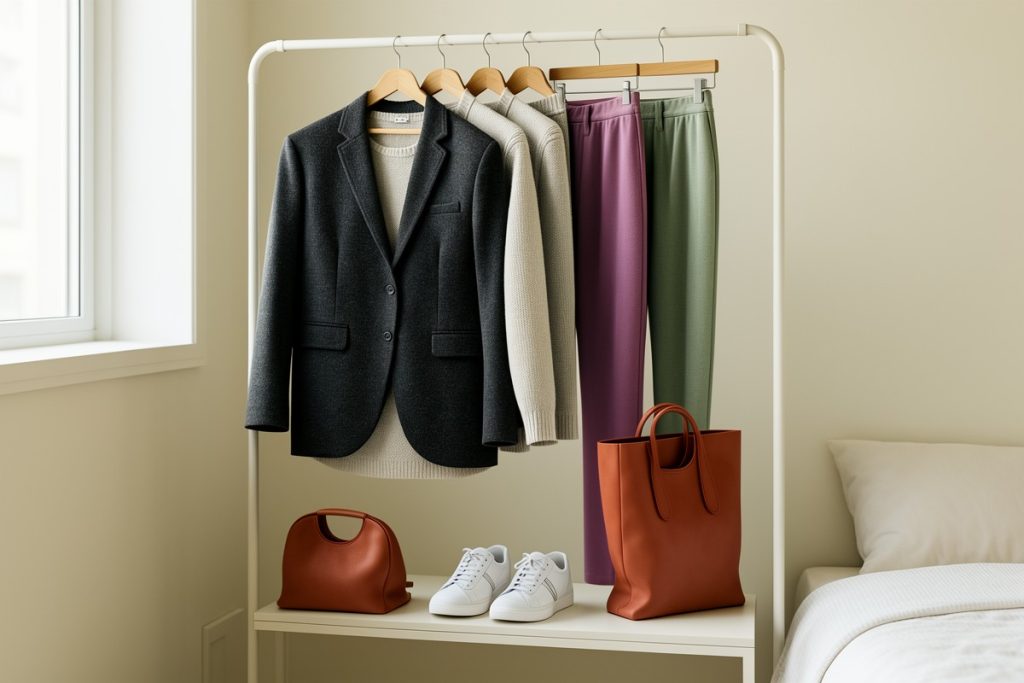
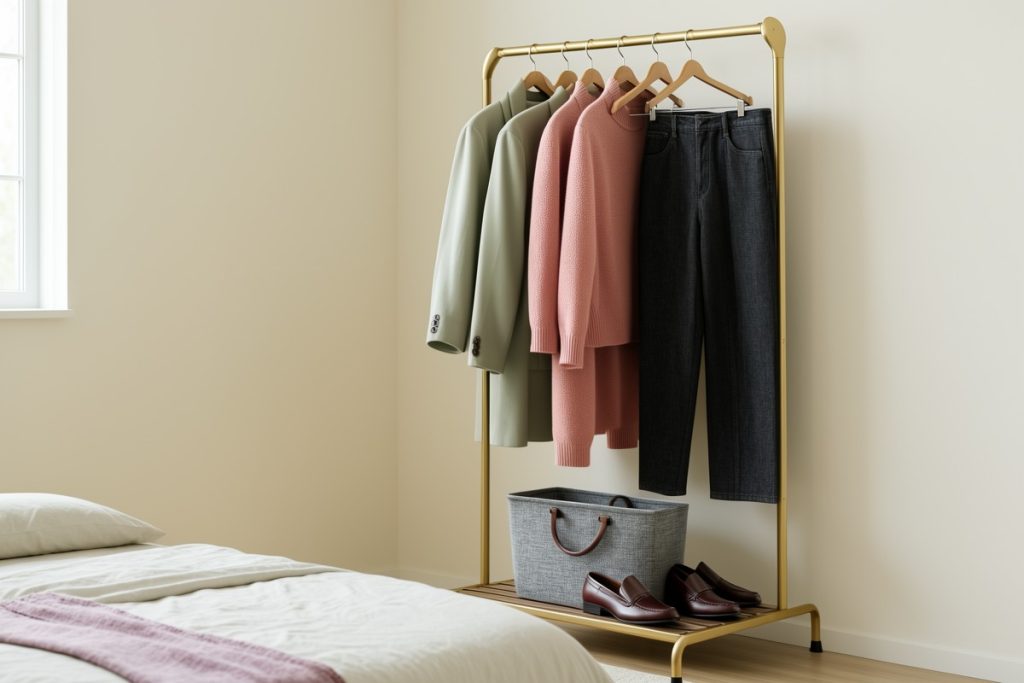
You do not need to replace your entire closet. Pull out pieces you already wear and build from there. A useful starting point is three bottoms, five tops, two layers, two pairs of shoes, and one everyday work bag. This gives you enough variety to create multiple combinations while leaving room for personal style.
Choose a foundation color first. Navy, black, charcoal, brown, or cream can anchor the wardrobe. Then add two colors you genuinely enjoy wearing, such as sage and blush, burgundy and camel, or blue and rust. The goal is coordination, not perfect matching. If every item only works with one other item, the capsule will feel restrictive quickly.
| Category | Practical starting set | What to check |
|---|---|---|
| Bottoms | One trouser, one skirt or wide-leg pair, one dark jean | Comfort when seated and compatibility with your shoes |
| Tops | Three polished basics and two personality pieces | Whether they layer without bunching or pulling |
| Layers | One blazer or structured jacket and one soft cardigan | Temperature control and usefulness beyond the office |
| Shoes | One walkable flat or loafer and one dressier option | Stability, cushioning, and the commute you actually make |
| Bag | One structured tote or compact work bag | Space, weight, organization, and shoulder comfort |
Build outfits around repeatable combinations
Instead of asking whether each item is attractive on its own, make complete outfits on your bed or with a wardrobe app. Pair every bottom with at least two tops and one layer. If you have three bottoms and five tops, you already have 15 possible pairings before changing accessories.
Look for useful contrasts: a soft blouse with tailored trousers, a fitted knit with a fuller skirt, or dark denim with a structured jacket. Combining different silhouettes keeps a small wardrobe from looking repetitive. You can also change the impression of an outfit with a belt, earrings, scarf, or shoe, but accessories should support the wardrobe rather than rescue pieces that do not coordinate.
Take quick photos of the combinations you like. This is not about creating a rigid uniform. It simply gives you a visual record for mornings when you are tired, running late, or moving between home and the office.
Choose clothes that survive the workday
Fit is more important than the size printed on a tag. Sit down, raise your arms, walk several steps, and wear the layer over the top you expect to pair with it. A blazer that looks excellent while standing may feel tight at your desk. Trousers that fit in a fitting room may pull when you climb stairs. A shirt that requires constant adjusting is not a practical capsule piece.
Pay attention to fabric behavior. Look for materials that are comfortable across temperature changes and do not need delicate styling every morning. If an item wrinkles easily, decide whether you are genuinely willing to steam or iron it. Follow the garment’s care instructions rather than guessing; the Federal Trade Commission explains that textile care labels provide the manufacturer’s cleaning guidance.
For commuting, test the whole outfit together. Walk in the shoes, carry the bag, and check whether the jacket stays comfortable under a coat. A beautiful outfit that causes blisters or leaves no room for essentials will not become a favorite through optimism.
Shop your closet before adding anything
Lay out the pieces you already reach for on workdays. Separate them into three groups: reliable, promising but imperfect, and never worn. The reliable group becomes your foundation. The promising group may need tailoring, different styling, or a better layer. The last group should not control your shopping list simply because it was expensive.
Notice the gaps between outfits. You may not need another top; you may need a third bottom that works with your existing shirts. You may not need a new blazer; you may need a cardigan for the cold office. Shopping for the missing connector usually produces a more useful wardrobe than buying another statement item.
Before purchasing, ask whether the item works with at least three pieces you own, suits your actual dress code, and can be worn in at least two settings. If the answer is no, put it on a 48-hour list instead of buying immediately.
Keep the capsule flexible, not precious
A capsule wardrobe is a tool, not a rulebook. Keep a few seasonal pieces outside the core set: a warm sweater, a linen shirt, a party-ready dress, or weatherproof footwear. Your wardrobe should reflect your climate, body changes, sensory preferences, and life outside work.
Review the capsule after a month of normal wear. Which pieces did you repeat? Which outfit combinations felt awkward? Which items stayed untouched because they were uncomfortable, too formal, or difficult to care for? Those observations are more useful than chasing a perfect capsule number.
If you replace something, consider repairing or reusing the old piece when practical. The Environmental Protection Agency’s textile materials data is a helpful reminder that clothing decisions have a resource impact, so buying fewer items that earn frequent wear is a sensible long-term approach.
A quick capsule wardrobe checklist
- Can I create at least three outfits from this new piece?
- Does it fit my real office dress code?
- Can I sit, walk, commute, and layer comfortably in it?
- Will I realistically follow its care instructions?
- Does it fill a genuine gap rather than duplicate a favorite?
The strongest hybrid-office wardrobe is not the one with the fewest clothes. It is the one that makes your workweek easier, feels like you, and gives you dependable choices when your attention belongs somewhere else.
Last reviewed: 2026-08-24
Sources
- Textiles: Material-Specific Data — U.S. Environmental Protection Agency