
Quick answer
To build a capsule wardrobe for a busy workweek, start with the clothes you actually wear, choose two or three coordinating colors, and keep only versatile pieces that suit your schedule, body, and laundry habits. Aim for a small group of reliable tops, bottoms, layers, shoes, and accessories rather than an arbitrary number of items.
Key takeaways
- Design around your real week, including commuting, dress codes, weather, and laundry frequency.
- Choose a simple color system so most tops work with most bottoms.
- Prioritize fit, comfort, and repeat wear over trendiness or a specific item count.
- Shop only after identifying a genuine gap, and check care requirements before buying.
Start with your actual week, not an imaginary one
A capsule wardrobe works best when it reflects your life as it is. Before pulling clothes from your closet, write down what a normal seven-day period includes. You may need polished outfits for three office days, comfortable layers for commuting, one casual look, and something slightly dressier for an evening plan. Someone else may need washable clothes for childcare, video calls, errands, or a job that requires movement.
Look at the next two weeks of your calendar and note the situations you dress for most often. Also consider your climate, laundry schedule, and how much time you realistically have in the morning. A beautiful wardrobe that requires delicate washing, ironing, or constant styling will not feel practical if your week is already full.
This approach prevents a common mistake: building a capsule around an aesthetic instead of a routine. The goal is not to own the fewest clothes possible. It is to make your most frequent dressing decisions easier.
Choose a flexible color system
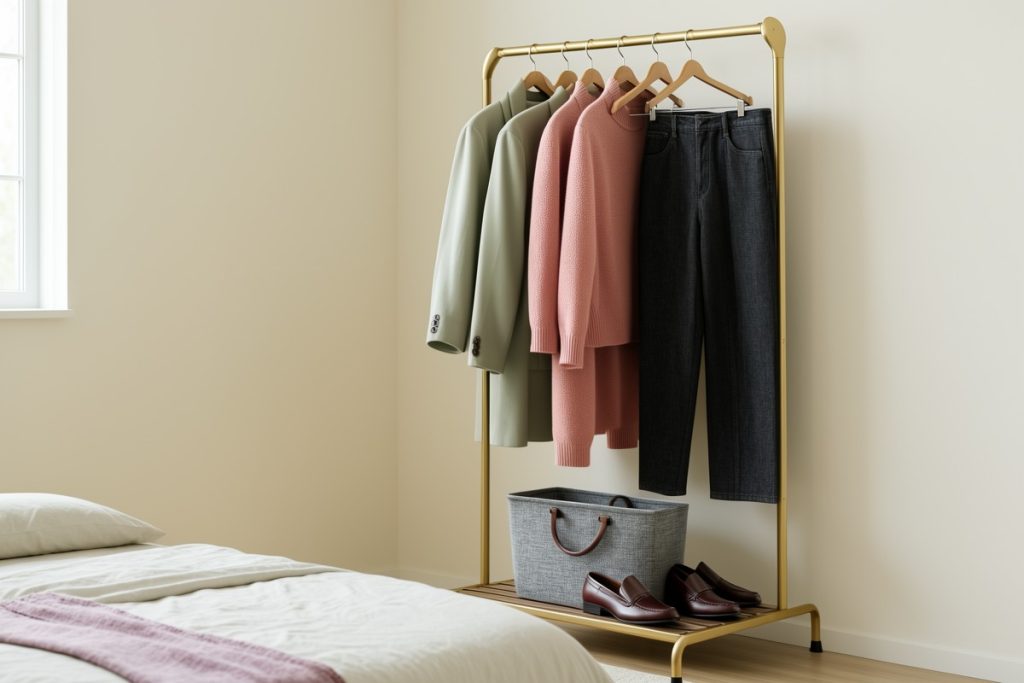
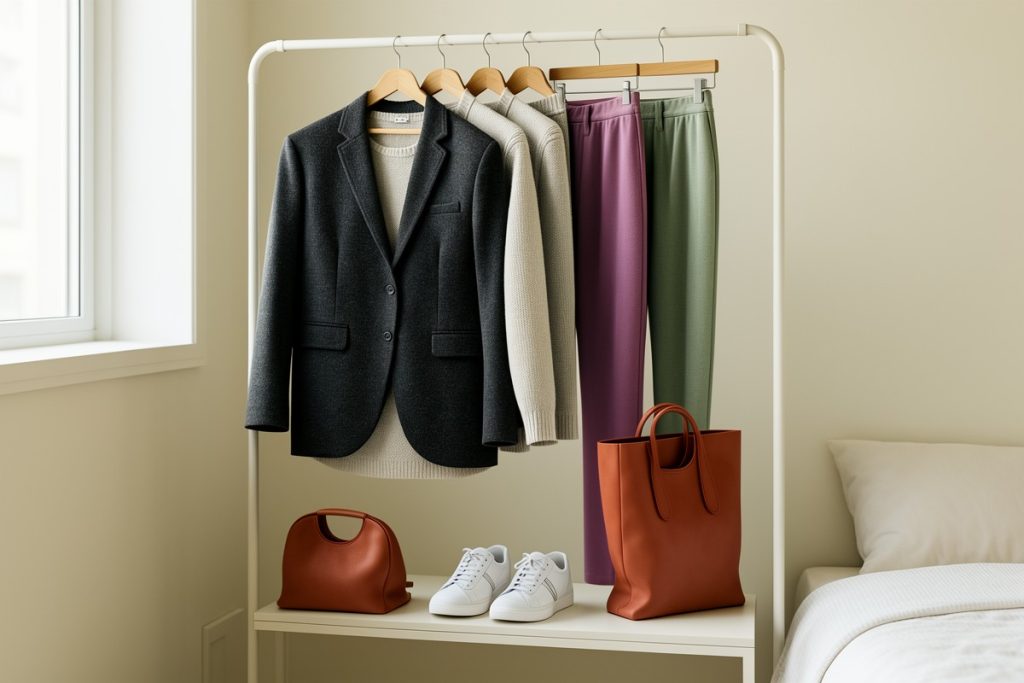
Color coordination is what makes a smaller wardrobe feel larger. Start with two neutral base colors, such as black and cream, navy and white, or brown and denim. Add one or two supporting colors that you genuinely enjoy wearing. These could be sage, burgundy, soft blue, rust, or another shade that works with your existing wardrobe.
Use the darkest or most neutral colors for high-use pieces such as trousers, skirts, jackets, and shoes. Put more personality into tops, scarves, jewelry, or one standout layer. This does not mean every item must match perfectly. It simply gives you enough overlap to create outfits without treating every morning like a styling project.
If you are unsure whether a color belongs, hold the item next to at least three pieces you already wear. If it creates only one outfit, it may be a special-occasion piece rather than a capsule essential.
Build around outfit formulas
Instead of counting individual garments first, identify two or three outfit formulas that feel comfortable and appropriate. For example:
- Tailored trousers, a simple top, and a cardigan or blazer.
- Dark jeans, a knit top, and a structured jacket.
- A midi dress with a light layer and comfortable flats or boots.
Once you know your formulas, choose pieces that can move between them. A jacket should work with both trousers and jeans. A top should look right under a cardigan and on its own. Shoes should support the amount of walking your day requires, not just complete a photograph.
A useful starting point for a workweek capsule might include three bottoms, five tops, two layers, one dress or alternate outfit, two pairs of everyday shoes, and a small group of accessories. Treat this as a planning guide, not a rule. If you do laundry weekly, you may need more tops. If your workplace is casual, you may need fewer formal pieces and more comfortable layers.
Use this closet audit before shopping
Take everything out of the category you are reviewing, then make decisions based on evidence rather than guilt. Try on anything that has not been worn recently. Pay attention to the way the garment feels when you sit, walk, reach, and layer it. A piece that looks good on a hanger but restricts movement will probably remain unworn.
| Category | Keep when… | Consider changing when… |
|---|---|---|
| Fit | You can move comfortably and feel at ease. | You are constantly pulling, adjusting, or avoiding it. |
| Versatility | It works with at least three outfits you would actually wear. | It requires a special item or occasion every time. |
| Condition | The fabric and construction still look presentable. | Damage, pilling, or fading affects how you feel wearing it. |
| Care | The washing and drying routine fits your life. | Its maintenance is the reason it stays in the closet. |
Place uncertain items in a separate box or section for 30 days rather than forcing an immediate decision. If you do not reach for them during a realistic month, that is useful information. Repair, tailor, donate, sell, or recycle them according to their condition and your local options.
Shop only for the gaps you can name
After the audit, write a short gap list using practical descriptions. “Black cardigan that layers over my work tops” is more useful than “something cute.” “Comfortable closed-toe shoes for walking and meetings” gives you clear standards for fit and function.
Before buying, check whether the new piece works with at least three items already in your wardrobe. Consider the full cost of ownership, including tailoring, special care, and accessories needed to make it wearable. A lower-priced garment is not automatically a better value if it loses shape quickly or remains uncomfortable.
Pay attention to fiber content and care instructions. The Federal Trade Commission explains that most textile and apparel products must provide care information, so use that label to confirm whether the item fits your washing routine. When possible, choose quality and comfort over a trend that may be difficult to wear repeatedly.
Make the capsule easy to use on busy mornings
Arrange the wardrobe by function rather than by vague categories. Keep your most-used work layers together, place everyday shoes where they are easy to reach, and store accessories near the outfits they complete. You can also take quick photos of combinations you like and keep them in a private phone album. The purpose is not to create a perfect catalog; it is to remove small decisions when you are tired or late.
Give each new garment a trial period. Wear it in at least three different situations before deciding whether it belongs. Notice whether it stays comfortable, works with your shoes, and survives your normal day without constant attention. This is more reliable than judging it during a quick fitting-room visit.
Keep the wardrobe flexible, not restrictive
A capsule wardrobe should support your identity, not flatten it. Keep room for color, texture, cultural clothing, occasionwear, and pieces that bring genuine pleasure. You do not need to force every item into a neutral uniform, and you do not need to remove clothes simply because they are not worn weekly.
The most sustainable capsule is usually the one that helps you buy less impulsively and wear more of what you already own. The U.S. Environmental Protection Agency tracks textiles as a distinct part of the municipal waste stream, which is one reason extending the useful life of clothing matters. Repairing a loose hem, washing according to the care label, and rotating pieces can be more valuable than replacing a whole wardrobe with a new set of basics.
Review the capsule at the start of each season. Remove genuinely weather-inappropriate items, check what needs repair, and update your gap list. A wardrobe that changes gradually with your real needs will serve you better than a dramatic closet reset.
Last reviewed: 2026-10-09