Quick answer
Choose a cordless drill kit based on the jobs you actually expect to do, not the number of accessories in the box. For basic furniture assembly, shelf installation, curtain hardware, and small repairs, prioritize a comfortable drill, a rechargeable battery, an LED light, useful bits, and clear storage. A larger kit is worthwhile only when its included accessories match your likely projects.
Key takeaways
- Match the drill to light-duty repairs, furniture assembly, or heavier projects before comparing accessory counts.
- Check battery charging, grip comfort, clutch settings, chuck compatibility, and bit quality.
- A 132-piece kit can be convenient, but it does not automatically make every accessory useful or durable.
- Use the correct bit, secure the workpiece, and inspect the tool before drilling or driving.
Start with the jobs you need to solve
The best cordless drill kit is the one that removes friction from your usual home tasks. Before shopping, write down three or four projects you are likely to complete during the next year. That list might include assembling flat-pack furniture, tightening loose hardware, mounting curtain rods, installing shelves, replacing cabinet pulls, or drilling pilot holes for small woodworking projects.
These jobs generally call for a compact, easy-to-control drill and a selection of common driver bits and drill bits. They do not necessarily require a high-powered professional tool or a large collection of specialized accessories. If your plans include drilling into concrete, building a deck, driving long structural screws, or using the tool for hours at a time, look beyond entry-level kits and investigate a hammer drill or higher-capacity platform designed for that workload.
What to look for in a beginner-friendly drill
Accessory count attracts attention, but the drill itself determines how pleasant the work will be. Look for a keyless chuck, which lets you change compatible bits without a separate chuck key. A variable-speed trigger gives you better control when starting a screw or drilling into a delicate material. A clutch with multiple settings can help prevent overdriving screws into furniture or soft wood.
Pay attention to the grip and balance. A drill that feels front-heavy can become tiring during an overhead task, while a bulky handle can make it difficult to work inside cabinets. If you are buying online, inspect product photos and specifications for the tool’s approximate size, battery arrangement, charging method, and included accessories. Do not assume that a compact appearance means the tool is suitable for every material.
An LED work light is a practical feature when you are working inside a cabinet, under a desk, or in a dim corner. It improves visibility around the bit, but it does not replace a proper room light or a careful view of hidden wiring and plumbing.
Understand what the accessory count really means
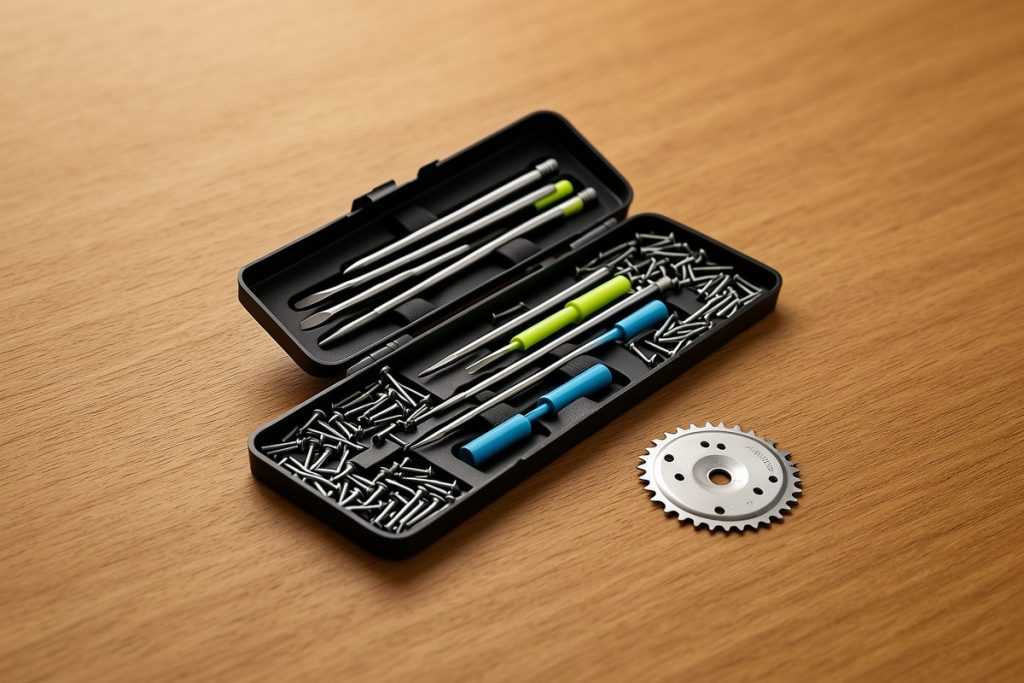
A large kit can be useful because it keeps common supplies together. It may include driver bits, drill bits, sockets, masonry or wood accessories, fasteners, and a case. That convenience matters for a new homeowner who would rather make one organized purchase than collect pieces gradually.
Still, “132 pieces” does not mean 132 equally useful tools. Some counts include duplicate sizes, small fasteners, holders, or accessories intended for occasional use. The more important questions are whether the kit includes the sizes you need, whether the bits are clearly organized, and whether replacements are easy to find when a commonly used bit wears out.
For furniture assembly and light household repairs, the most useful contents are usually Phillips and slotted driver bits, a few common drill-bit sizes, a bit holder or extension, a tape measure, and basic fastening accessories. For wall mounting, you also need anchors suited to the wall material. A drill kit cannot compensate for using the wrong anchor in drywall, masonry, tile, or a stud.
How the candidate kit fits light home projects
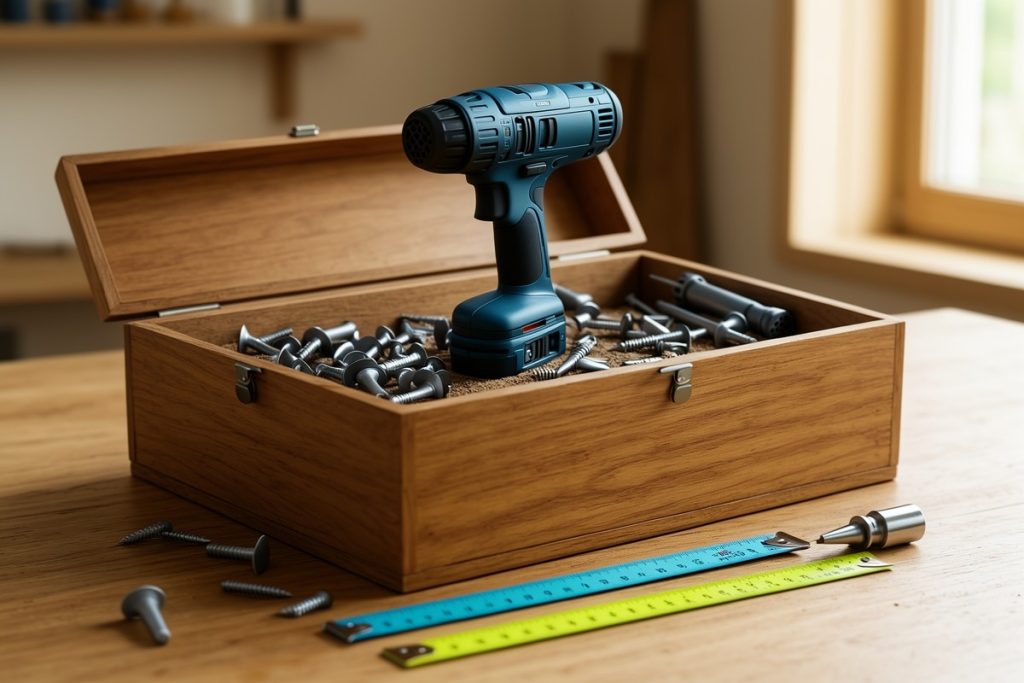
The 8V Cordless Drill Set, 132-Piece Home Tool Set for DIY & Home Improvement is a natural fit for readers building a basic household repair kit. Its listed combination of an 8V rechargeable drill, LED light, and broad accessory selection makes it worth considering for tasks such as furniture assembly, minor adjustments, and everyday homeowner projects.
That recommendation has limits. The listing alone does not establish how long the battery lasts under a particular workload, how durable each accessory is, or whether the kit includes the exact anchor and bit type required for your project. Treat it as a convenience-oriented option for light tasks rather than proof that one box can replace a full range of professional tools. Confirm the included pieces and charging details before ordering, especially if you already own compatible bits or need a specialized accessory.
Use this quick comparison before buying
| Your likely work | Prioritize | Watch for |
|---|---|---|
| Furniture assembly and tightening | Compact drill, clutch settings, Phillips bits, comfortable grip | Excessive size or too few common driver bits |
| Shelves, curtain rods, and hardware | Variable speed, LED light, drill bits, wall-anchor compatibility | Assuming the included anchors suit every wall |
| Woodworking and repeated drilling | More battery capacity, good chuck, quality bits, replacement options | Short runtime or accessories that dull quickly |
| Masonry or heavy construction | Hammer function, higher-duty design, appropriate rated accessories | Using a light-duty drill for demanding materials |
A practical pre-purchase checklist
- List the first three projects and identify the materials involved.
- Confirm the drill uses the bit types and sizes those projects require.
- Check how the battery charges and whether a charger is included.
- Look for a clutch, variable-speed trigger, keyless chuck, and work light.
- Read the accessory list instead of relying on the headline piece count.
- Make sure the case can keep frequently used bits easy to find.
- Plan to buy safety glasses and any project-specific anchors or fasteners separately.
Work safely and avoid common mistakes
Remove the battery or disconnect the power source before changing accessories or making adjustments. Select a bit designed for the material, keep the bit straight, and start at a controlled speed rather than immediately squeezing the trigger fully. Clamp or otherwise secure loose workpieces so they cannot spin or shift.
Before drilling into a wall, consider what may be behind the surface. Electrical cables, plumbing, and structural components can be hidden. Use an appropriate detector when needed, avoid uncertain locations, and follow the tool manufacturer’s instructions. Eye protection is sensible whenever drilling, driving, or working with materials that can produce chips or fragments.
Stop if the bit binds, the tool overheats, the battery or charger appears damaged, or the task demands more force than the drill can safely provide. The correct response to a struggling light-duty drill is usually a different tool or technique, not more pressure.
Make the decision based on convenience, not hype
For a first home tool kit, convenience has real value: a rechargeable drill, common accessories, and organized storage can help you finish small jobs without several separate shopping trips. But the useful measure is whether the kit matches your actual projects. A smaller, better-matched set is often more practical than a larger box filled with accessories you will not use.
Choose the candidate kit if your near-term needs are mainly light repairs, assembly, and basic household maintenance. Choose a more specialized drill if you expect masonry, long fasteners, repetitive work, or construction-level demands. That simple distinction will help you spend appropriately and avoid blaming a beginner tool for a job it was never meant to handle.
Last reviewed: 2026-11-20
Sources
- Hand and Power Tools — Occupational Safety and Health Administration.
- OSHA Standard 1910.242: Hand and Portable Powered Tools and Equipment — Occupational Safety and Health Administration.