Quick answer
Keep car cleaning manageable by using a short reset routine instead of waiting for a major deep clean. Remove rubbish every time you park, keep a small cleaning kit in the vehicle, vacuum high-crumb areas weekly, and wipe touchpoints with a suitable product. Work while parked, protect delicate surfaces, and choose tools that make the routine easier to repeat.
Key takeaways
- Use a five-minute reset after errands or your commute rather than saving everything for the weekend.
- Focus on high-impact areas first: rubbish, floor mats, cup holders, seats, and touchpoints.
- Keep cleaning supplies contained in one small basket so they are easy to find and less likely to become clutter.
- Check a product’s power source, attachments, filter care, and storage needs before buying.
By Harper Wells
Modern Womanhood Voice
Why car cleaning feels harder than it should
A messy car is rarely the result of one dramatic spill. It is usually the accumulation of coffee cups, receipts, crumbs, dust, gym clothes, grocery bags, and the small objects that never quite make it into the house. When your schedule is already full, “clean the car” sounds like a large weekend project, so it gets postponed.
The more realistic approach is to separate maintenance from deep cleaning. Maintenance takes a few minutes and prevents the mess from becoming overwhelming. Deep cleaning happens less often and covers the jobs that need extra time, such as washing floor mats or cleaning between seats.
Your goal is not a permanently perfect interior. It is a car that feels pleasant, safe, and usable without demanding an entire afternoon.
Start with a five-minute car reset
The fastest improvement usually comes from removing what does not belong in the car. Take a small bag with you and collect rubbish, empty bottles, clothing, shopping receipts, and items that need to go indoors. Do not reorganize the whole vehicle during this step. Removing visible clutter creates the biggest sense of order with the least effort.
Next, return essential items to one consistent place. Sunglasses can live in the console, reusable bags in the trunk or cargo area, and charging accessories in a small pouch. Consistent storage matters more than buying elaborate organizers because you are more likely to maintain a system you can remember without thinking.
Try doing this whenever you arrive home or finish a longer errand. If you are tired, use the two-minute version: remove rubbish and take out anything that does not belong. A partial reset is still useful.
Use a simple order of operations
Cleaning in the wrong order creates extra work. Dust and crumbs can fall onto areas you have already wiped, and scattered belongings make it difficult to reach the floor. Use this sequence instead:
- Empty the cabin. Remove rubbish, loose belongings, and removable floor mats.
- Clear the larger debris. Pick up wrappers, stones, leaves, and crumbs that can be removed without products.
- Vacuum the floor and seats. Work from the top down, paying attention to seams and the areas around seat rails.
- Brush out tight spaces. Use a soft brush for vents, console edges, and narrow gaps rather than forcing a cloth into them.
- Wipe touchpoints. Clean the steering wheel, door handles, gear selector, buttons, and cup-holder edges with a product appropriate for that surface.
- Replace only what belongs. Put back the items you actually use and remove the rest.
This order keeps dry debris from turning into damp grit and helps you notice which areas truly need attention.
Build a small cleaning kit you will actually use
A useful kit should be compact enough to store in the trunk or a side compartment. More supplies are not automatically better; too many bottles and accessories can become another source of clutter.
| Item | What it helps with | Practical note |
|---|---|---|
| Small rubbish bags | Wrappers, tissues, and receipts | Keep a few together in a pouch or container. |
| Microfiber cloths | Dust and light surface cleaning | Use separate cloths for dirtier and cleaner areas. |
| Soft detailing brush | Vents, seams, and console gaps | Avoid stiff bristles on delicate trim. |
| Interior-safe cleaner | Suitable hard surfaces | Read the label and test an inconspicuous spot first. |
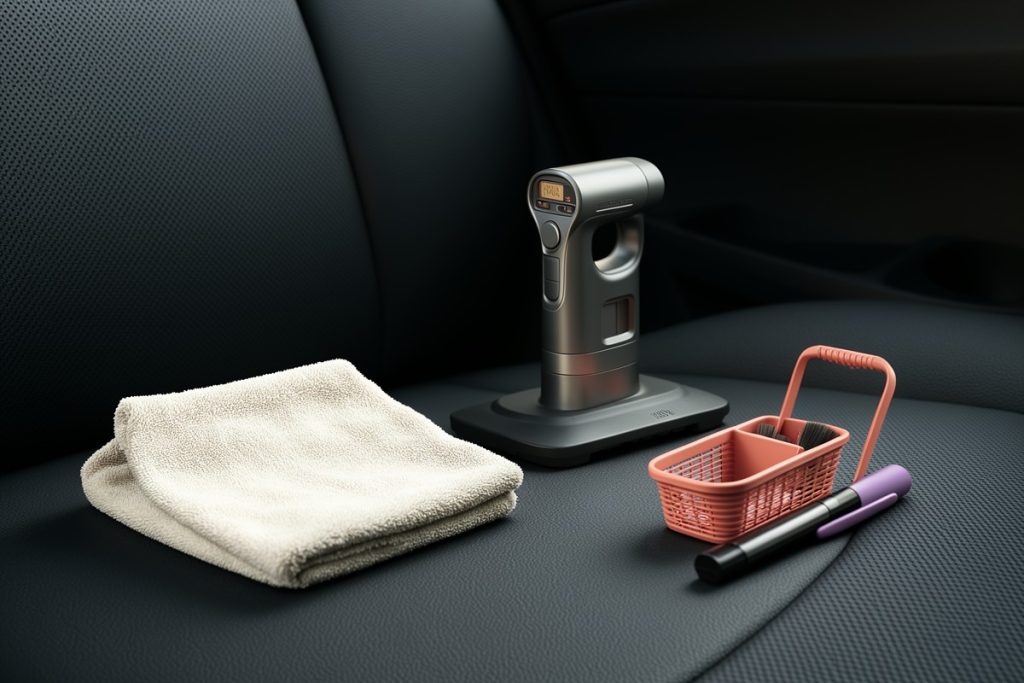
| Compact vacuum | Crumbs, grit, and loose debris | Confirm the power source and filter-care instructions before purchase. |
If you want a dedicated tool for loose debris, you can compare the HOTOR car-cleaning option. It may suit someone who prefers keeping a vacuum specifically for the vehicle, but it is worth checking the current listing for its power connection, included attachments, filter instructions, storage requirements, and return terms before deciding. A product is only helpful if it fits your car, routine, and available storage.
Focus on the places that make the biggest difference
You do not need to clean every surface during every session. Prioritize the areas you touch or notice most often:
- Driver’s area: Clear the floor, wipe the steering wheel and door handle, and remove objects that could roll under the pedals.
- Front cup holders: Empty them, lift out removable inserts if possible, and clean around the edges where sticky residue collects.
- Floor mats: Shake or vacuum them outside the cabin when you can. This prevents grit from being redistributed inside.
- Back seat: Check beneath child seats, bags, and jackets, where forgotten rubbish tends to collect.
- Trunk or cargo area: Remove shopping bags and loose equipment before they become a permanent second layer of storage.
When time is limited, clean the driver’s area and floor first. Those areas affect how the car feels immediately and are more useful than polishing a rarely touched surface.
Clean safely and protect the interior
Always clean while parked, never while driving. NHTSA identifies distracted driving as a serious safety risk, and reaching for supplies or wiping surfaces on the road is not worth the few minutes saved.
Use products according to their labels and choose formulas intended for the material you are cleaning. Leather, coated surfaces, fabric, plastic, and glossy trim may react differently to moisture or strong chemicals. Spray onto a cloth when the product directions allow it, rather than soaking buttons, vents, seams, or electronic controls.
Do not mix cleaning products. If you are cleaning for hygiene rather than appearance, read the label carefully and follow its required contact time and ventilation instructions. The EPA’s Safer Choice program is a useful starting point for learning how some cleaning products are assessed for ingredients and environmental considerations, although certification does not replace checking whether a product is suitable for your vehicle’s surfaces.
Create a routine that matches your week
A sustainable schedule might look like this:
- Every trip home: Remove rubbish and anything that belongs indoors.
- Once a week: Vacuum the front floor, seats, and cup holders, then wipe major touchpoints.
- Once a month: Clean the back seat, trunk, door pockets, and floor mats more thoroughly.
- After spills: Act promptly using the correct method for the material. Delaying can make odors and stains harder to address.
Put the weekly reset on a day that already includes errands, such as filling the car or grocery shopping. Pairing the task with an existing routine reduces the need for extra motivation. You can also set a five-minute timer and stop when it ends; consistency is more valuable than an ambitious system you avoid.
A clean car does not have to be another standard you fail to meet. Treat it as a small maintenance habit: remove what does not belong, handle the messiest areas first, and keep only the supplies that genuinely make the job easier. That is enough to make everyday driving feel calmer without turning car care into a second job.
Last reviewed: 2026-10-12
Sources
- Distracted Driving — National Highway Traffic Safety Administration
- Safer Choice — U.S. Environmental Protection Agency