
Most digital nomad packing lists read like fantasy. They assume you are willing to haul a forty-liter tech backpack, a roller bag, and a messenger bag through cobblestone streets just to reach a café with unreliable WiFi. That is not freedom. That is logistics.
The best remote work setups are boring. They are light, predictable, and built around the work, not the aesthetic. If you are preparing for your first trip—or trying to simplify the one you are on—here is a realistic framework for staying productive without treating your back like a cargo ship.
Start with the Bag, but Do Not Overthink It
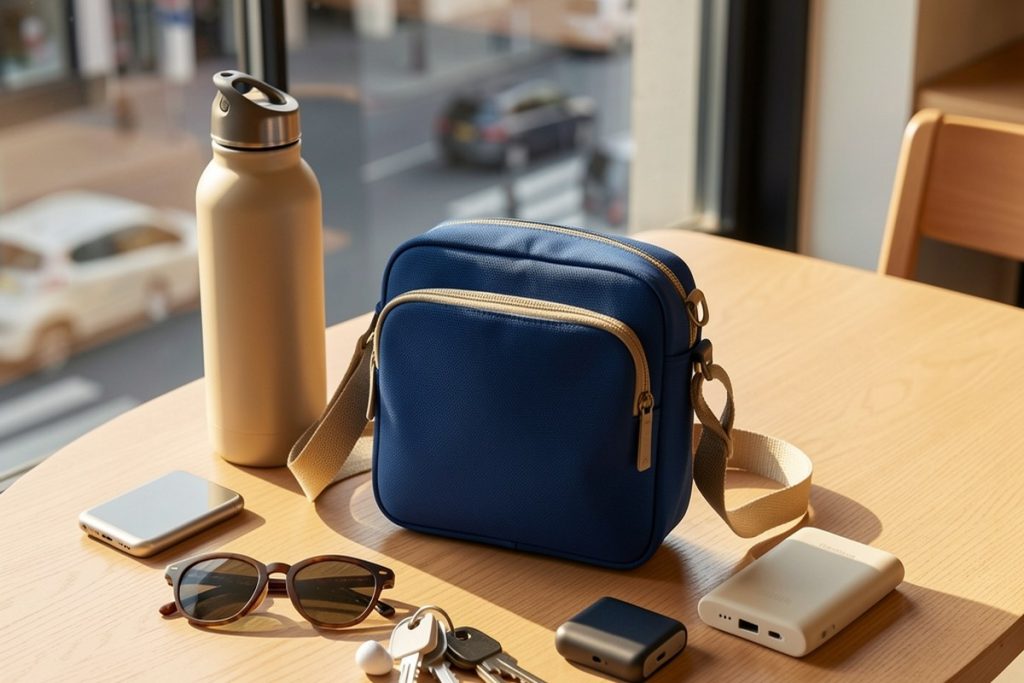
You need one carry-on bag and one personal item. That is it. The bag does not need to cost four hundred dollars or include seventeen hidden pockets. It needs a padded laptop compartment, a hip belt that actually works, and a shape that fits budget airline sizers. Spend less time comparing fabric weights and more time confirming your accommodation has a decent chair.
Treat Connectivity Like a Tool, Not a Hope
Coffee shop WiFi is a bonus, not a strategy. Before you book a stay, run a speed test during a video call with a friend who lives nearby, or ask the host to send a screenshot of their upload speeds. Buy a local SIM or an eSIM plan the moment you land. If your income depends on showing up to Zoom calls, redundancy beats optimism every time.
Fix Your Posture Before It Fixes You
The quickest way to ruin a nomad trip is to pretend you can hunch over a laptop for six hours without consequences. A simple foldable laptop stand, a compact Bluetooth keyboard, and a travel mouse take up less room than a hardcover book and will save your neck. You do not need a full desk, but you do need to get the screen near eye level.
Be Selective About Extra Gear
Every item you pack should earn its place twice. If it only solves one problem and takes up half your side pocket, leave it. That said, gear evolves quickly, and our team keeps a running shortlist of practical items worth evaluating before your next move. Here is the option we are tracking this month if you want to see what is currently on our radar: [https://amzn.to/4yS269O](https://amzn.to/4yS269O). We recommend reading the current product details and recent user questions directly on the listing to confirm it fits your specific kit and travel style.
Power and Adapters: One Good Set Is Enough
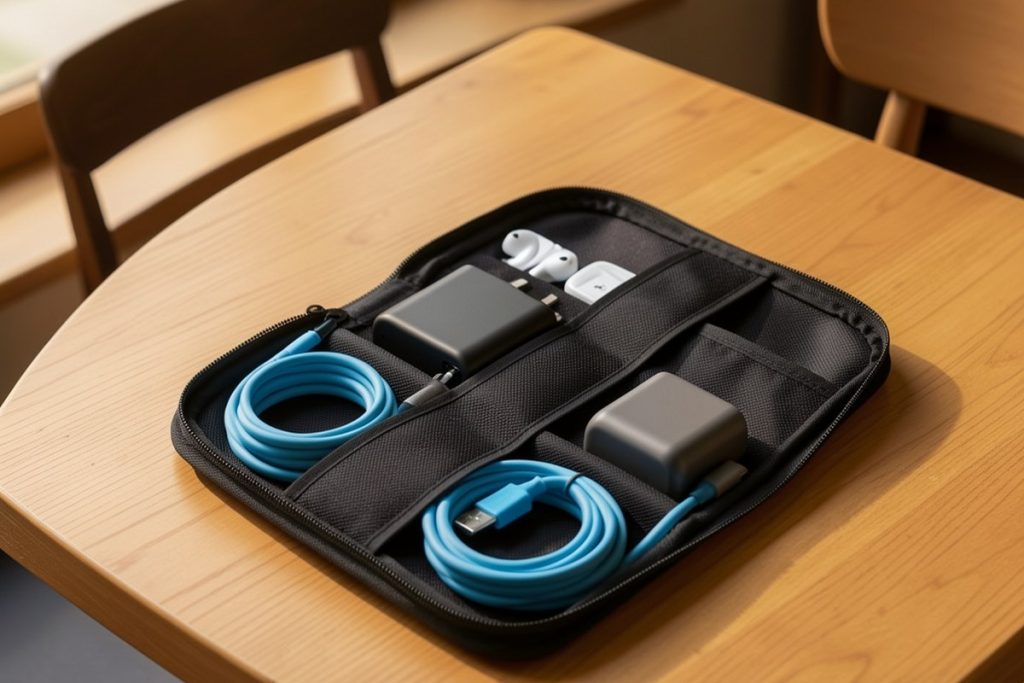
Carry one universal travel adapter with USB-C PD and one solid power bank between ten and twenty thousand milliamp-hours. You do not need three adapters and two power banks “just in case.” Charge your devices overnight, top off the bank during the day, and remember that most of the world runs on the same voltage your laptop already accepts.
The Real Productivity Hack Is Boundaries
No piece of gear will save you if you do not protect your work hours. Set a start time and a hard stop. Tell your travel partners when you are unavailable. The most successful nomads I know do not have the fanciest kits. They have the clearest routines.
Final Thought
You do not need to optimize your way into a perfect luggage collection. You need a bag that closes, a connection that holds, and a setup that lets you finish your work so you can actually experience the place you traveled to see. Keep it simple. Your shoulders—and your schedule—will thank you.