
Quick answer
For one or two chicken breasts, two forks are usually the simplest option. For repeated meal prep, a twist-style shredder can make the process more contained and easier to repeat, provided the cooked chicken fits comfortably and the tool is easy to clean. The best choice depends on batch size, desired texture, cleanup, and whether you value speed over using utensils already in your kitchen.
Key takeaways
- Use two forks for small portions and occasional cooking; they cost nothing extra and give precise control.
- A twist-style shredder is more relevant when you regularly prepare several servings of pulled chicken.
- Chicken should reach 165°F internally before shredding, according to USDA food-safety guidance.
- Check capacity, cleaning instructions, grip design, and material information before buying.
By Zara Ahmed (Deep Research Reviewer)
Last reviewed: 2026-08-14
Why shredding method matters for meal prep
Shredded chicken is useful because it can move between several meals without much extra cooking. The same batch can become taco filling, sandwich mixture, salad topping, soup protein, or a quick addition to rice and vegetables. The frustrating part is often not cooking the chicken; it is turning a hot, uneven piece of meat into consistent strands without scattering pieces across the counter.
There is no single best method for every kitchen. Forks are dependable and require no storage space. A stand mixer can process a large batch quickly, but it creates another bowl to wash and may break the chicken into a softer, finer texture than you want. A twist-style tool sits between those options: more specialized than forks, but potentially more contained than using a large appliance.
Compare the easiest chicken-shredding methods
| Method | Best for | Main advantage | Main limitation |
|---|---|---|---|
| Two forks | One or two breasts | Precise, inexpensive, and familiar | Slow and tiring for repeated batches |
| Stand mixer | Large batches | Fast with minimal manual pulling | More cleanup and less control over texture |
| Twist-style shredder | Regular small-to-medium meal prep | Purpose-built and potentially more contained | Must be emptied and cleaned after use |
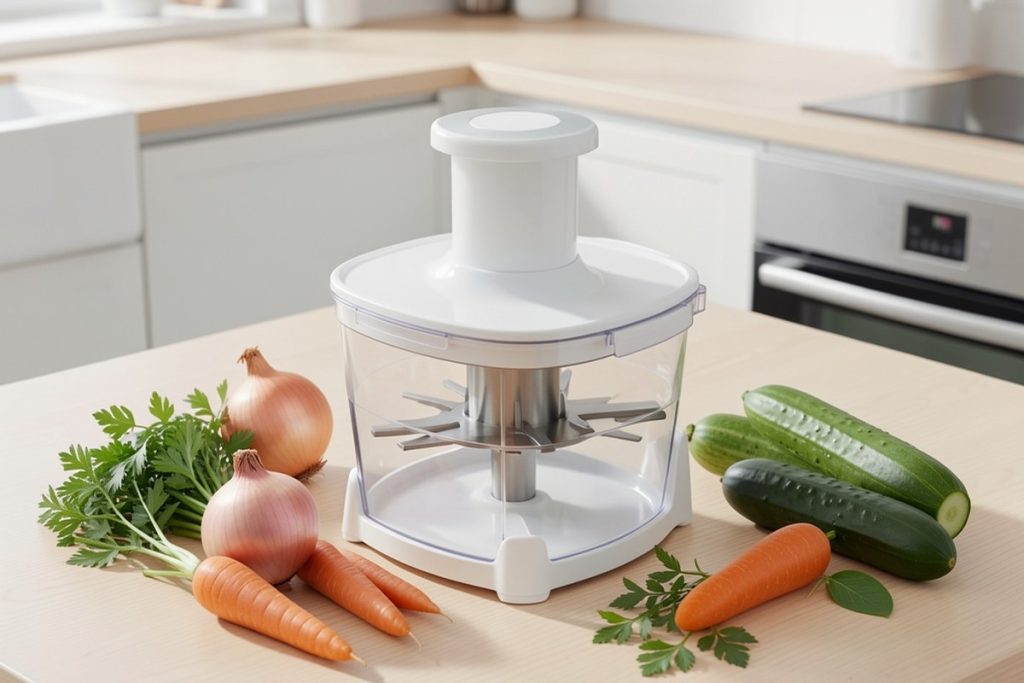
| Food processor | Very fine shredded or chopped chicken | Quick for certain recipes | Easy to over-process the meat |
The table highlights an important buying question: how often will you prepare shredded chicken? A dedicated tool makes more sense when it solves a repeated annoyance. If you shred chicken once a month, forks may remain the better value. If you prepare several portions every week, saving small amounts of effort can justify giving the tool permanent space in a kitchen drawer.
How to shred chicken without making it dry
Texture starts before shredding. Chicken that is already overcooked will tend to produce dry, crumbly strands regardless of the tool. Use a food thermometer to verify that poultry reaches 165°F internally. The USDA’s Chicken from Farm to Table guidance provides handling and cooking advice for poultry.
After cooking, let the chicken rest briefly so it is easier to handle and retains some of its juices. It should be warm enough to separate but not so hot that you risk burning yourself or damaging a plastic utensil. Cut unusually thick pieces into smaller chunks if necessary. Smaller, reasonably even pieces are easier to process consistently than one large breast.
For moist meal prep, reserve a little cooking liquid, broth, or sauce and mix it into the shredded chicken only as needed. This is more controllable than drowning the entire batch. If you are preparing chicken ahead of time, refrigerate it promptly in a shallow container. The USDA’s Leftovers and Food Safety guidance covers cooling, refrigeration, and reheating practices.
Where a twist-style shredder can help
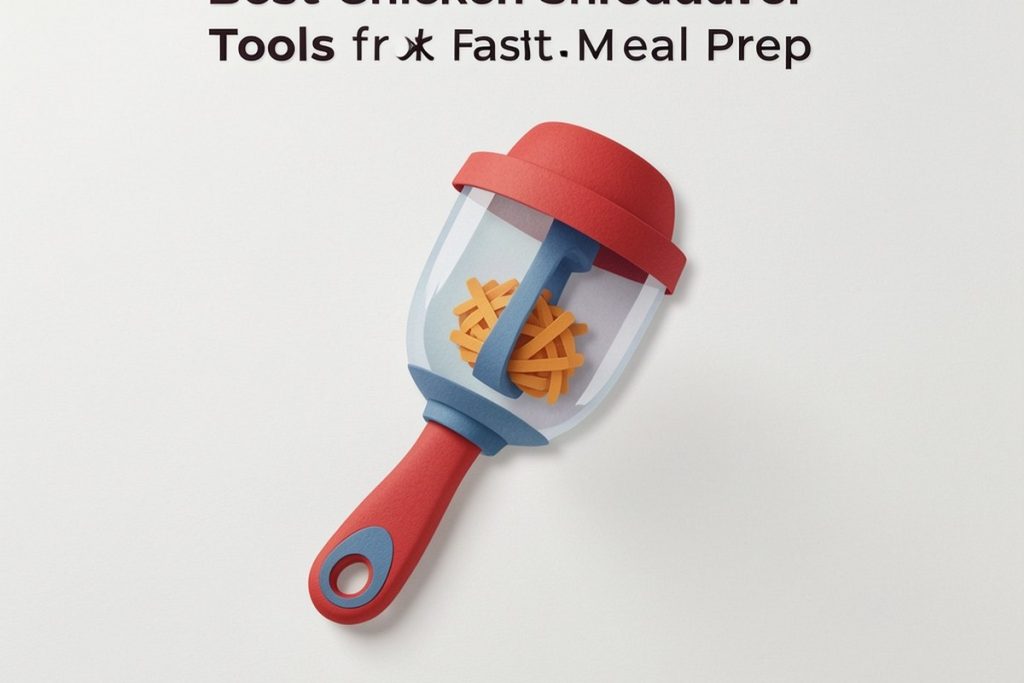
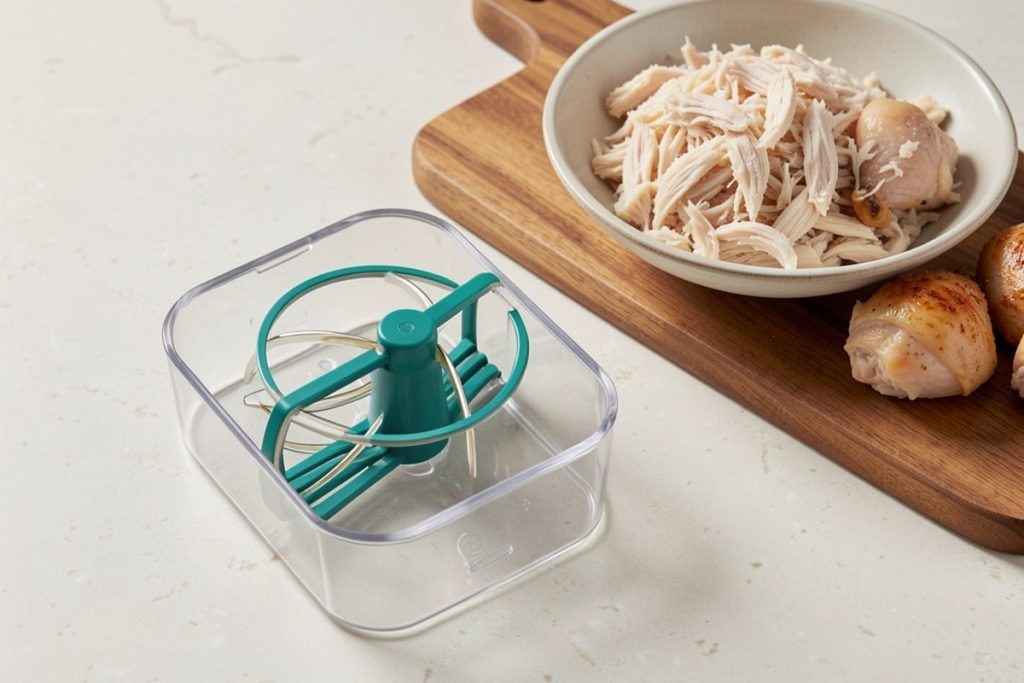
The NonSlip Chicken Shredder Tool Twist is a reasonable option for cooks who want a dedicated way to process cooked chicken without reaching for a stand mixer. Its catalog listing describes a clear meat-shredding design, a non-slip twist operation, visible shredding, and BPA-free construction. Those are listed product features rather than results from independent testing, so treat them as specifications to confirm on the product page before ordering.
Its clearest potential advantage is workflow. You can place manageable pieces inside, twist according to the product’s instructions, and transfer the strands to a bowl. A clear body may also make it easier to see whether larger pieces remain, while a non-slip design is intended to help keep the tool stable during use. Neither feature guarantees a particular speed or texture, and the result will depend on the chicken’s size, temperature, and doneness.
What to check before buying
A useful kitchen tool should reduce friction rather than create a new chore. Before choosing this type of product, look beyond the promise of fast shredding and check how it fits your actual routine.
- Capacity: Confirm how much cooked chicken the container can handle at once. A small tool may require several batches for a family meal.
- Opening and emptying: Look for a design that lets you remove shredded chicken without digging into narrow corners.
- Grip: A stable base or textured exterior matters if you plan to twist firm pieces of meat.
- Cleaning: Check whether the parts separate and whether the manufacturer gives clear washing instructions.
- Material details: Review the listed materials and care guidance, especially if the tool will be used frequently.
- Texture: Decide whether you want long, distinct strands or finer chicken for dips, fillings, and soups.
A simple meal-prep workflow
Start by cooking enough chicken for the meals you expect to eat within a few days. Verify doneness with a thermometer, then rest the chicken briefly. Divide large pieces into manageable portions and shred only what you need for the current batch. Keeping some pieces intact can be useful if you want flexibility for salads, bowls, or sliced sandwiches later.
Season after shredding when possible. This allows you to divide the chicken into different flavor profiles instead of committing the entire batch to one recipe. For example, one portion can receive salsa and cumin, another can be mixed with yogurt and herbs, and a third can be combined with broth for soup. Add moisture gradually so the chicken stays useful across several meals.
Store the finished chicken in shallow, covered containers and label the container with the preparation date using your normal kitchen system. Reheat only the amount you plan to eat. If the texture becomes dry, add a spoonful of broth or sauce while reheating rather than adding a large amount at the start.
When forks are still the better choice
A specialized shredder is not automatically an upgrade. Two forks are often better when you need a very specific strand size, are working with a single small piece, or do not want another item to wash. Forks also make it easy to inspect the chicken as you go and remove any tough connective tissue.
A stand mixer may be more practical for a large gathering or a weekly bulk-cooking routine. A food processor can work for recipes where finely chopped chicken is acceptable, but short pulses are important because continuous processing can quickly turn meat into a paste-like mixture.
The most useful purchase is therefore the one that matches your batch size and cleanup tolerance. For occasional cooking, keep the process simple. For recurring meal prep, a dedicated twist tool may be worthwhile if its capacity, grip, and cleaning design suit your kitchen.
Bottom line
The best way to shred chicken quickly for meal prep is the method you will use consistently without compromising texture or food safety. Forks remain the low-cost default, while a twist-style shredder can be a practical middle ground for regular small-to-medium batches. Evaluate the product’s stated features carefully, confirm its care instructions, and choose it because it solves a repeated problem—not simply because it is specialized.