
Quick answer
Choose wireless headphones by matching three priorities: how much outside noise you need to reduce, what sound profile you enjoy, and how you will wear them for long periods. A bass-forward model such as Sony ULT WEAR makes sense for listeners who want strong low-end impact, long advertised battery life, and everyday Bluetooth convenience. Choose another option if neutral sound, a lighter fit, or a different control system matters more.
Key takeaways
- Noise cancellation, sound signature, comfort, battery, and controls matter more than a long feature list.
- Bass-focused headphones can be enjoyable for electronic, hip-hop, pop, and movie listening, but may not suit people seeking a neutral presentation.
- Comfort is personal: check clamp, ear-cup space, heat, glasses compatibility, and weight before committing.
- Compare advertised battery figures under the same conditions; features such as noise cancellation and voice assistants can affect real-world use.
Start with the problem your headphones need to solve
“Best wireless headphones” is too broad to be a useful shopping question. The right choice for a commuter may be wrong for someone working in a quiet home office. A frequent traveler may prioritize noise reduction and battery life, while a music listener may care most about tuning, comfort, and equalizer controls.
Before comparing models, write down the situation that causes the most frustration. Is it engine noise, nearby conversations, a short battery, uncomfortable ear cushions, or sound that feels thin? A clear problem gives you a fair comparison. Otherwise, impressive specifications can distract you from the feature you will notice every day.
Compare wireless headphones on the same five criteria
A useful apples-to-apples comparison uses the same questions for every model. Score each category from one to five, then give extra weight to the two factors that matter most to you.
| Criterion | What to check | Who should prioritize it |
|---|---|---|
| Noise control | Whether the design includes active noise cancellation, an ambient mode, or only passive isolation | Commuters, travelers, and shared-office users |
| Sound profile | Bass emphasis, vocal clarity, detail, and available EQ adjustments | Listeners with specific music preferences |
| Comfort | Headband pressure, ear-cup depth, heat, glasses compatibility, and stability | Anyone wearing headphones for several hours |
| Battery and charging | Advertised playback time, charging connection, and whether wired listening is possible | Travelers and people who dislike frequent charging |
| Controls and extras | Physical buttons, app support, multipoint use, voice assistant access, and microphone needs | People switching between devices or taking calls |
This framework prevents a common mistake: treating every feature as equally valuable. If comfort is a deal-breaker, a small battery advantage should not outweigh an uncomfortable fit. If you mainly listen at home, paying more for maximum noise reduction may not be sensible.
Where a bass-focused model fits
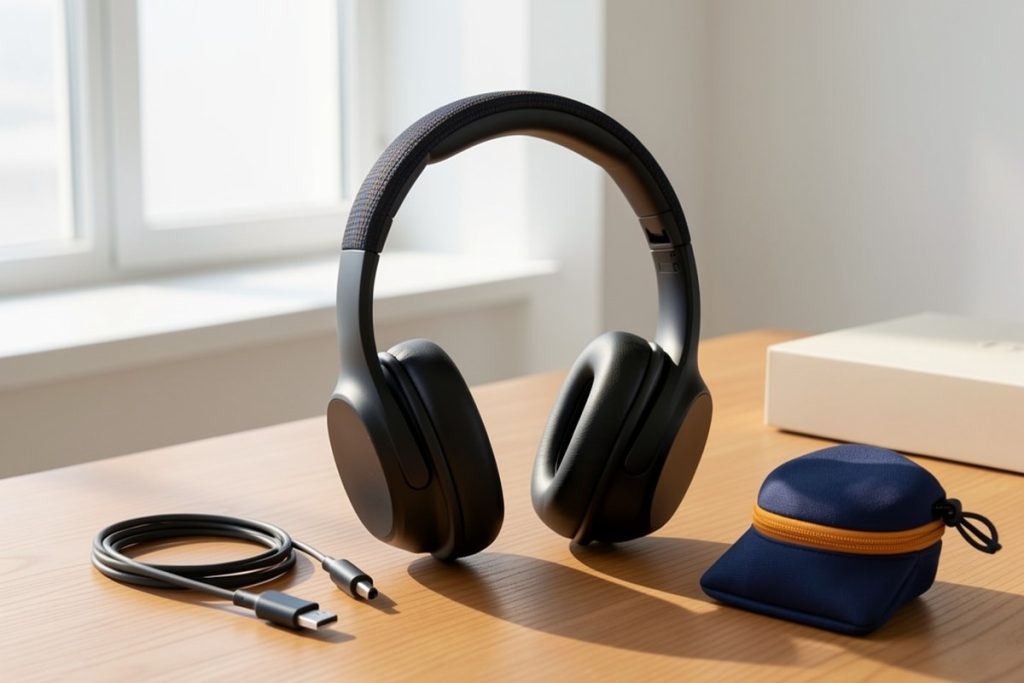
One example worth placing on a shortlist is Sony ULT WEAR Over-Ear Noise Canceling Wireless Headphones. Sony positions this model around powerful bass, comfortable over-ear use, noise cancellation, Bluetooth connectivity, Alexa support, and an advertised 30-hour battery. Those features make it a natural candidate for someone who wants an energetic everyday listening experience rather than a strictly neutral one.
The important distinction is that “more bass” is a preference, not an automatic measure of better sound. Extra low-end impact can make beats, bass guitar, action films, and electronic music feel more substantial. It can also be less appealing to listeners who want vocals and instruments presented with minimal coloration. If you are unsure, look for information about EQ adjustment and listen to familiar tracks before making a final decision.
Noise cancellation is similarly situational. It can be useful against steady background sounds such as transport or air-conditioning, but it should not be treated as a replacement for hearing protection in loud environments. The practical question is whether the headphones reduce enough distraction for your routine, not whether a product description uses the strongest possible wording.
When another pair may be the better choice
A different model may suit you better if your first priority is a neutral or highly adjustable sound profile. That is especially true if you mix audio, critically evaluate recordings, or regularly switch between spoken-word content and music. In those cases, clarity and balance may matter more than a bass-enhancement feature.
You may also prefer another pair if the physical fit is not right. Over-ear headphones vary in ear-cup opening, padding, headband pressure, and heat buildup. People who wear glasses can notice pressure around the frames, while smaller heads may find that some headbands do not adjust securely. These details rarely show up in a headline specification, yet they determine whether the headphones stay comfortable after the first hour.
Finally, compare the controls you will actually use. Physical buttons can be easier to operate without looking, while touch controls may feel cleaner but can be triggered accidentally by hair, hats, or movement. If you move between a phone and laptop, confirm whether the model supports the connection behavior you need rather than assuming every Bluetooth headphone handles multiple devices identically.
A five-minute buying checklist
- Identify your main noise problem: engines, voices, office activity, or general distraction.
- Choose a sound preference: bass-forward, balanced, or adjustable.
- Measure your likely wear time and prioritize padding, pressure, and ear-cup space accordingly.
- Compare battery claims using the manufacturer’s stated conditions, not just the largest number.
- Confirm compatibility with your phone, computer, preferred assistant, and any wired setup you require.
- Check the return policy so fit and comfort can be evaluated honestly at home.
How to make the final comparison fair
Compare products at similar prices and in the same condition. Use the same playlist, listening volume, devices, and environment. Test a steady background sound for noise cancellation, then try speech, acoustic music, bass-heavy tracks, podcasts, and a film scene. Do not judge only during the first five minutes; comfort problems often appear later.
Also separate manufacturer claims from your own requirements. A listed battery figure is useful for comparing models, but your playback volume, Bluetooth behavior, calls, and noise-control settings can change results. Bluetooth itself describes a family of wireless technologies rather than a guarantee of identical performance across every device, so compatibility and connection features deserve their own check.
The best purchase is not necessarily the model with the most features. It is the one that solves your loudest everyday problem without creating a new one. For bass-oriented listening and general wireless use, the Sony option is worth considering. For neutral sound, a particular fit, or a specialized workflow, a competing model may be the more honest match.
Last reviewed: 2026-08-24