
Quick answer
Store a solar generator indoors in a cool, dry, ventilated area away from direct sunlight, moisture, heat sources, and combustible clutter. Before putting it away, inspect the battery, cables, outlets, and panels for damage, then follow the manufacturer’s charging and storage instructions. Check it periodically so the unit is ready without creating avoidable battery or fire hazards.
Key takeaways
- A dry, temperature-stable storage location is safer than a hot garage, damp basement, or outdoor shed.
- Inspect the unit and cables before storage, and stop using any battery that is swollen, cracked, leaking, unusually hot, or damaged.
- Follow the manufacturer’s instructions for storage charge level and maintenance charging rather than guessing.
- Keep panels, cables, and adapters together, but leave ventilation openings unobstructed.
- Test the setup periodically with a small, known load instead of waiting for the next outage.
Why solar generator storage matters
A solar generator is most useful when it is ready before the power goes out. Long-term storage, however, is not simply a matter of placing the unit in a corner and forgetting it. Batteries can lose charge over time, cables can deteriorate, and dust or moisture can make a previously reliable setup harder to use.
Storage also affects safety. Lithium-ion batteries should be protected from extreme heat, physical damage, water, and conditions that could cause overheating. The U.S. Fire Administration advises using lithium-ion products according to the manufacturer’s instructions and watching for warning signs such as swelling, odor, leaking, or excessive heat.
The goal is a simple balance: protect the battery from harsh conditions while keeping the equipment accessible enough to inspect and use. A solar generator hidden behind boxes in a hot shed may be technically stored, but it is not well prepared for an emergency.
Choose the right storage location
For most households, an interior utility room, pantry, closet, or dry section of a garage is more suitable than an outdoor location. Choose a place with stable temperatures and enough clearance around the generator for air circulation. Keep it away from radiators, furnaces, fireplaces, water heaters, direct sunlight, and areas where it could be struck or knocked over.
Avoid storing the unit on a damp concrete floor. Place it on a stable shelf or raised surface that can support its weight, while ensuring it cannot fall. Do not cover ventilation openings with clothing, blankets, plastic sheeting, or storage bins. Ventilation matters when the unit is operating or charging.
Do not store a battery-powered device beside gasoline, paint thinner, propane cylinders, paper piles, or other easily ignited materials. The generator does not need to be isolated in a special room, but it should not be buried in combustible clutter.
Prepare the generator before putting it away
Start with a visual inspection. Look for cracks, dents, melted plastic, corrosion, loose connectors, frayed cables, or signs of moisture. Check the solar panels for broken glass or damaged wiring. If the battery casing is swollen, leaking, unusually hot, or producing an unusual smell, move people away from the area and follow local emergency or manufacturer guidance. Do not open the battery or attempt a DIY repair.
Clean dust from exterior surfaces with a dry or slightly damp cloth, following the product manual. Keep liquids away from ports and ventilation openings. Make sure cables are dry before connecting them, and coil them loosely rather than bending them sharply around a plug or connector.
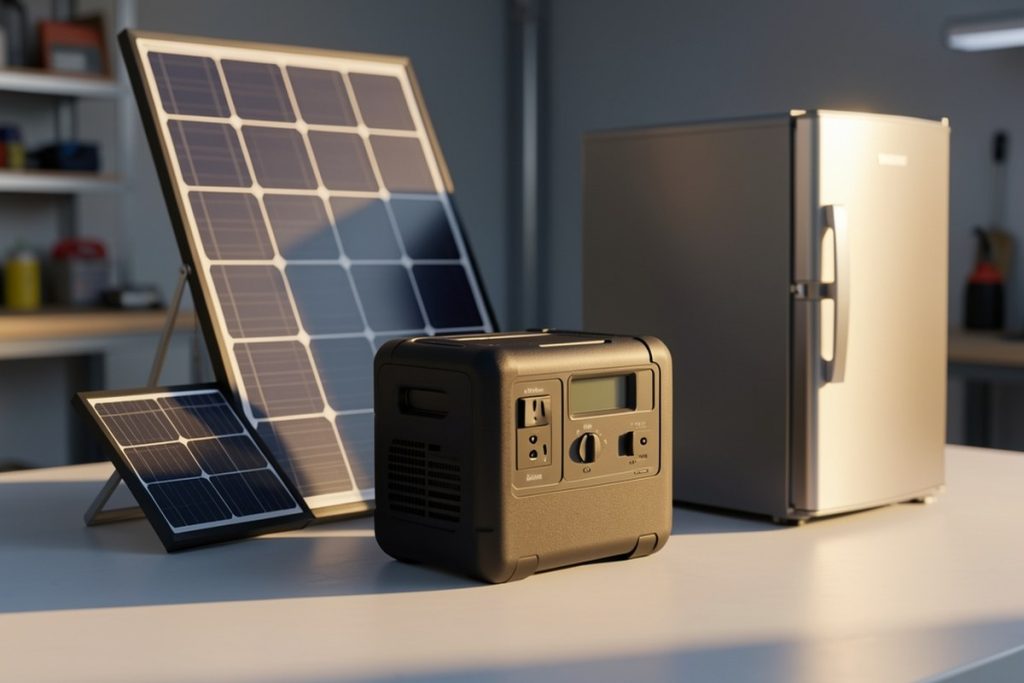
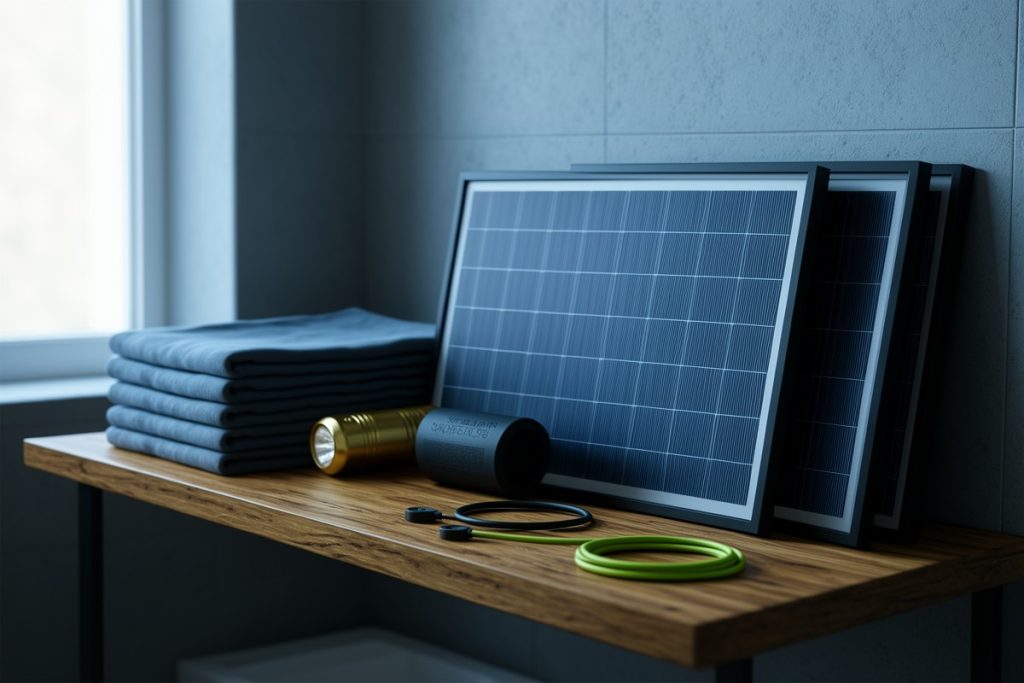
Store the generator and its accessories as a system. Keep the solar panels, charging cables, adapters, and any required connection pieces together in a clearly designated location. This saves time during an outage and reduces the chance that a compatible cable is replaced with an unsuitable one.
Follow the correct battery storage routine
There is no universal storage percentage that applies to every solar generator. Battery chemistry, battery-management software, and the manufacturer’s maintenance instructions all matter. Use the manual for the specific model to determine whether the unit should be left partially charged, periodically topped up, or connected to a maintenance routine.
For the Jackery HomePower 3000 and two 200W solar panels, the product listing identifies a 3,072Wh LFP battery and a 3,600W AC output with 7,200W surge capacity: Jackery HomePower 3000 solar generator. Those specifications may suit someone planning for a larger reserve, but they do not remove the need to follow the manual, check the unit’s physical dimensions, and confirm that its output matches the appliances you intend to use. A larger battery can also be heavier and less convenient to relocate.
Do not leave any battery charging unattended unless the manufacturer specifically supports that arrangement and the location is suitable. Use the supplied or approved charger and place the unit on a hard, stable surface while charging. If charging produces excessive heat, unusual odor, smoke, or other abnormal behavior, disconnect power only if it is safe to do so and seek guidance.
Use this pre-storage checklist
| Check | What good looks like |
|---|---|
| Location | Cool, dry, stable, ventilated, and away from heat and flammable clutter |
| Battery housing | No swelling, cracks, leaks, odor, or unexplained heat |
| Cables and ports | Dry, intact, clean, and free from fraying or corrosion |
| Charge level | Set according to the model’s storage instructions |
| Accessories | Panels, cables, adapters, and manual stored together |
| Access | Easy to reach without lifting boxes or blocking exits |
Inspect it on a regular schedule
Pick a recurring reminder, such as the first weekend of every season. Check the battery condition, charge indicator, cables, and storage area. Look for pests, moisture, dust buildup, or anything placed too close to ventilation openings.
A short functional check can reveal problems before an emergency. If the manual permits it, connect a small, familiar load for a limited period and confirm that the generator starts, delivers power, and shuts down normally. You do not need to run the battery flat. The purpose is to identify a dead cable, failed outlet, damaged panel, or unexpected error while you still have time to replace or repair equipment safely.
Keep a written emergency plan nearby, but do not rely on the generator to power every circuit in the house. List the specific essentials you intend to operate, such as a refrigerator, internet equipment, medical device, or a few lights. Confirm each device’s running and startup requirements, and never connect the generator to home wiring through an improvised backfeed arrangement. A qualified electrician should handle any permanent transfer equipment.
Know when storage has become unsafe
Remove a solar generator from normal use if it shows swelling, smoke, leaking, severe corrosion, exposed wiring, repeated overheating, or physical damage. Do not put a damaged lithium-ion battery in household trash or a regular recycling bin. The Environmental Protection Agency recommends checking local battery-recycling or household hazardous-waste options, because damaged batteries require special handling.
If a unit has been exposed to flooding or significant water, do not charge it simply because the exterior appears dry. Contact the manufacturer or a qualified service provider for next steps. Safety is more important than recovering one emergency-use device.
A small routine creates a reliable reserve
The best storage plan is uncomplicated: choose a suitable room, protect the equipment from heat and moisture, follow the model-specific charging instructions, and inspect everything on a schedule. This approach helps preserve the generator’s usefulness without treating it as maintenance-free.
Solar equipment is an investment in resilience, but resilience depends on preparation. A few minutes of seasonal checking can prevent the most frustrating outcome: discovering during an outage that the battery is empty, the panel cable is missing, or the unit has been stored in conditions that shorten its life.
Last reviewed: 2026-08-28
Sources
- Energy Storage — U.S. Department of Energy Office of Electricity
- Used Lithium-Ion Batteries — U.S. Environmental Protection Agency