
Quick answer
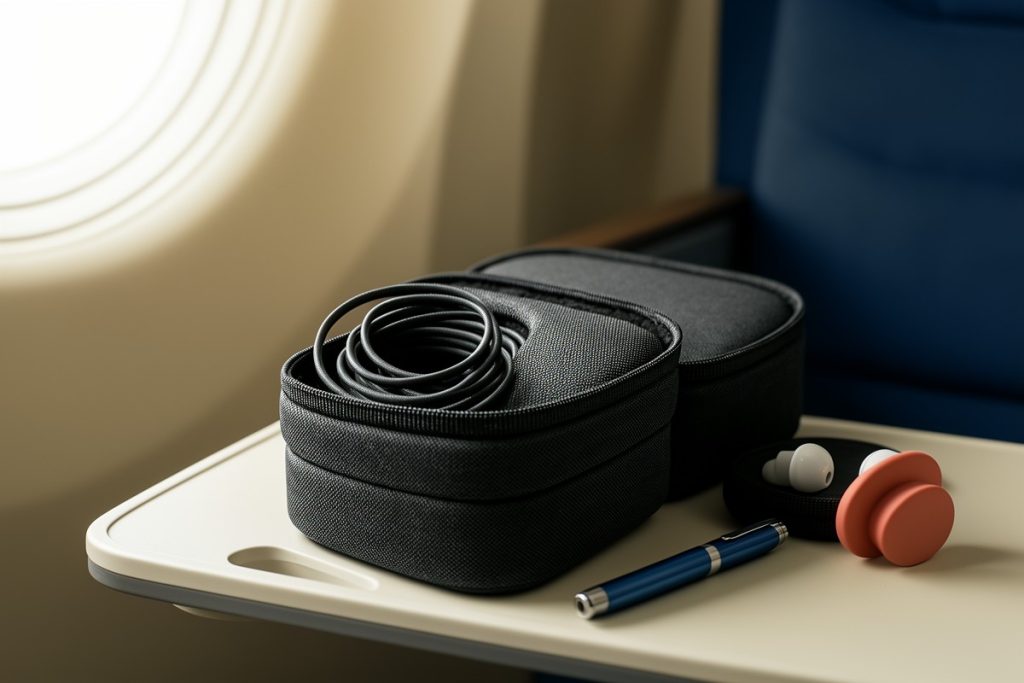
Pack a small, reachable flight kit for items you need during the first hour: charging accessories, earbuds, medication, tissues, and a pen. Keep your laptop, passport, valuables, and work files in your personal item. A seat-back organizer can reduce rummaging, but it must fit your airline’s rules and never obstruct safety equipment, another passenger, or crew instructions.
Key takeaways
- Design your flight kit around access, not maximum capacity.
- Keep laptops, documents, medication, and valuables under your direct control.
- Download essential work before boarding because inflight connectivity is not guaranteed.
- Check current airline and aviation rules before packing batteries or attaching anything to a seat or tray.
- Choose an organizer only if it is more convenient than a simple pouch you already own.
By Casey Blake, Realistic Remote Work Advisor
Last reviewed: 2026-09-04
Why remote workers need a different flight-packing system
A typical vacation packing list is built around the destination. A remote worker’s flight kit has to handle a series of transitions: leaving home, passing security, waiting at the gate, boarding, settling into a seat, and arriving ready for the next task.
Those transitions create predictable problems. Charging cables end up at the bottom of a carry-on. Earbuds disappear into a jacket pocket. A pen is nowhere to be found when a quick note would help. At landing, loose accessories get left behind because they were spread across the tray table and seat pocket.
The solution is not to carry more gear. It is to separate urgent items from everything else. Build one compact kit for the first hour of the flight, then keep less essential equipment in your main personal item or carry-on. This makes the kit easier to retrieve and less likely to become a second, disorganized suitcase.
What belongs in a reachable flight kit
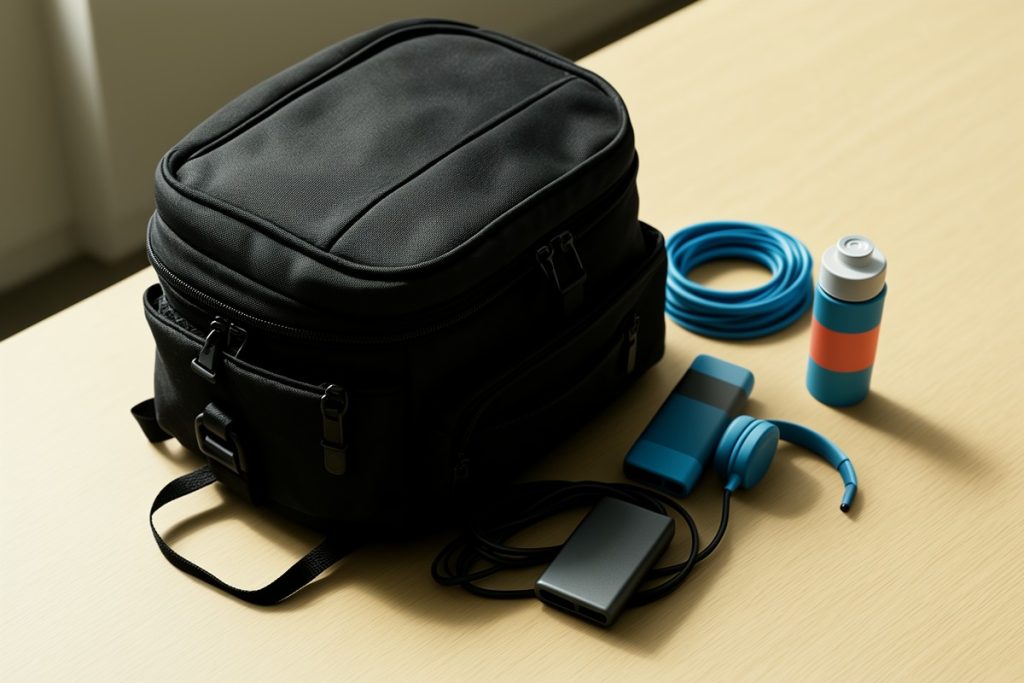
Start with the items you are most likely to need without opening your entire bag. For many digital nomads, that means a charging cable, earbuds, a pen, tissues, an eye mask, and a small snack. Add medication only if it can remain secure and accessible according to your normal travel routine.
A short task list can also be useful, but do not assume the airplane will be a productive office. Limited space, noise, interruptions, and inconsistent connectivity make short, self-contained tasks more realistic than meetings or concentrated creative work.
Before leaving reliable internet, download the files you may need. This could include a presentation, itinerary, meeting notes, or reference material. Protect confidential work appropriately, especially if you expect to use shared spaces or public Wi-Fi after landing.
Keep important items in your personal item
A seat-area organizer is for convenience, not security. Your laptop, passport or other travel documents, wallet, medication, and valuable equipment should stay in the personal item that remains under your control. Do not leave irreplaceable items in a seat pocket or attached pouch when you step away.
Keeping the laptop in your personal item also gives you more flexibility if the organizer has to be removed or stowed. Check your airline’s current personal-item dimensions and cabin-bag allowance before traveling. Policies vary, and a well-packed accessory does not make an oversized bag compliant.
| Storage area | What to keep there | Reason |
|---|---|---|
| Personal item | Laptop, travel documents, medication, wallet, valuables | Stays with you and is easier to secure |
| Reachable flight kit | Earbuds, cable, pen, tissues, eye mask, small snack | Useful without unpacking the main bag |
| Main carry-on | Clothing, toiletries, backup accessories | Less urgent during the flight |
When a seat-back organizer makes sense
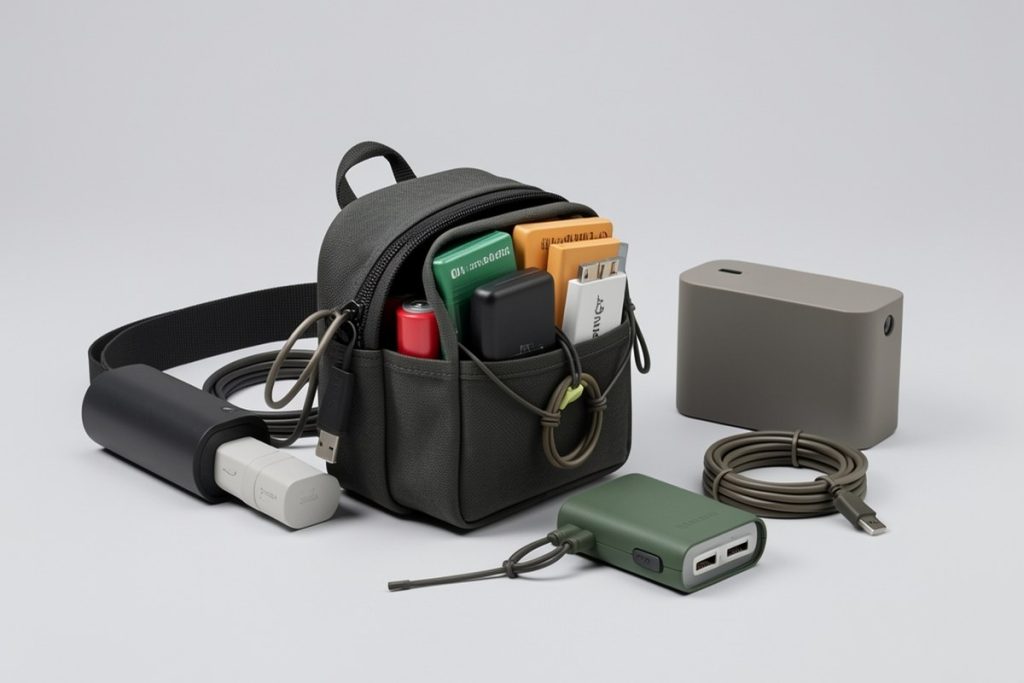
An airplane organizer is most useful when your problem is small-item sprawl rather than a lack of luggage space. The Airplane Pocket Organizer is described as a tray-table cover and seat-back organizer bag that can attach to luggage. That combination may appeal to travelers who want one compact place for flight accessories while moving between the airport and the cabin.
Keep the recommendation realistic. This article is not based on hands-on testing, and the product’s suitability will depend on its current dimensions, materials, attachment method, and the aircraft seat in front of you. Check the listing details before buying, particularly if you travel with a tightly packed personal item or regularly fly different aircraft types.
A basic zippered pouch may be the better choice if you want the lightest and simplest option. An attached organizer offers more immediate access only when it can be used without blocking safety information, interfering with another passenger, or creating a loose item that cabin crew asks you to remove. Follow crew instructions during boarding, taxi, takeoff, landing, and any other part of the flight.
Pack around realistic inflight work
Remote work on a flight works best when you decide in advance what does not require a stable connection, a large desk, or a quiet room. Reviewing downloaded notes, outlining an article, sorting a task list, and drafting ideas may be practical. Video meetings, large file transfers, and work requiring constant access to cloud tools are less dependable.
- Before leaving: download essential files and charge your devices.
- At the gate: confirm that your laptop, charger, and documents are in the personal item.
- After boarding: retrieve only the small items needed immediately.
- During the flight: keep valuables secured and remain attentive to announcements.
- Before landing: return every accessory to the same compartment before standing up.
Power banks and spare lithium batteries deserve particular attention. The Federal Aviation Administration provides specific guidance for packing batteries, and airlines may impose additional requirements. Review the current rules before each trip rather than relying on memory from a previous flight.
A five-minute preboarding checklist
- Is the laptop and its charger in your personal item?
- Are medication, identity documents, and valuables reachable and secure?
- Are loose cables bundled rather than floating through the carry-on?
- Can the organizer fit inside your luggage if it must be removed?
- Have you downloaded the work you may need offline?
- Have you checked current airline and aviation rules for batteries and cabin baggage?
At your destination, use the same reset routine. Put cables, earbuds, and other small items back into their compartments before you leave the seat. That simple habit reduces the chance of losing something and makes the next leg of the trip easier.
The goal is a calmer travel transition
Good digital nomad gear will not turn an economy seat into a private office. It can, however, remove a few recurring sources of friction: rummaging for a cable, balancing loose items, and repacking in a hurry. Keep the kit limited, protect the items that matter, and treat the aircraft’s rules as the final authority.
For some travelers, a dedicated seat-area organizer will be a convenient upgrade. For others, a lightweight pouch already provides everything needed. The right choice is the one that makes your routine more predictable without adding bulk, safety concerns, or another item to remember.