Quick answer
To start crochet, use smooth medium-weight yarn, a compatible 5 mm hook, scissors, and a yarn needle. Learn a slip knot, chain, and single crochet, then make a small square by repeating rows while counting stitches. Keep your tension relaxed, fix errors early, and choose a project that practices one stitch instead of several unfamiliar techniques.
Key takeaways
- Medium-weight yarn and a 5 mm hook are forgiving choices for most beginners.
- Learn the slip knot, chain, and single crochet before attempting a complicated pattern.
- Count stitches at the end of every row to prevent uneven edges.
- A small square is useful practice because it teaches tension, turning, and stitch control.
Gather a few beginner-friendly supplies
You do not need a large craft kit to begin. Start with a smooth, light-colored yarn that lets you see individual stitches clearly. Medium-weight yarn, commonly called category 4 worsted or aran yarn, is usually easier to handle than very thin thread or bulky novelty yarn.
Pair it with a regular crochet hook around 5 mm. Yarn labels often suggest a hook range, but those suggestions are starting points rather than strict rules. The Craft Yarn Council describes its yarn and hook ranges as guidelines, so follow the pattern’s instructions when a project gives a specific recommendation.
- One ball of smooth, medium-weight yarn
- A 5 mm crochet hook, or the size suggested on the yarn label
- Small scissors
- A yarn needle for weaving in ends
- A removable stitch marker, safety pin, or scrap of contrasting yarn
Choose a pale or mid-tone color for your first project. Very dark yarn, fuzzy yarn, and multicolored yarn can hide the loops you need to identify while learning.
Learn the three movements that unlock most beginner projects
Many simple crochet patterns are built from a small group of actions. You do not need to memorize every abbreviation before making your first item.
- Slip knot: Make an adjustable loop on the hook. It should move slightly along the hook without tightening into a hard knot.
- Chain: Yarn over and pull the yarn through the loop on your hook. Repeat to create a foundation chain.
- Single crochet: Insert the hook into the indicated stitch, yarn over, pull up a loop, yarn over again, and pull through both loops on the hook.
The most common early mistake is holding the yarn and hook too tightly. Your loops should slide over the hook without force. If the hook keeps snagging or you cannot insert it into the next stitch, loosen your grip before changing tools.
Choose a first project that teaches one skill at a time
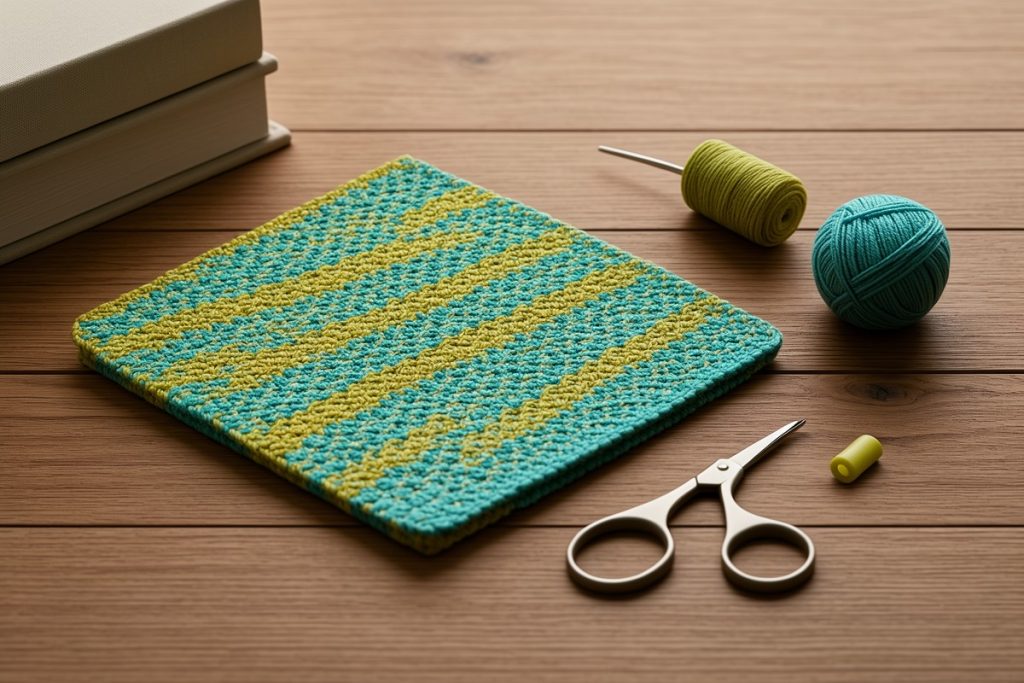
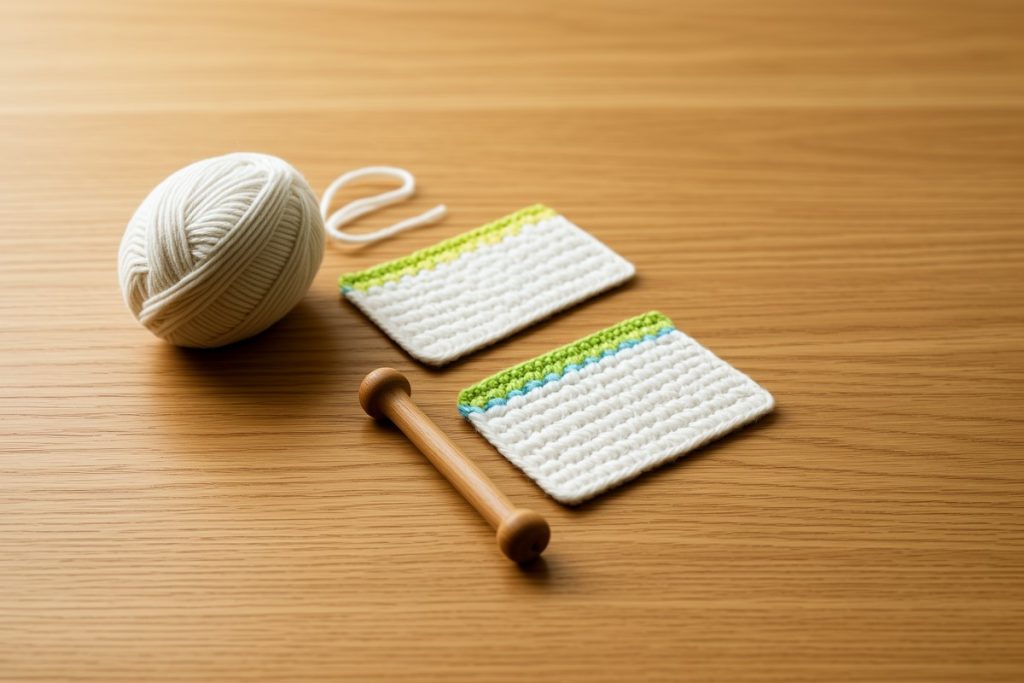
A small square made with single crochet is a better first project than a complicated hat or fitted garment. It gives you repeated practice without requiring sizing, shaping, color changes, or advanced joining.
| Project | What you practice | Best for |
|---|---|---|
| Small practice square | Chain, single crochet, turning, and tension | Learning the basic motion |
| Simple dishcloth | Keeping rows even and finishing edges | Making a useful first item |
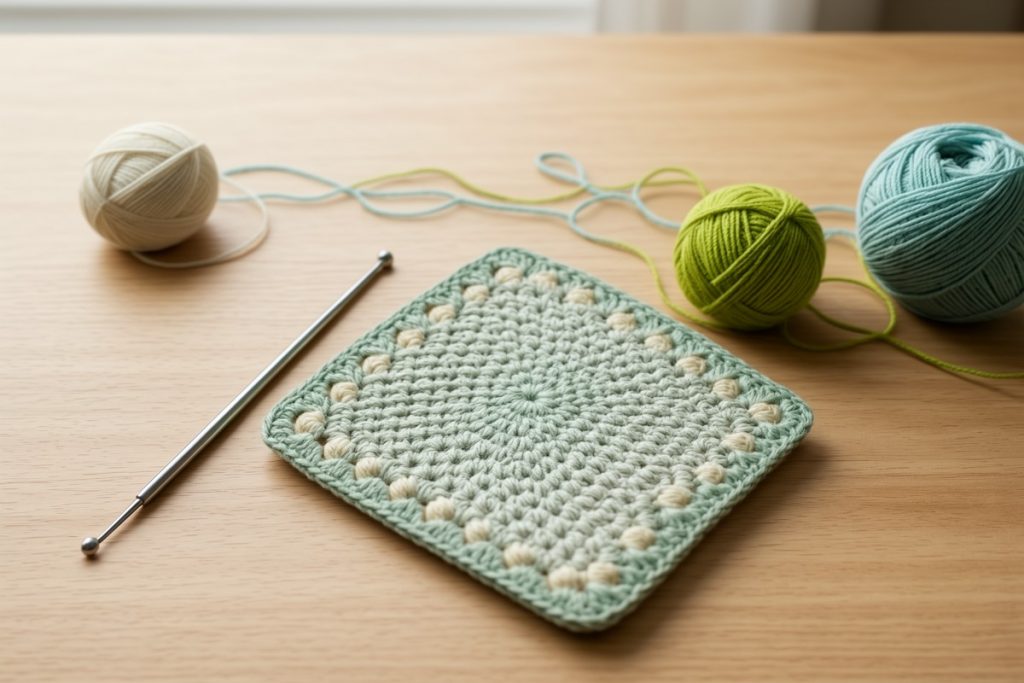
| Granny square | Working in rounds and changing direction | After you are comfortable reading a pattern |
Do not judge your progress by speed. A square with uneven edges still teaches you something valuable: where your tension changes, where a stitch was missed, and how the fabric responds to your grip.
Make a simple single-crochet square
This beginner exercise uses standard U.S. crochet terms. It is intentionally small so you can finish it before frustration sets in.
- Make a slip knot and chain 15 stitches.
- Insert your hook into the second chain from the hook and make one single crochet. Continue across the chain. You should have 14 single crochet stitches.
- Chain one, then turn your work.
- Make one single crochet in each stitch across the row. Count 14 stitches before turning.
- Repeat the chain-one, turn, and single-crochet row until the piece is roughly as tall as it is wide.
- Cut the yarn, leaving a tail of several inches. Pull the tail through the final loop and weave it through the fabric with a yarn needle.
The chain-one turning chain does not count as a stitch in this exercise. At the end of every row, look for the first and last stitch before beginning the next row. Those edge stitches are easy to miss, and losing one repeatedly will make the square become narrower.
Fix the four problems beginners see most often
Your edges slope inward: You are probably skipping the first or last stitch in some rows. Count the stitches after each row and mark the first stitch if it is difficult to see.
The fabric feels stiff: Relax your hands and try making the loops slightly larger. A hook one size larger can also create a looser fabric, but check that your yarn remains easy to control.
The fabric has large gaps: Your loops may be too loose, or you may be pulling the working yarn farther than necessary. Aim for consistent loops rather than trying to make every stitch tight.
You cannot find where to insert the hook: Pause and examine the top edge. Each stitch generally looks like a small V. Insert the hook under both strands of that V unless the pattern tells you to work elsewhere.
Use a pattern or book without becoming dependent on it
A good beginner resource should show the order of operations, explain unfamiliar terms, and provide projects that increase in difficulty gradually. Free tutorials can be enough for learning one stitch, but a structured guide can be useful when you want several lessons in one place.
Crochet Basics Made Simple: A Beginner’s Guide to Learn Crochet and Creating Easy Projects from Day One may suit readers who prefer a book-based sequence of beginner instructions and projects. It is not essential for learning the basics, and you should check the listing for the current format and contents before deciding whether it matches your preferred learning style.
Whichever resource you use, compare its terminology with the pattern itself. Crochet terms can differ between U.S. and U.K. conventions, especially for names such as “single crochet.” Follow one tutorial or book consistently until you understand which terms it uses.
A practical first-session checklist
- Choose smooth, light-colored, medium-weight yarn.
- Check the yarn label for a suggested hook size.
- Practice the slip knot and chain before starting the project.
- Make a short row, then count the stitches.
- Stop and correct a missed stitch instead of building several rows on top of it.
- Write down the hook size and yarn type if you plan to repeat the project.
Your first goal is not a perfect square. It is learning to recognize a stitch, maintain a comfortable rhythm, and recover when something looks wrong. Once those skills feel familiar, you can move to a dishcloth, scarf, granny square, or another small project with much less guesswork.
Last reviewed: 2026-09-18