
Quick answer
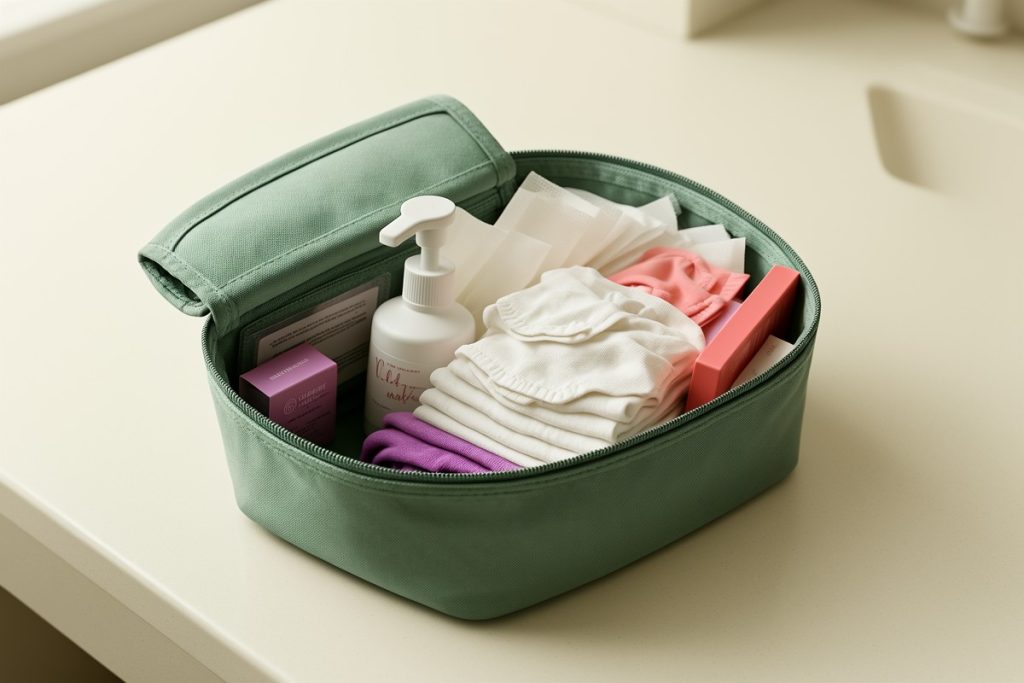
A useful women’s restroom emergency kit should cover the problems you are most likely to face: an unexpected period, a leak, missing soap or tissues, and a need to freshen up privately. Pack familiar period products, tissues, hand sanitizer, unscented wipes, spare underwear, and any personal essentials you already use safely. Keep everything in a compact washable pouch and refresh it monthly.
Key takeaways
- Pack products you already know work for you instead of filling a pouch with every possible option.
- Include spare underwear, tissues, and hand sanitizer because they solve common emergencies beyond menstruation.
- Use wipes for external cleanup or surfaces, never as a substitute for handwashing or a flushing instruction.
- Review the pouch monthly and store medication according to its label and safety instructions.
Start with the essentials you will actually use
The best emergency kit is not the biggest one. It is the small pouch you remember to carry and can open quickly when something goes wrong. Your ideal contents will depend on your cycle, commute, work environment, health needs, and access to public restrooms, but a practical baseline is easy to build.
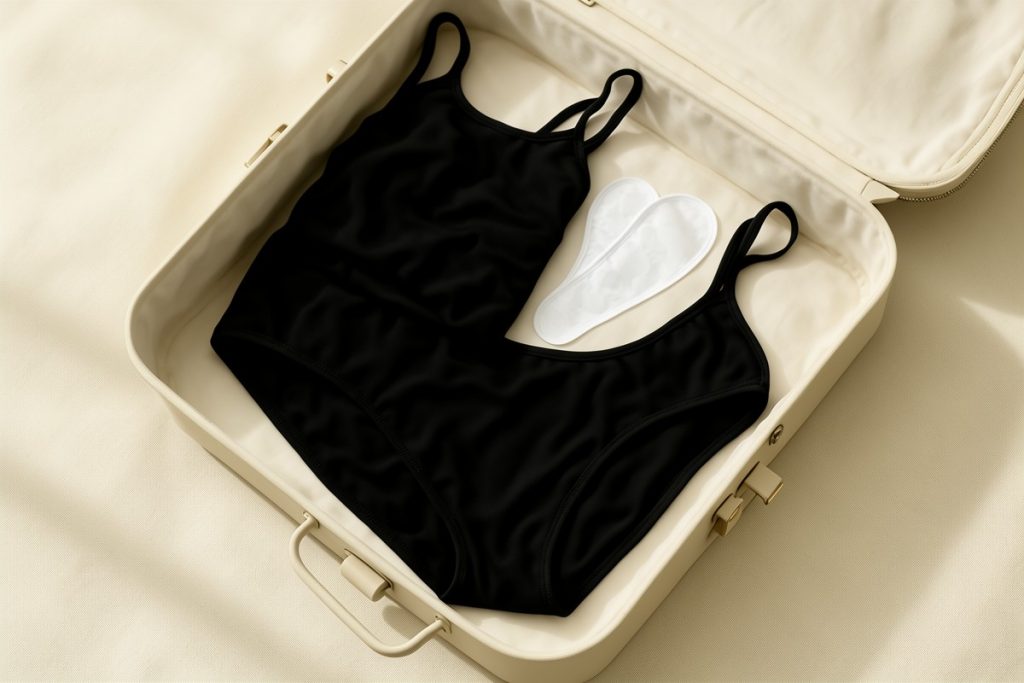
Period products: Carry the products you already prefer, with two or three extras. If you use more than one type during your cycle, pack a small combination rather than assuming one product will suit every day. Follow the directions on the package, including any guidance about how long a product should be worn.
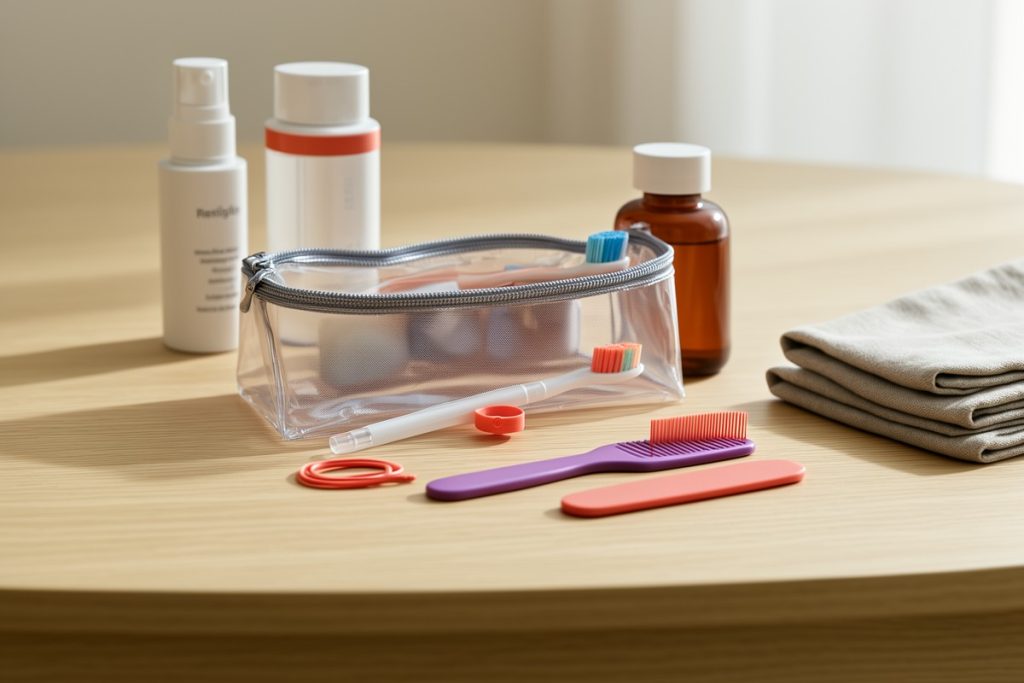
Tissues: A travel packet is useful when a dispenser is empty, a spill needs attention, or you want extra privacy while drying a surface. Store the packet in an inner pocket so it remains clean and dry.
Hand sanitizer: A small bottle is a backup for situations when soap and running water are unavailable. It should not replace handwashing when a sink is accessible. The CDC recommends using hand sanitizer containing at least 60% alcohol when soap and water are not available.
Unscented wipes: These can help with external cleanup or a small surface. They are not intended for internal vaginal use, and most should go in a trash bin rather than the toilet. Unscented products are generally a more flexible choice for people who find fragrance irritating.
Spare underwear: One clean pair may be the most valuable item in the pouch after an unexpected leak. Fold it into a small washable bag or separate compartment so it stays apart from other supplies.
Personal essentials: Add items you already know how to use safely, such as a prescribed rescue medication or a personal care product. Avoid placing loose pills in the pouch, and do not add medication simply because it seems useful for a hypothetical situation.
A simple restroom emergency kit checklist
| Item | What it helps with | Practical note |
|---|---|---|
| Period products | An early, unexpected, or heavier-than-usual period | Carry familiar products and follow package directions |
| Tissues | Empty dispensers, spills, and extra drying | Protect them from moisture |
| Hand sanitizer | Backup hand hygiene | Choose at least 60% alcohol when soap is unavailable |
| Unscented wipes | External cleanup or a small surface | Dispose of them in the bin unless instructions say otherwise |
| Spare underwear | A leak or unexpected clothing change | Store in a separate washable bag |
| Personal essentials | Your specific health or comfort needs | Follow storage and use instructions |
Build the kit around your daily routine
Think about where an emergency is most likely to happen. If you commute by train or bus, a slim pouch in your everyday bag may be more useful than a larger kit left at home. If you spend long days at work, keep a second set of basics in a desk drawer if your workplace storage is private and secure. If you drive frequently, a spare kit in the car can help, but avoid storing heat-sensitive products or medication in a vehicle without checking their storage requirements.
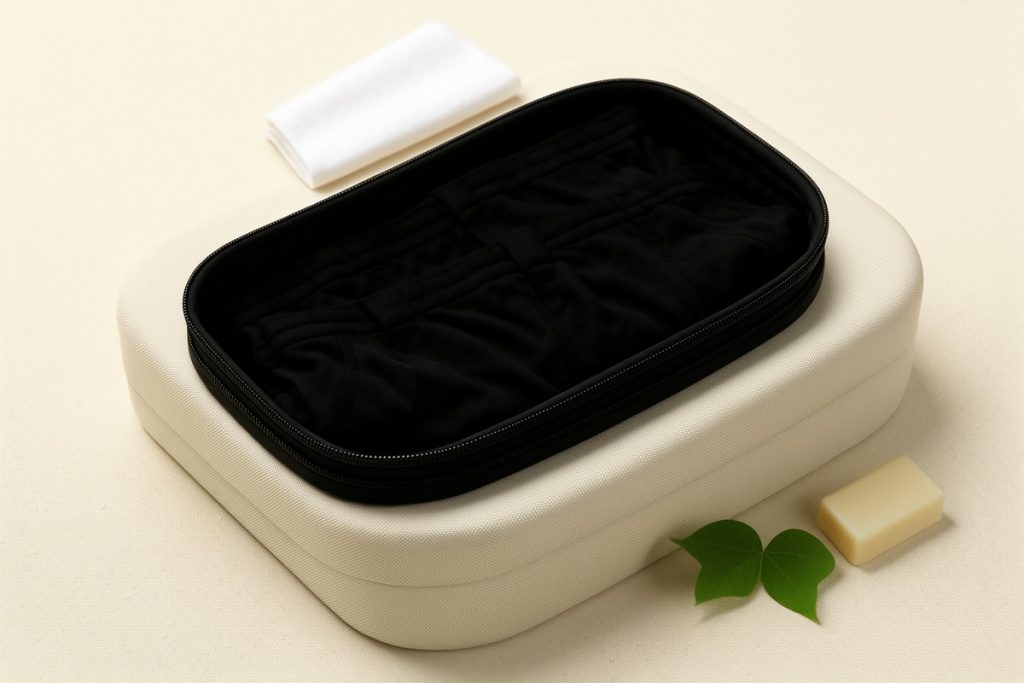
Size matters because convenience determines whether you carry the kit consistently. A neutral, washable pouch with one or two compartments is usually enough. You should be able to find period products without emptying your entire bag, while clean items should stay separate from used tissues or clothing.
Set a monthly reset date. Count your supplies, inspect the pouch for moisture, remove anything damaged, and replace products you have used. Check medication expiry dates separately and follow the original label for storage. This small habit prevents the most frustrating version of preparedness: opening the kit during an emergency and finding that it is empty.
When a ready-made kit may be worth considering
Assembling a kit yourself gives you complete control over brands, sizes, materials, and personal preferences. A ready-made option can be useful if you want a starting point or do not want to shop for each basic item separately. The Restroom Kit may be worth comparing with your checklist for that reason.
Before choosing it, review the current product listing and compare the included items with what you actually need. Consider whether you would use every item, whether you would still need to add period products or spare underwear, and whether the pouch fits your everyday bag. A preassembled kit is a convenience, not a guarantee that every product will suit your skin, cycle, or routine.
Use the kit safely in a shared restroom
A simple sequence keeps the process practical: prepare, use, dispose, and wash. Keep clean supplies off the floor and away from visibly wet or dirty surfaces. If you need to place your bag down, use a closed compartment or another clean, stable spot whenever possible.
Wrap disposable period products before placing them in a restroom bin. Do not flush pads, wrappers, or wipes simply because the packaging looks small. Plumbing systems differ, and ordinary wipes can create problems even when they feel lightweight. Follow the facility’s disposal instructions and use the bin provided.
Wash your hands with soap and clean running water when those are available. The CDC recommends scrubbing all hand surfaces for at least 20 seconds, then rinsing and drying. When a sink is not available, use hand sanitizer according to its label. Cleaning every object in the stall is less important than performing proper hand hygiene before leaving.
Keep personal care comfortable and discreet
You do not need scented sprays, harsh cleaners, or a large collection of products to be prepared. Fragrance and unnecessary ingredients can make a personal-care pouch less comfortable for sensitive skin. Choose items you have already tolerated, and avoid experimenting with a new product for the first time during a stressful moment.
If a product causes burning, a rash, unusual discomfort, or another concerning reaction, stop using it and seek appropriate medical advice. A kit can help with an ordinary inconvenience, but it cannot address severe pain, fainting, unusually heavy bleeding, or symptoms that feel different from your normal period. Those situations deserve medical attention rather than more supplies.
The most useful restroom emergency kit is small, familiar, and maintained. Start with the basics, tailor the contents to your routine, and test the arrangement during an ordinary week. When the pouch is easy to carry and easy to trust, it quietly removes one more source of stress from busy days.
Sources
Last reviewed: 2026-09-18