
Quick answer
A useful travel period emergency kit should cover four possibilities: your period starts unexpectedly, your flow is heavier than planned, you need to change underwear, or bathroom access is limited. Pack your preferred menstrual products, spare underwear, wipes or tissues, hand sanitizer, and a sealable bag. Keep the kit in your personal item so it stays accessible during transit.
Key takeaways
- Pack for leaks and delays, not only for your expected cycle dates.
- Choose products you already know how to use and wear comfortably.
- Keep spare underwear and used-item storage separate from clean supplies.
- Place the kit in your carry-on or personal bag rather than checked luggage.
Why a small period kit makes travel easier
Travel has a way of turning a manageable inconvenience into a stressful scramble. A delayed flight, an unfamiliar bathroom, or a period arriving several days early can leave you searching through a crowded airport shop for products that may not suit your body.
The goal is not to pack an entire bathroom. It is to create one compact backup system that gives you options without adding much weight. A thoughtfully packed kit can also help you feel more comfortable on road trips, during conferences, on overnight trains, or whenever you will be away from home for several hours.
Start with your usual menstrual product. Familiarity matters more than novelty when you are tired, traveling, or dealing with a leak. If you use pads, tampons, menstrual discs, or period underwear, bring the products you have already used successfully. A trip is not the ideal time to test a new fit or absorbency.
Build the kit around four common travel problems
1. Your period starts unexpectedly
Carry enough supplies for the first day, plus a few extras. The exact amount depends on your flow and how long you will be away from reliable stores, but a small reserve is more useful than packing only one product. If you use multiple product types, include the one you reach for first and one backup option.
2. You experience a leak
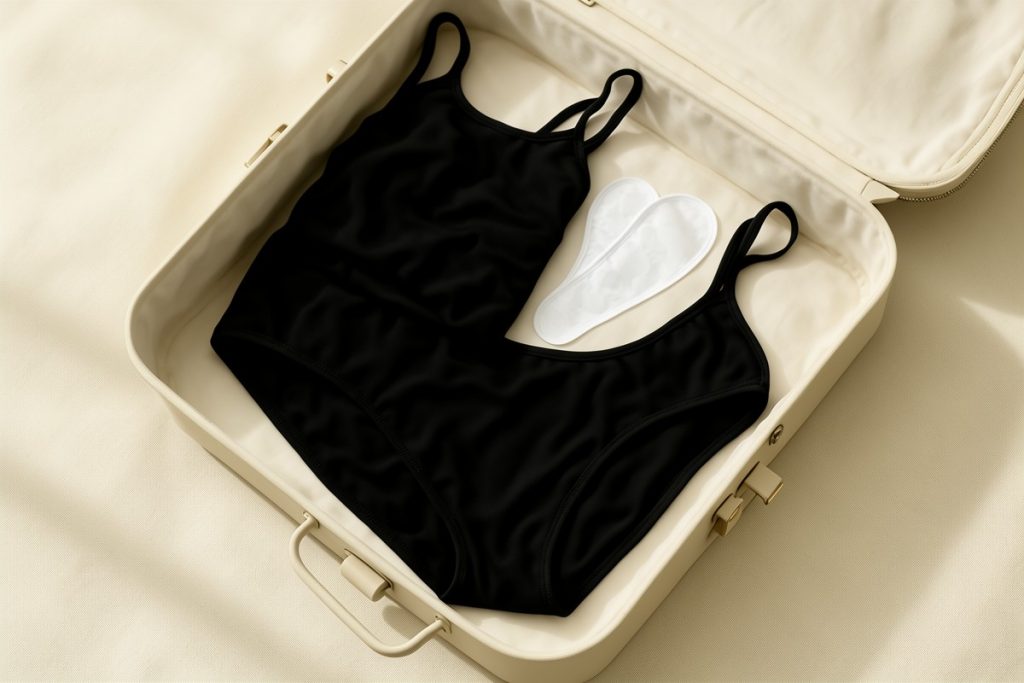
Include at least one spare pair of underwear in a breathable fabric that feels comfortable for a long day. Dark colors can make stains less stressful, but comfort and fit should come first. A sealable reusable pouch or leak-resistant bag is useful for separating damp clothing until you can wash it.
3. You need to change while away from a sink
Pack unscented wipes or tissues and a small amount of hand sanitizer. These are backups for situations where soap and water are not immediately available, not replacements for washing when a sink is accessible. The CDC recommends washing your hands before and after changing menstrual products and keeping reusable products clean according to their care instructions.
4. Your journey takes longer than planned
Think beyond the scheduled itinerary. A missed connection or traffic delay can add several hours, so include enough supplies for the longest realistic stretch between bathrooms or shops. If you take medication for cramps, keep it in its original container and follow the label directions. Do not pack a medicine you have never used before simply because it seems convenient.
A simple travel period kit checklist
- Your preferred menstrual products, plus a small backup supply
- One or two pairs of comfortable spare underwear
- Unscented wipes or tissues
- Hand sanitizer for use when soap and water are unavailable
- A sealable bag for damp clothing or used disposable items
- Any familiar pain-relief medication you normally use, stored as directed
- A small laundry or stain-treatment item if you expect a long trip
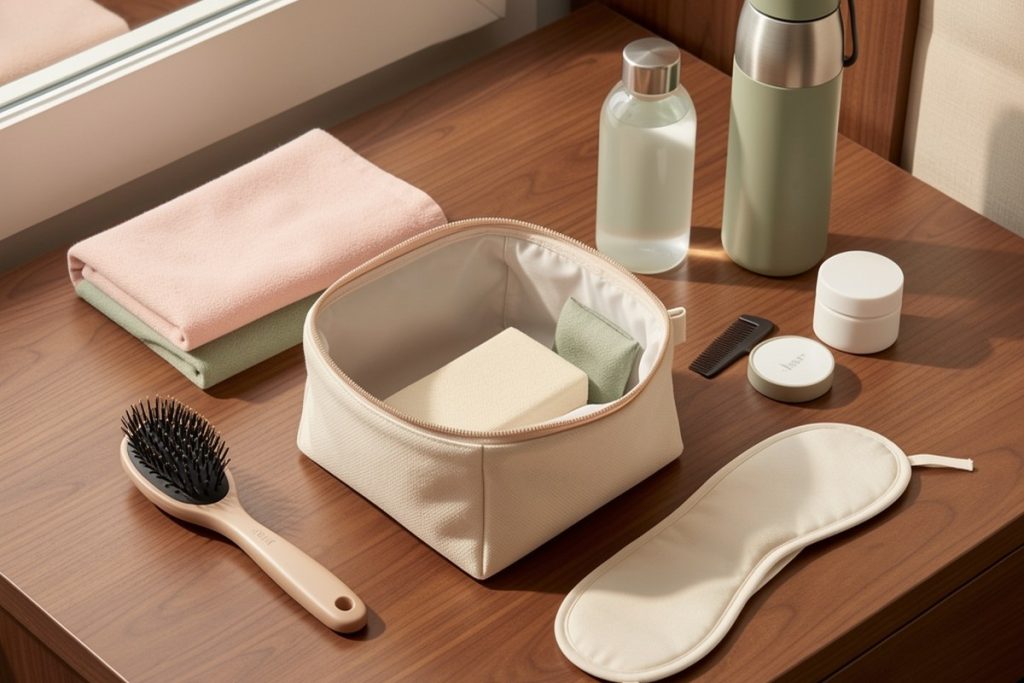
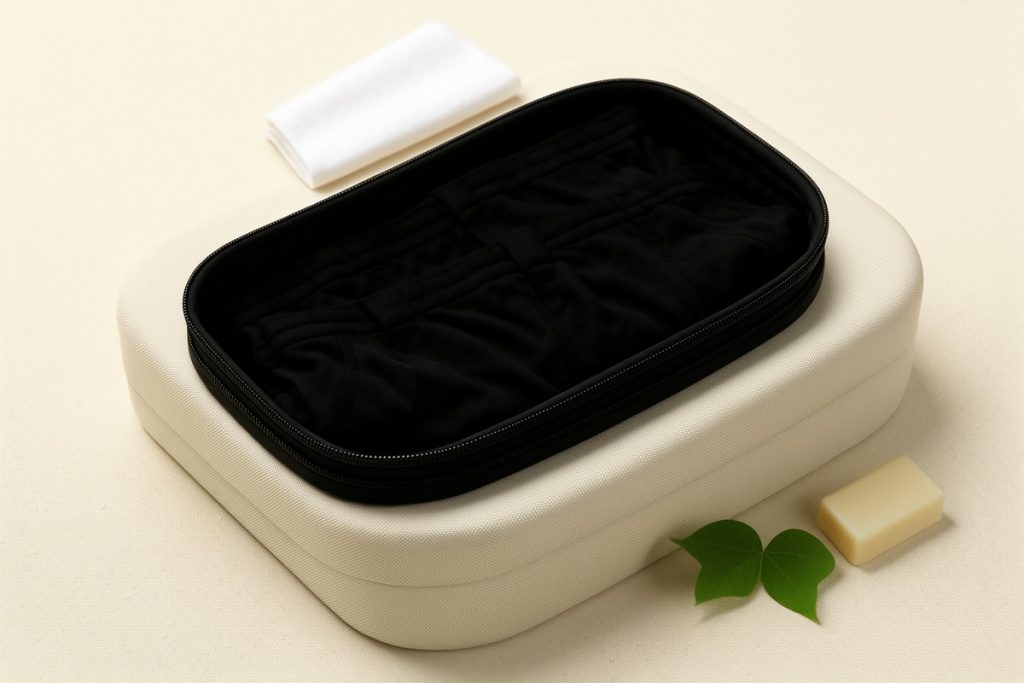
Keep the kit in a washable pouch with a wide opening. A pouch that looks like an ordinary toiletry bag can be easier to carry into a public bathroom than loose items gathered from several compartments.
How to choose a preassembled option
A ready-made kit can make sense if you are building a travel bag from scratch or regularly forget one of the less obvious essentials, such as spare underwear. The Emergency Panties® On-The-Go Underwear Kit for Women Travel Hygiene & Toiletry Essential with Seamless Underwear, Fresh Wipe & Panty Liner – Plus Size fit 1X-3X Black Bikini is listed as a compact option that combines those categories in one package.
Before buying, check the current listing for the exact contents, size range, underwear cut, and care instructions. A preassembled kit is convenient, but it may not match your preferred product, flow needs, or fit. It should supplement your routine rather than replace the items you know work for you. If you are between sizes or sensitive to certain materials, verify the details carefully before relying on it for a trip.
Pack for comfort, privacy, and easy access
Place the kit near the top of your personal item, not underneath a laptop, shoes, or a full toiletry case. In a car, keep it in the center console or a small day bag rather than in the trunk. The best emergency kit is the one you can reach without unpacking everything around it.
Use separate compartments for clean supplies and anything damp or used. If you are flying, keep liquid or gel items within the current security rules for your departure airport. The TSA generally limits carry-on liquids, aerosols, gels, creams, and pastes to containers of 3.4 ounces or less in a quart-size bag, with certain exceptions; check the official guidance before leaving because screening rules and airport procedures can change.
For reusable products, bring only what you can clean properly during the journey. A reusable item that stays wet in a closed pouch for too long may become unpleasant or difficult to manage. A small breathable storage bag can help during the trip, but follow the product manufacturer’s cleaning and storage instructions once you reach a suitable bathroom.
Make the kit part of your routine
Restock it after every trip and check it before a busy week, holiday, or overnight stay. Replace supplies that have been used, confirm spare underwear still fits comfortably, and remove anything damaged by heat or moisture. It can also help to keep a second kit at work, in your gym bag, or in a frequently used purse.
You do not need a perfect pouch or a large collection of products. You need a dependable backup that reflects your body, your travel style, and the places you are likely to visit. A few familiar supplies, stored where you can reach them, can turn an awkward surprise into a small problem with a straightforward solution.
Last reviewed: 2026-09-04