
Quick answer
For a home first-aid kit for minor cuts and scrapes, keep clean water access, soap, sterile gauze, adhesive bandages in several sizes, medical tape, small scissors, disposable gloves, and a waste bag. Rinse the wound, control bleeding with gentle pressure, cover it with a clean dressing, and monitor it. Seek medical care for deep, gaping, contaminated, or persistently bleeding wounds.
Key takeaways
- Clean running water, gentle pressure, and a fresh dressing handle many minor cuts and scrapes.
- Choose dressings that fit the wound without touching the injured area unnecessarily.
- Replace any dressing that becomes wet or dirty, and check the kit regularly.
- Deep wounds, animal bites, embedded objects, and uncontrolled bleeding need professional care.
By Dr. Priya Sharma, Evidence-Based Health Expert
What a useful home first-aid kit should contain
A first-aid kit for minor cuts and scrapes does not need to be large or complicated. Its job is to support three steps: clean the injury, protect it, and make it easy to monitor healing. Store supplies together in a clean, dry container that adults can reach quickly but young children cannot open unsupervised.
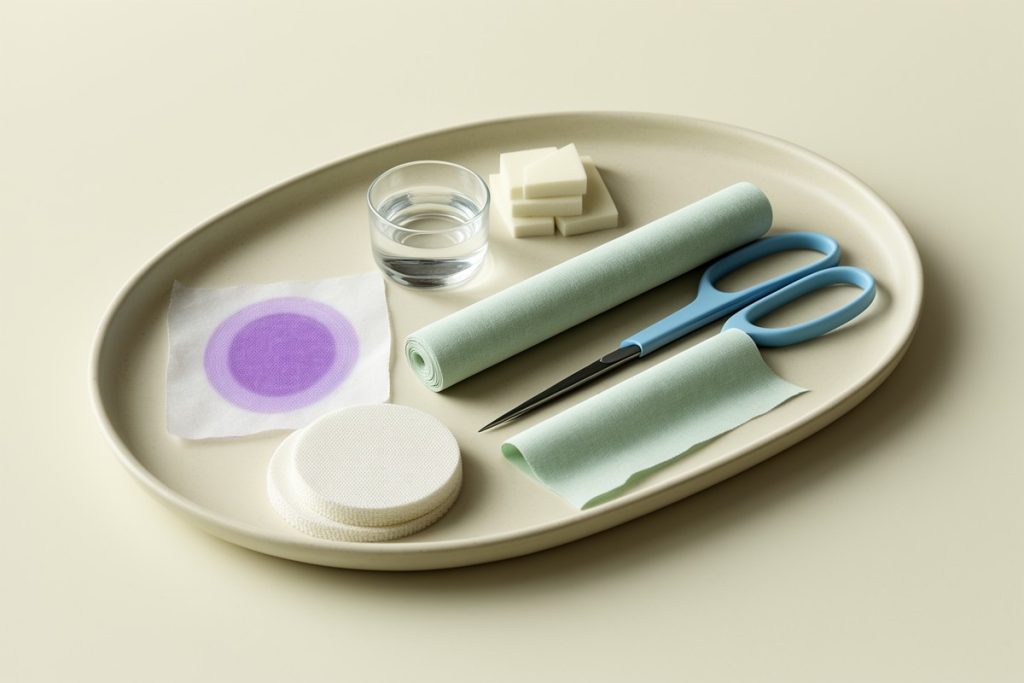
Start with disposable gloves, mild soap, sterile gauze, adhesive bandages in several sizes, medical tape, and clean scissors. Non-stick dressings are useful when a scrape is too broad for a standard bandage. A small waste bag helps you dispose of used gauze and gloves without touching them again. Tweezers can help remove a small, loose piece of surface debris, but do not use them to dig into a wound or pull out an embedded object.
Clean water is usually more important than a cupboard full of antiseptic products. If your household may not have easy access to a tap during travel or outdoor activities, sterile saline pods can be a practical backup. Keep the kit stocked for the people who actually use it, including different bandage sizes and gloves that fit.
How to treat a minor cut or scrape at home
First, wash your hands. If another person is helping, disposable gloves reduce contact with blood and wound fluid. Have the supplies ready before touching the injury.
If the wound is bleeding, apply steady, gentle pressure with clean gauze or a clean cloth. Avoid repeatedly lifting the material to check whether the bleeding has stopped. If blood soaks through, add another layer rather than removing the first one. Bleeding that remains heavy or does not stop with sustained pressure needs urgent medical assessment.
Once bleeding is controlled, rinse the wound under clean running water. Wash the surrounding skin with soap, but avoid scrubbing the injured surface. Look for visible grit or dirt. You can lift away loose debris with clean tweezers, but do not force out anything stuck deeply in the tissue. Household disinfectants, alcohol, or strong chemicals can irritate injured skin and are not a substitute for proper cleaning.
Pat the surrounding skin dry and cover the injury with a sterile dressing or adhesive bandage. The dressing should protect the wound without being so tight that it causes numbness, tingling, discoloration, or discomfort. Change it if it becomes wet or dirty. Otherwise, check it at least daily and replace it according to the product directions. Keeping the area protected can reduce friction and help you notice changes such as spreading redness, swelling, drainage, or worsening pain.
When an adhesive bandage is a sensible choice
Adhesive bandages work best for clean, superficial cuts and scrapes that are small enough for the pad to cover fully. They are convenient for fingers, knees, elbows, and other areas where a loose piece of gauze may shift. The surrounding skin should be dry enough for the adhesive to hold, and the pad should sit over the wound rather than directly rubbing against its edges.
For a ready-made option, BAND-AID Brand Flexible Fabric Adhesive Bandages come in assorted sizes and use flexible fabric with a non-stick pad. That combination may suit routine coverage of minor cuts and scrapes when a standard adhesive dressing fits the injury. It is still only a dressing: clean the wound first, follow the product directions, and replace it when wet or dirty. Stop using it if the adhesive irritates the skin.
An adhesive bandage is not appropriate for every injury. Do not use one to close a deep or gaping wound, cover an embedded object, or manage heavy bleeding. It should not delay medical care for a wound that may need stitches, professional cleaning, or treatment for infection.
When a cut or scrape needs medical attention
Get prompt medical advice if the wound is deep, has separated edges, exposes deeper tissue, causes numbness or loss of movement, or contains glass, metal, or another embedded object. A cut from a dirty or rusty object, a puncture wound, and an animal or human bite may require additional assessment, including a review of tetanus protection.
Watch for infection during the following days. Increasing redness, warmth, swelling, pain, pus, red streaks, fever, or a general feeling of being unwell are reasons to contact a healthcare professional. People with diabetes, poor circulation, immune-system conditions, or medicines that affect healing should seek individualized advice sooner rather than relying only on home care.
Burns need a different first step. Cool a fresh burn under cool running water for 20 minutes when possible; do not apply ice, butter, or greasy products. An adhesive bandage is not the first treatment for a significant burn. Seek medical help for large, deep, chemical, electrical, or facial burns, or burns involving the hands, feet, genitals, or major joints.
Simple first-aid kit restock checklist
| Item | Purpose | What to check |
|---|---|---|
| Adhesive bandages | Cover small, clean wounds | Several sizes; sealed and suitable for sensitive skin |
| Sterile gauze | Apply pressure or cover a broader scrape | Packaging intact and dry |
| Non-stick dressing | Protect an area where ordinary gauze may stick | Large enough to cover the injury |
| Medical tape | Secure gauze or a dressing | Adhesive still holds without irritating skin |
| Disposable gloves | Reduce direct contact with blood | Correct size and no tears |
| Scissors and clean tweezers | Cut tape or lift loose surface debris | Clean, functional, and stored safely |
Review the kit every few months and after anyone uses it. Replace opened, damp, damaged, or depleted supplies, and check the dates on products that have expiration information. Keep a few adhesive bandages in an everyday bag or car kit, but store heat-sensitive supplies according to their directions. A small, organized kit is more useful than a larger one whose contents are difficult to find.
Last reviewed: 2026-09-21