
Quick answer
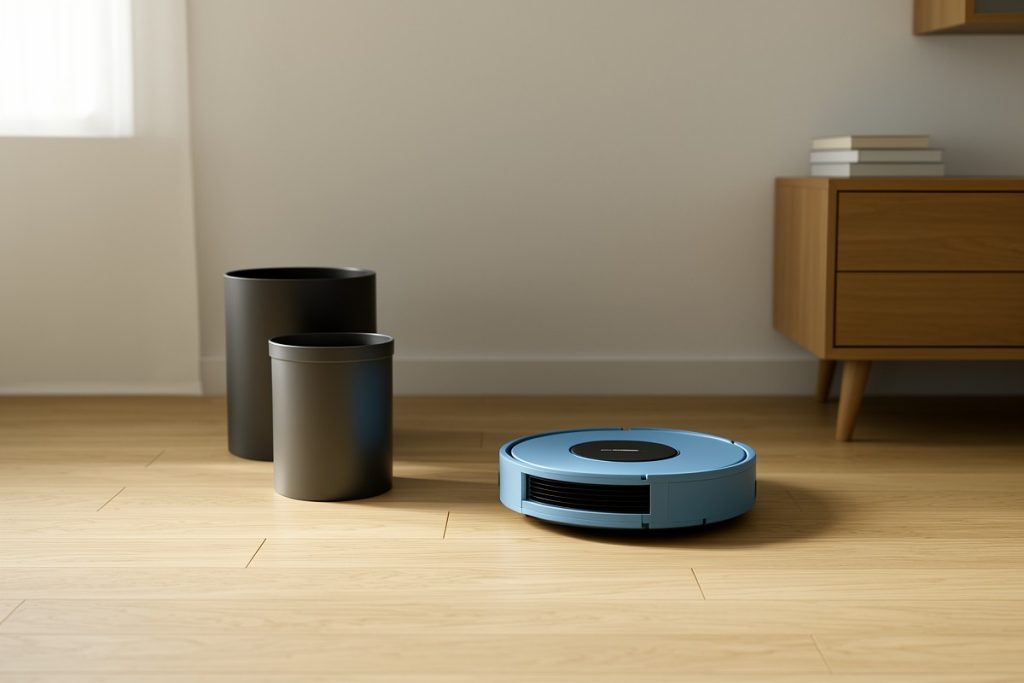
For a small home, a self-emptying robot vacuum is worth considering when your main goal is fewer interruptions between cleaning runs. A manually emptied model is often the simpler choice if storage space is tight, you dislike extra components, or you do not mind checking the bin yourself. Compare the full maintenance routine, dock footprint, and floor plan—not suction numbers alone.
Key takeaways
- Self-emptying bases reduce frequent bin-emptying, but they still require dock, filter, brush, and sensor maintenance.
- A manual model may fit better in a small home because its charging setup is usually less substantial.
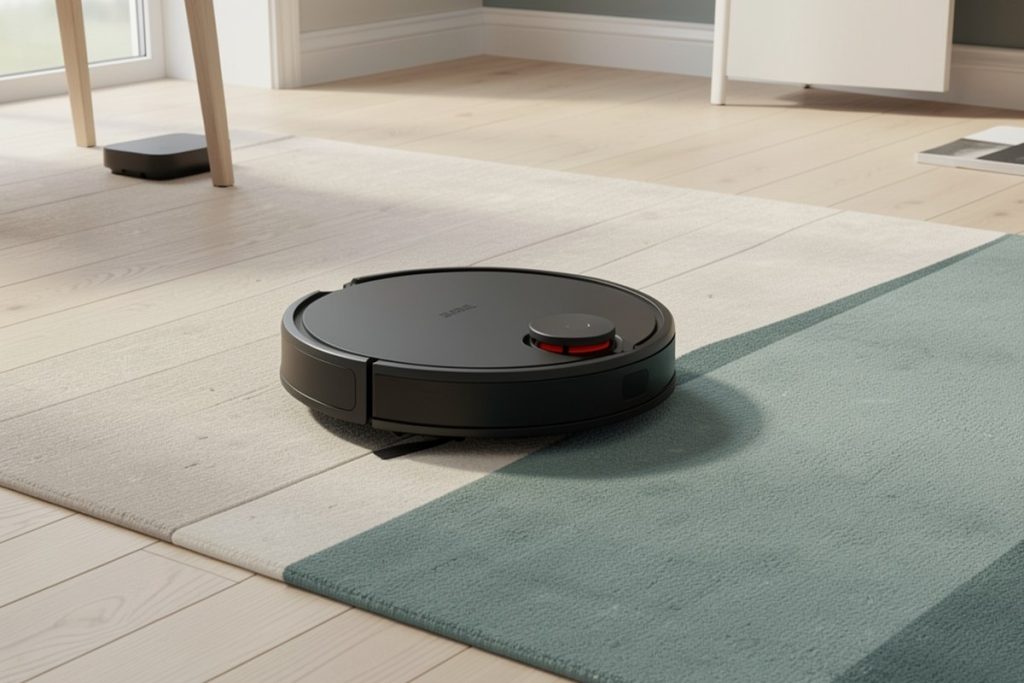
- Dock clearance, thresholds, cords, rugs, and furniture matter more than a single headline specification.
- Mapping can improve repeatable cleaning, but it does not replace preparing the floor.
The real difference is the maintenance routine
The biggest distinction between these two robot vacuum types is what happens after cleaning. A standard robot returns to its charger, and you remove its small dustbin when it is full. A self-emptying model returns to a larger base that transfers collected debris from the robot into a separate container or bag.
That transfer can make regular cleaning easier, but it does not make the appliance maintenance-free. You may still need to empty the base, clean or replace filters, remove hair from the brush, wipe sensors, and check the dock opening. The dock also needs a clear, accessible location so the robot can return to it reliably.
A manual-emptying robot has fewer parts to manage. Its bin is typically easier to inspect, and you can see immediately whether it is full or clogged. The trade-off is that the chore happens more often, especially if you run the robot frequently or collect a lot of dust and hair.
When self-emptying is a sensible upgrade
A self-emptying base makes the most sense when convenience is the problem you are trying to solve. If you want scheduled cleaning while you are working, sleeping, or away from home, fewer interruptions can make it easier to keep the robot in regular use. It is also useful for households where a small robot bin fills before the next planned run.
The benefit is greatest when the base can remain in an open, practical location. Measure the area before buying. The robot needs enough room to approach the dock, turn, and make a clean connection. A base tucked behind a door or squeezed between furniture may be difficult to use even if the robot itself is compact.
Also consider how the dock stores debris. A bag-based system may require replacement bags, while a reusable container still needs periodic emptying and cleaning. Neither approach removes upkeep; each simply changes when and where you perform it. Check the instructions for filter care, container access, and any recommended cleaning schedule.
When manual emptying is the better fit
Manual emptying can be the better choice for a studio apartment, a small floor plan, or anyone who values a simpler appliance. You may have less dock hardware to accommodate, fewer dock-specific parts to clean, and an easier time seeing what the robot collected.
This option is especially practical if you already expect to check the robot after each run. A quick bin inspection can become part of the routine, much like clearing a lint filter or wiping a countertop. The downside is consistency: if the bin becomes full, a scheduled cleaning may be shortened, interrupted, or less effective depending on the model.
Think about your actual cleaning frequency. Someone running a robot once or twice a week may find manual emptying perfectly manageable. Someone running it daily may prefer transferring the debris to a larger dock container, even if that choice takes more floor space.
Compare the complete ownership experience
| Consideration | Self-emptying model | Manual-emptying model |
|---|---|---|
| Most useful for | Frequent schedules and fewer daily interruptions | Small spaces and straightforward routines |
| Space needed | Robot, larger dock, and approach clearance | Robot and a generally simpler charging area |
| Regular upkeep | Robot maintenance plus dock container, bag, seal, or filter checks | Robot bin, brush, filter, and sensor checks |
| Main inconvenience | More hardware and possible consumables | More frequent hands-on emptying |
| Before buying | Confirm dock dimensions and collection method | Confirm bin access and expected cleaning frequency |
This is a category comparison, not a promise that every model follows the same design. Read the exact manual before deciding. Some docks are easier to empty than others, and some robot bins are more accessible or larger than their competitors’ bins.
What navigation and mopping do—and do not—solve
Mapping and navigation can help a robot follow a repeatable route, recognize rooms, and return to its base. They do not eliminate common preparation tasks. Cords, socks, small toys, loose rug edges, and clutter can still interfere with cleaning or navigation.
Mopping adds another maintenance routine. If a model includes a water tank or mop pad, you will need to follow the instructions for filling, removing, washing, and drying those parts. A robot that vacuums and mops may be convenient, but the added function is not automatically an advantage if you only want simple dry-floor cleaning.
Similarly, a stated suction figure should not be treated as a complete prediction of results. Brush design, floor transitions, filter condition, navigation, and debris type all affect how useful a robot is in a particular home. Compare the features with the obstacles and surfaces the robot will actually encounter.
Where the Tikom L8000 Plus may fit
The Tikom Robot Vacuum and Mop, Robotic Vacuum Cleaner with Self-Emptying Base, L8000 Plus is worth investigating if your priority is reducing frequent emptying while cleaning hard floors and carpet. Its product listing presents a self-emptying base, LiDAR navigation, home mapping, mopping, a stated 6000Pa suction specification, and a stated 90-day capacity claim.
Those are listed features, not an independent performance verdict. Before choosing it, confirm the current instructions for dock maintenance, debris storage, filter care, mop handling, clearance, and carpet use. Check your thresholds and furniture height as well. If your home is very small or you prefer fewer components, a manual-emptying robot may still be the more practical choice.
A practical pre-purchase checklist
- Measure the dock area: include open space in front and beside the base, not just its footprint.
- Count the recurring chores: compare periodic dock care with more frequent robot-bin emptying.
- Inspect your floors: note thresholds, rugs, cables, stairs, and tight gaps.
- Check consumables: find out whether the system uses bags, washable filters, or replaceable parts.
- Plan for preparation: expect to clear loose objects and inspect brushes regardless of the base design.
Bottom line
Choose a self-emptying robot vacuum when reducing daily interruptions is worth the larger dock and additional upkeep. Choose manual emptying when space, simplicity, and easy inspection matter more. The fairest comparison is not “which has the biggest number?” It is “which maintenance routine will I consistently follow in my home?”
Last reviewed: 2026-10-09
Sources
- Tikom L8000 Plus product listing — manufacturer-provided feature and specification information.
- Air Cleaners and Air Filters in the Home — U.S. Environmental Protection Agency guidance on filtration and maintenance considerations.
- Care for Your Air: A Guide to Indoor Air Quality — U.S. Environmental Protection Agency guidance on reducing indoor contaminants.