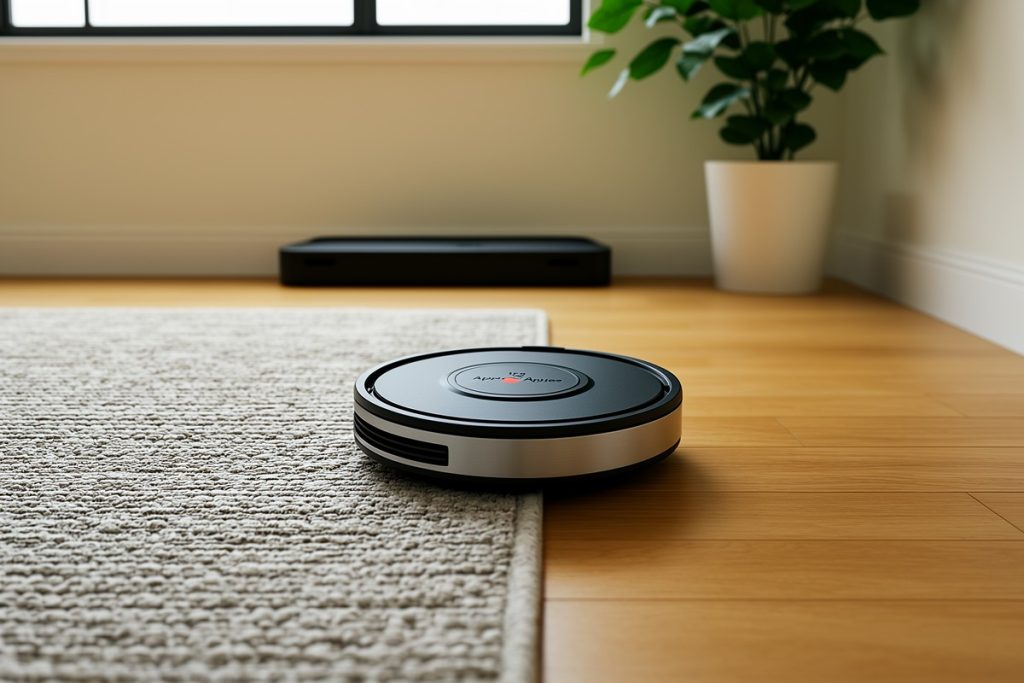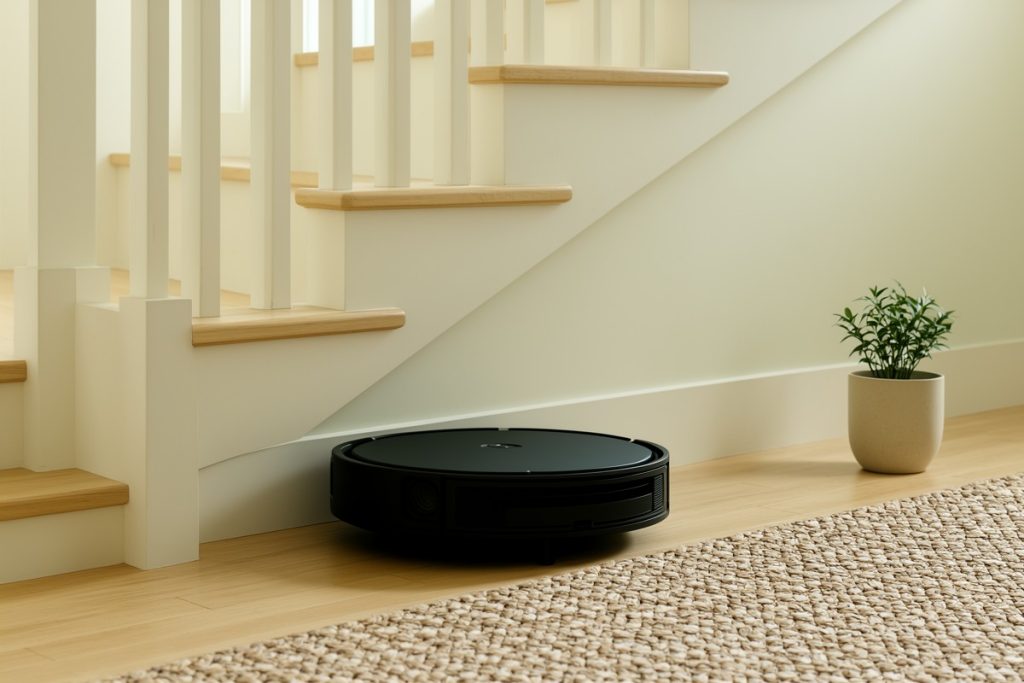

If you are shopping for a robot vacuum, you have probably noticed that self-emptying models cost noticeably more than standard versions. For most households with pets, allergies, or simply a preference for low-maintenance cleaning, the upgrade is worth the extra upfront cost. If you live in a small apartment with minimal foot traffic and do not mind emptying a dustbin by hand every few days, a standard dock model will clean your floors just as effectively while leaving more money in your pocket.
What Separates Self-Emptying Models from Standard Docks
A standard robot vacuum returns to its dock to recharge. That is all the dock does. A self-emptying dock adds a second function: it sucks the debris out of the robot’s internal dustbin and stores it in a much larger bag or bagless canister. That means you can go weeks, sometimes up to 60 days, without touching dirt, hair, or dust.
The convenience is obvious, but the real value is in allergen containment. Every time you pop open a small robot dustbin over a trash can, you release a cloud of fine dust and dander back into the room. A sealed base keeps that debris contained until you are ready to dispose of the bag or empty the canister outside. For allergy sufferers, that alone can justify the price gap.
One minor downside worth noting: the transfer process is loud. When the robot docks and the base activates, it sounds like a full-size vacuum for about 15 to 30 seconds. If you run the robot at night while family members sleep, that noise can be jarring. Scheduling cleans to finish mid-morning or early afternoon avoids the issue entirely.
Of course, the dock itself is larger. It needs extra vertical clearance and a few more inches of floor space. If your charging spot is tucked under a low bench or inside a cramped closet, measure carefully before you commit to a bulkier base.
Who Actually Needs a Self-Empty Base?
Self-emptying docks are not a universal upgrade. They solve specific problems, and paying extra for convenience you will not use is an easy way to waste money. You will get the most value from one if several of the following apply to your home:
- You own pets that shed year-round.
- Someone in your household has dust or dander allergies.
- Your home is larger than 1,500 square feet.
- You run the robot daily or every other day.
- You would rather forget about vacuum maintenance for weeks at a time.
Conversely, if your home is mostly hard flooring with light foot traffic and no shedding pets, the dustbin inside a standard robot will take days to fill. In that environment, paying premium prices for an auto-empty tower is less about need and more about luxury. If none of the scenarios above describe your situation, a standard model is probably the smarter buy. You still get automated floor cleaning; you just trade a few minutes of manual emptying for a lower price tag and a significantly smaller dock footprint.
Side-by-Side: What the Extra Cost Really Buys You
Before you decide, it helps to see the trade-offs in one place. Here is how the two categories stack up on the factors that matter most during daily use.
| Feature | Self-Empty Base | Standard Dock |
|---|---|---|
| Debris capacity | 30–60 days (bag or bagless canister) | 3–7 days (internal dustbin only) |
| Hands-on maintenance | Empty base every 1–2 months | Empty robot dustbin every 1–3 days |
| Allergen containment | Sealed bag or HEPA canister limits exposure | Manual dumping releases dust cloud |
| Upfront cost | Higher purchase price | Budget-friendly entry point |
| Dock footprint | Larger, needs vertical clearance | Compact, fits tight spaces |
A Balanced Look at One Bagless Option
If you are leaning toward a self-emptying model and prefer avoiding recurring bag purchases, the Shark AV2501AE AI Robot Vacuum is worth considering. It uses a bagless, XL self-empty base with a 60-day capacity and a HEPA filter, which means you are not buying proprietary bags every few months. Instead, you lift the canister and dump it directly into an outside trash bin.
According to the manufacturer, the unit uses LiDAR navigation to map rooms and avoid obstacles, runs for up to 120 minutes per charge, and includes a self-cleaning brushroll marketed for pet hair. It also supports Wi-Fi connectivity and Alexa voice commands, so it fits into most smart-home routines without extra hubs. Bagged systems trap debris neatly but require ongoing bag purchases. A bagless base eliminates that running cost, though you do trade the convenience of a sealed drop-in bag for a brief exposure to dust when you empty the canister. Keep in mind that no robot vacuum handles deep-pile carpet or large debris piles as well as a traditional upright. This model, like most in its class, is best treated as a daily maintenance tool rather than a deep-cleaning replacement.
When a Standard Robot Vacuum Makes More Sense
There are legitimate reasons to skip the self-emptying trend. If your home is under 800 square feet, the robot’s internal dustbin likely will not fill up during a single cleaning cycle. Emptying it takes under 30 seconds, and you save both money and shelf space.
Budget is another practical factor. The price difference between a solid standard model and a self-emptying equivalent can be significant. If you are new to robot vacuums and unsure how often you will actually run the device, starting with a standard dock lets you test the habit before investing in premium convenience features.
Finally, consider your floor plan. If the robot lives under a low-profile coffee table or inside a narrow media console, the taller self-empty dock may simply not fit. Measure your intended charging location before you order. A standard dock slides into places where a tower cannot.
Bottom Line
Self-emptying robot vacuums earn their keep in busy, pet-friendly, or allergy-conscious homes where manual maintenance feels like a constant chore. The sealed storage and extended capacity translate to cleaner air and less frequent interaction with dust and hair. Over the course of a year, the time savings add up. Standard models remain the practical choice for small spaces, tighter budgets, and minimalists who do not mind a quick daily dump. Think about how often you want to touch dust, how much floor space you can spare, and what your household actually tracks inside. Match the dock to your lifestyle and your tolerance for upkeep, not just your floors.
Last reviewed: 2026-08-05