
Quick answer
During a severe-weather power outage, secure immediate safety first, check official alerts, conserve phone battery, and avoid unsafe heating, cooking, or generator practices. Keep water, medications, flashlights, backup power, and important contacts accessible. If the outage lasts, reassess food, temperature, medical needs, and local instructions rather than relying on rumors or unverified social posts.
Key takeaways
- Check for immediate hazards before troubleshooting the outage.
- Use official weather and emergency updates, not unverified posts.
- Conserve phone power while keeping one device available for alerts.
- Never use grills, camp stoves, or fuel-burning equipment indoors.
By Claire Winters, Context-Rich News Analyst
A power outage during severe weather is both a safety problem and an information problem. The lights may be off, mobile networks may be congested, and conditions outside may make a quick trip for supplies unwise. A short, calm plan helps you avoid the most common mistakes while preserving the tools you may need later.
Start with a safety check, not a repair attempt
When the power goes out, pause before opening the electrical panel or heading outside. Look for immediate dangers: smoke, sparks, a burning smell, fallen wires, flooding near electrical equipment, or damage to the building. If you see any of these, move away from the hazard and contact emergency services or the relevant utility through an official channel. Never approach a downed power line, even if it appears inactive.
Next, identify who in the household needs extra support. Check on children, older adults, anyone using powered medical equipment, and pets. A person who depends on electricity for medical care may need a backup plan immediately; contact their care team, utility provider, or emergency services rather than waiting for conditions to worsen.
Use flashlights instead of candles where possible. If you use candles, keep them on a stable, nonflammable surface and never leave them unattended. Keep refrigerators and freezers closed as much as possible. Opening the door repeatedly lets cold air escape and makes it harder to judge how long food will remain safe.
Use the first 15 minutes to organize information
Severe weather creates a temptation to constantly refresh social media. That can drain a phone while providing an uneven mix of rumors, old posts, and useful information. Check official alerts first. The National Weather Service explains the meaning of weather watches, warnings, and advisories, while local emergency-management agencies may provide evacuation, shelter, road, or boil-water instructions.
Write down the outage time, the weather warning in effect, and any instructions that affect your household. If you have a battery-powered radio, use it when mobile service is unreliable. Keep one phone available for calls and alerts, turn on low-power mode, dim the screen, close unnecessary apps, and avoid streaming video.
A simple paper list can also help: emergency contacts, your utility’s outage-reporting number, medication information, and the location of the nearest suitable shelter. This is not a substitute for official updates, but it reduces the need to search for basic information when your battery is low.
A practical severe-weather outage checklist
- Immediate safety: Check for fire, electrical damage, flooding, and downed lines.
- People and pets: Confirm everyone is accounted for and identify urgent medical or temperature needs.
- Information: Check local emergency management, the National Weather Service, and utility updates.
- Power conservation: Enable low-power mode and reserve one charged device for essential communication.
- Supplies: Gather water, medications, flashlights, batteries, blankets, and a manual can opener.
- Escalation: Leave or call for help if the home becomes unsafe or someone’s medical needs cannot be met.
Protect food, water, and indoor air
Food safety becomes harder to judge as an outage continues. Keep refrigerator and freezer doors shut, and do not taste food to decide whether it is safe. When in doubt, discard it. The length of the outage, the temperature of the food, and whether the appliance stayed closed all matter. If local authorities issue water instructions, follow those instructions even if tap water appears normal.
Indoor air is another overlooked risk. Do not bring a barbecue grill, patio heater, camp stove, or generator into a home, garage, basement, or other enclosed area. Fuel-burning equipment can produce carbon monoxide, an odorless and potentially fatal gas. A generator must remain outdoors and far from doors, windows, and vents, following the manufacturer’s instructions and local safety guidance.
During cold weather, layer clothing and use blankets rather than improvising indoor combustion heat. During hot weather, move to a cooler safe location if the home becomes dangerously warm, particularly when children, older adults, or medically vulnerable people are present. Do not wait for discomfort to become a crisis.
Separate essential equipment from convenience gadgets
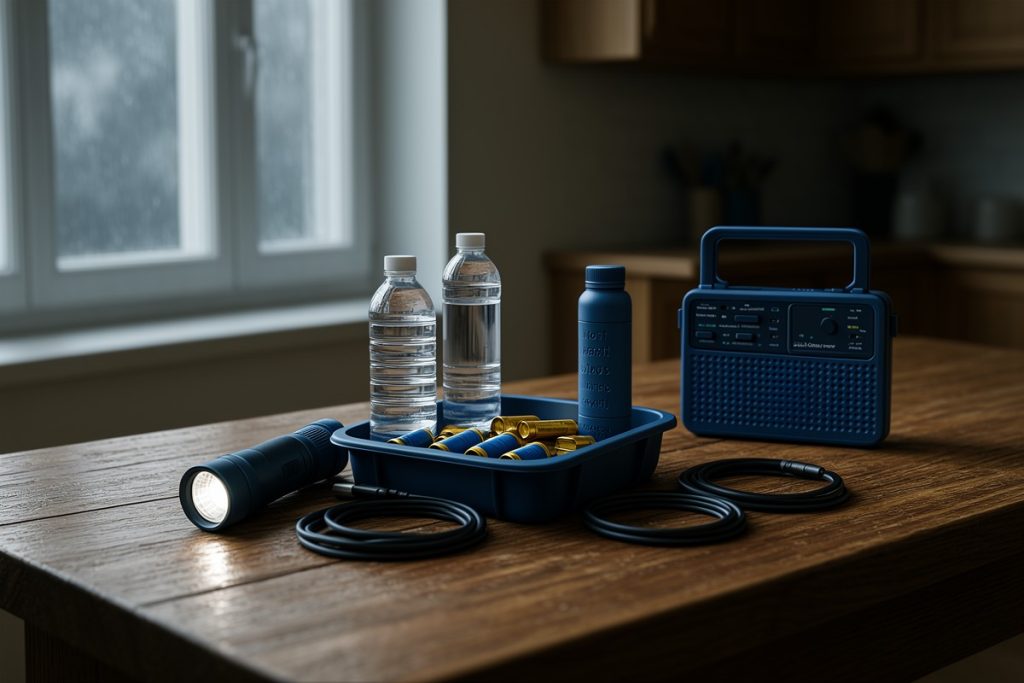
A basic emergency kit should cover safety and communication before entertainment. Prioritize flashlights, extra batteries, water, medications, first-aid supplies, a battery-powered or hand-crank radio, and a reliable backup battery for phones. Test equipment before storm season and replace batteries that are expired or depleted.
For a nonessential convenience item, the Induction Speaker 5-in-1 Wireless Bluetooth Audio accessory may be worth considering if its listed phone-charging feature is compatible with your device and you also want a speaker for ordinary use. It should not replace a dedicated power bank, emergency radio, or flashlight. Before relying on any accessory during an outage, confirm its charging method, test it with your phone, and keep a separate backup because one device may not meet every emergency need.
Know when an outage has become an emergency
Not every outage requires evacuation, but certain conditions call for immediate action. Leave or seek emergency help if there is fire, structural damage, rising floodwater, a gas smell, dangerous indoor temperatures, or a medical situation that cannot be safely managed. Do not enter flooded areas to retrieve belongings or operate electrical equipment.
If officials issue an evacuation order, follow it rather than waiting for a personal estimate of how serious the situation looks. Take medications, identification, essential chargers, water, and supplies for children or pets. If roads are unsafe, contact local emergency services or emergency-management authorities for instructions instead of attempting a risky drive.
Prepare before the next alert
The most useful outage preparation happens when the weather is calm. Store supplies in one accessible place, charge backup batteries, learn how to shut off utilities if instructed, and make sure household members know where the flashlights are. Check whether anyone’s medical equipment, medication storage, or mobility needs require a specific contingency plan.
Review your kit after each outage. Note what ran out, what was difficult to find, and which information sources were reliable. That small debrief turns a stressful event into a more practical plan for the next storm.
Last reviewed: 2026-08-24