
Quick answer
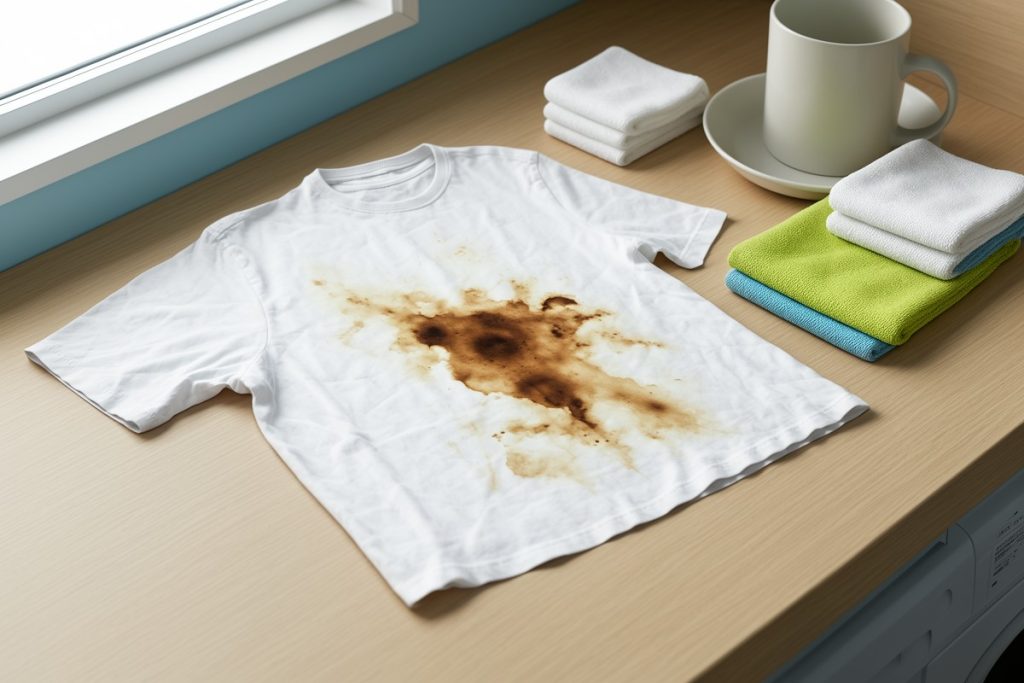
Treat a coffee stain before heat reaches it. Lift excess liquid by blotting, flush cool water through the back of the fabric, then work in liquid laundry detergent or a suitable prewash stain remover. Rinse and wash using the warmest setting allowed by the care label. Check the spot before drying; repeat if any brown shadow remains.
Key takeaways
- Blot spilled coffee instead of rubbing it deeper into the fabric.
- Use cool water from the back of the stain to push coffee out.
- Pre-treat before washing, following the product and garment-care instructions.
- Never put the garment in the dryer until the stain is completely gone.
By Tommy Ruiz, Everyday Problem Solver
Last reviewed: 2026-09-11
Why coffee stains need quick treatment
Coffee leaves behind dark compounds that are easy to spread while wet and harder to remove after they have dried. Cream and sugar can add fats and proteins, making the spot more than a simple beverage stain. The good news is that most washable clothing can be treated with a straightforward sequence: remove excess liquid, rinse from the back, pre-treat, wash, and inspect.
Speed helps, but you do not need to panic. If the spill has already dried, repeat treatment may still work. The most important rule is to keep the item out of the dryer until you have checked the stain in good light.
How to remove a fresh coffee stain step by step
1. Check the garment-care label
Before applying anything, confirm that the garment is washable and note any limits on water temperature, bleach, or drying. A dry-clean-only item should not be saturated at home; gently blot it and take it to a professional cleaner, explaining what spilled and when.
For washable clothing, test a small amount of the detergent or stain remover on an inconspicuous seam if the fabric is colored, delicate, or unfamiliar. This helps you spot possible color change before treating the visible area.
2. Blot up the excess coffee
Place a clean, absorbent towel under the stained area and gently press the top with another clean towel. Work from the outside of the spot toward the center. Replace the towel as it becomes damp.
Do not scrub aggressively. Rubbing can spread the coffee and force it farther between the fibers. Do not use a hot iron or hair dryer to speed up drying.
3. Flush the stain with cool water
Turn the garment inside out or hold the stained section so water can run through the back of the fabric. Use cool water and let it flow through the stain rather than directly pushing the coffee deeper from the front.
Continue until the water leaving the fabric looks clearer. If the garment cannot be rinsed under a tap, sponge or soak the area in cool water instead. The American Cleaning Institute recommends cool water for beverage stains before pre-treatment and laundering.
4. Apply liquid laundry detergent or stain remover
Apply a small amount of liquid laundry detergent, liquid detergent booster, or a prewash stain remover to the spot. Gently work it into the fabric with your fingertips or a soft, clean cloth. Follow the product label for how long it should remain on the garment.
For coffee that contained milk or cream, an enzyme-based laundry product may be useful, especially if the stain is older. Enzymes can help with some protein-based residues, but the product still needs to be safe for the garment and used according to its instructions.
5. Wash at the warmest safe setting
Wash the item according to its care label. If the label permits warm water, it may help loosen a stubborn beverage stain; if the fabric requires cold water, follow that instruction instead. Use the normal amount of detergent recommended for the load rather than pouring in extra detergent.
When the cycle finishes, inspect the garment before putting it in a dryer. Look at the spot under bright light while the fabric is still damp. If any brown or yellow outline remains, repeat the pre-treatment and wash rather than drying it.
What to do when the coffee stain is already dry
Start by removing any loose residue with a soft brush or clean cloth. Then soak the stained portion in cool water and apply liquid detergent or a suitable prewash product. Give the treatment time to work according to its label, then launder using the warmest setting safe for the fabric.
Older stains may need more than one treatment. Avoid escalating immediately to harsh chemicals. Repeated, careful treatment is usually safer than using a strong product that can damage color or fibers. If the stain survives several attempts, a professional cleaner may be the better option, particularly for wool, silk, rayon, tailored clothing, or garments with special finishes.
Choose the right approach for the garment
| Garment or spill | Best first step | Important caution |
|---|---|---|
| Fresh black coffee on washable cotton | Blot, rinse from the back with cool water, then pre-treat | Inspect before drying |
| Coffee with milk or cream | Use detergent or a compatible enzyme-based product | Follow the product and care-label directions |
| Dried coffee stain | Soak, pre-treat, and wash; repeat if needed | Do not assume one wash will remove it |
| Wool, silk, or dry-clean-only fabric | Blot without rubbing and seek professional cleaning | Avoid saturating or experimenting with bleach |
Should you use bleach or vinegar?
Do not make bleach your first step. For white or colorfast washable items, an oxygen bleach product may be appropriate if both the garment label and the product directions allow it. Test colored fabric first, and never assume that a white-looking garment can tolerate every bleach.
Chlorine bleach can damage some fibers and colors, so use it only when the care label and product instructions clearly permit it. Never mix bleach with ammonia, acids, vinegar, or other cleaners. Mixing cleaning products can create dangerous fumes.
Household vinegar and baking soda are often suggested online, but they are not necessary for the basic coffee-stain process. A suitable laundry detergent or prewash stain remover gives you clearer instructions and a more predictable starting point.
A simple coffee-stain checklist
- Read the care label.
- Blot excess coffee; do not rub.
- Rinse through the back with cool water.
- Apply detergent or prewash stain remover.
- Wash at the warmest safe setting.
- Inspect before drying.
- Repeat treatment if necessary.
Common mistakes that make coffee stains worse
The most common mistake is placing the garment directly in the dryer because the stain looks faint after washing. Heat can make a remaining mark much harder to remove. Another mistake is scrubbing from the front, which spreads the spill and pushes it into the fabric.
Using too many cleaning products at once is also risky. Start with one appropriate product, rinse thoroughly, and follow its label. Finally, do not ignore the garment-care label. The safest temperature and treatment depend on the fiber, color, and construction of the item.
For most washable clothes, the winning routine is simple: act promptly, use cool water first, pre-treat, wash carefully, and check your work before drying.