
Quick answer
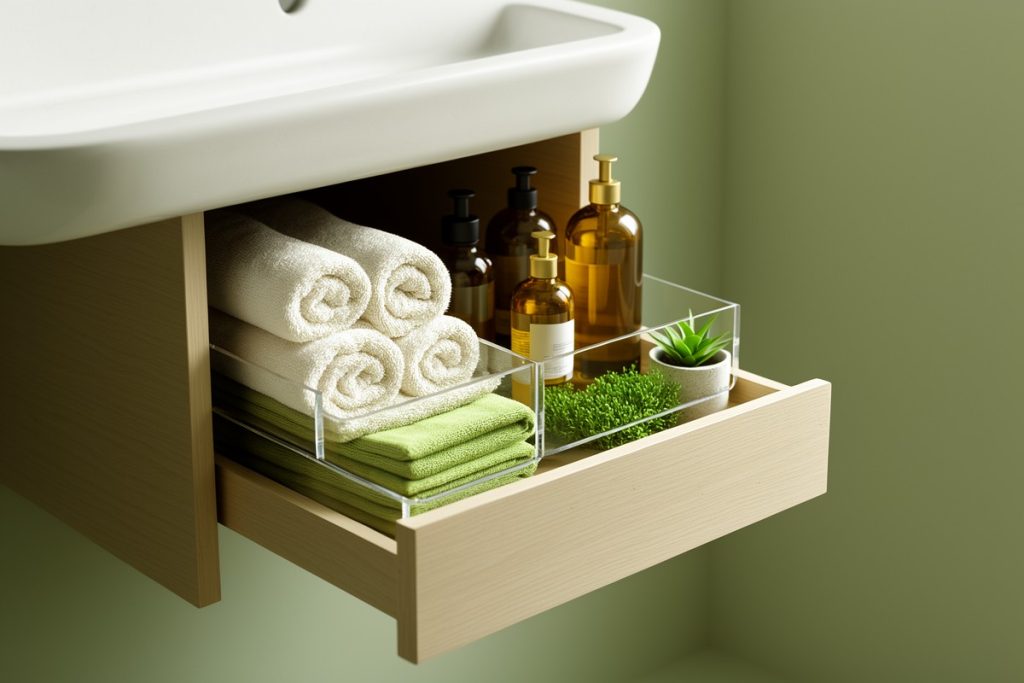
To organize a small bathroom for fall and winter, remove expired or rarely used products, group essentials by routine, and use vertical pull-out storage beneath the sink. Keep daily items within easy reach, reserve higher or deeper spaces for seasonal supplies, and leave room around plumbing. Clear stackable drawers can make awkward cabinets easier to use without adding bulky furniture.
Key takeaways
- Start with a short seasonal audit rather than reorganizing every item at once.
- Store products by routine—shower, dental care, hair care, first aid, and cleaning—so they are easier to find.
- Measure the cabinet opening, plumbing, and usable height before buying organizers.
- Use pull-out drawers for small bottles and backups, but keep leaks and moisture under control.
- Review the space again at the end of winter so unused products do not become permanent clutter.
By Autumn Cole, Seasonal Lifestyle Curator
Why a seasonal bathroom reset is worth doing
A small bathroom often becomes a storage space by accident. Summer sunscreen, travel-size toiletries, spare soap, cleaning products, and half-used beauty items gradually collect in the same cabinet. By fall, the problem is not always a lack of space; it is that the useful items are buried beneath things that no longer belong to the current routine.
A seasonal reset gives you a practical reason to edit the cabinet. You can move lighter summer items out of the way, bring richer moisturizers and extra bath supplies forward, and create a safer place for household products. The goal is not a picture-perfect bathroom. It is a cabinet where you can find what you need without taking everything out.
Begin with a 15-minute bathroom storage audit
Empty one shelf, drawer, or cabinet section at a time. Working in small zones prevents the entire bathroom from becoming a sorting project. Make four groups: keep here, move elsewhere, use soon, and discard responsibly.
Check dates and condition before returning anything. The FDA’s guidance on cosmetic shelf life explains that cosmetic products can change over time, and storage conditions can affect them. Discard products that have changed smell, color, or texture, as well as items you cannot identify or no longer remember using.
- Keep here: products used several times a week in this bathroom.
- Move elsewhere: duplicates, travel supplies, or items used only in another room.
- Use soon: open products that are still in good condition but have been neglected.
- Discard responsibly: empty containers, dried-out products, damaged packaging, and anything past its useful life.
Do not automatically place every empty bottle in the recycling bin. The U.S. Environmental Protection Agency’s recycling guidance recommends checking local rules because accepted materials and preparation requirements vary by community. Rinse containers only when your local program calls for it, and follow product directions for anything containing chemicals.
Match each bathroom zone to a seasonal job
Once the cabinet is edited, assign each area a purpose. A useful arrangement puts frequent tasks at eye level or near the front, while occasional supplies go higher, lower, or farther back. Keep items that could leak in a tray or on a washable surface rather than directly on unfinished wood.
| Zone | Best use | Fall and winter benefit |
|---|---|---|
| Front and center | Daily dental, skincare, and shower items | Faster morning and evening routines |
| Lower cabinet | Backups, spare toilet paper, and heavier supplies | Frees up prime space without hiding essentials |
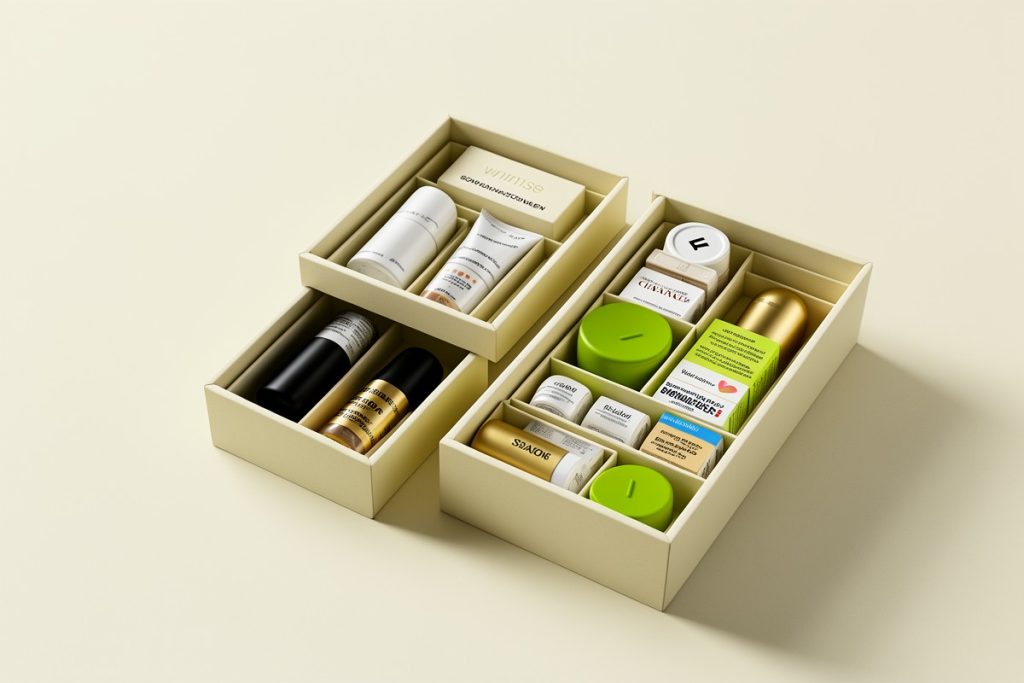
| Separate container | First-aid items or products needing extra care | Keeps small, important items from getting lost |
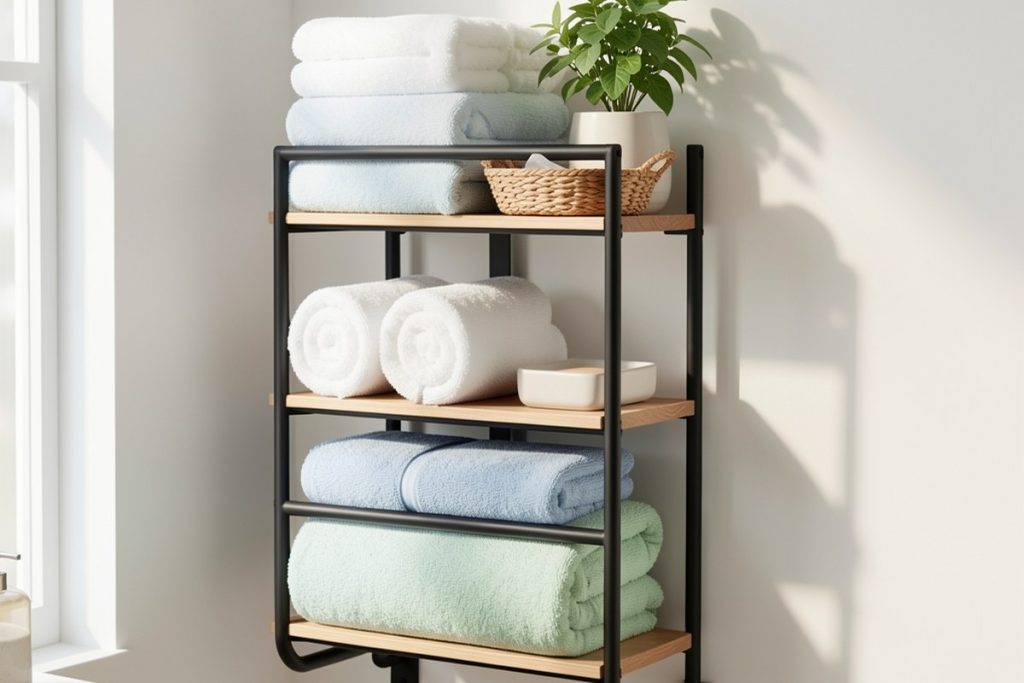
| High or deep storage | Travel items and summer-only products | Reduces visual and physical clutter during colder months |
Use vertical pull-out storage under the sink
The cabinet beneath a sink is usually deep but difficult to access. Pipes interrupt the available space, and items at the back often disappear from view. Instead of stacking loose bottles on the cabinet floor, measure the space and create narrow categories that can be pulled forward.
Measure the cabinet’s width, depth, and height. Then account for the sink drain, supply lines, hinges, door swing, and any uneven base. Measure the actual opening as well as the interior; an organizer that fits inside may still be too wide to pass through the door.
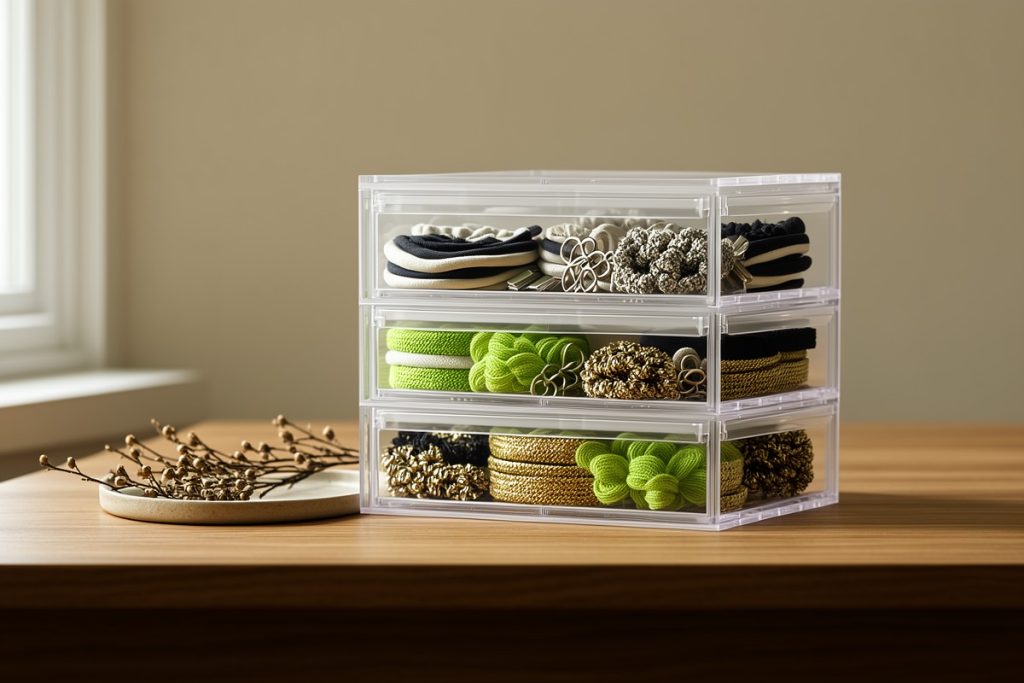
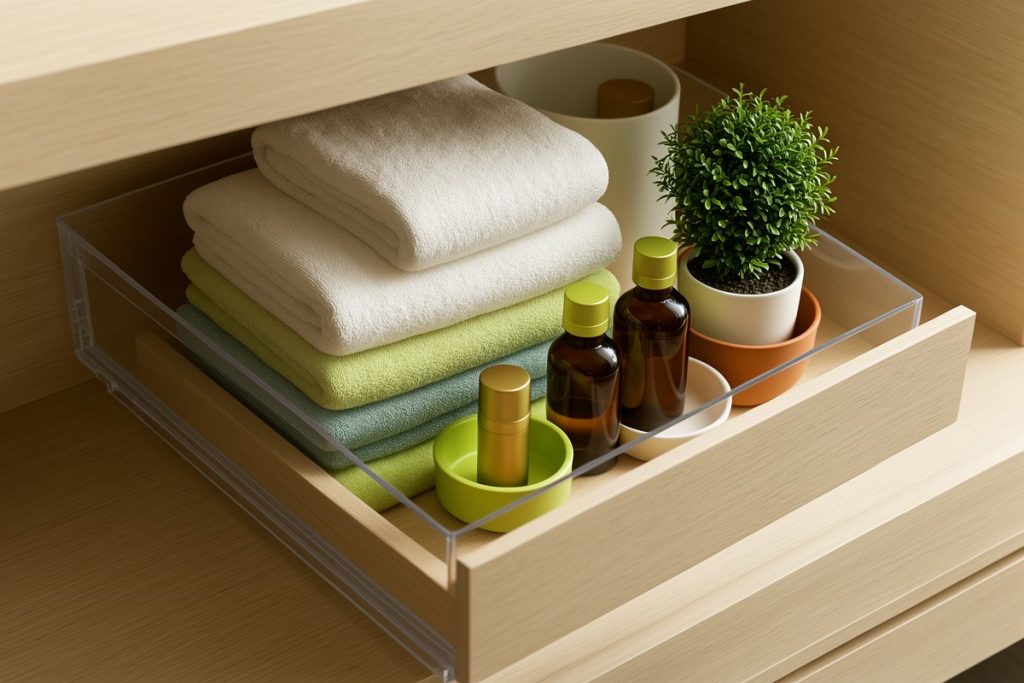
The Vtopmart 3 Pack Clear Stackable Storage Drawers, Easy to Assemble Bathroom Organizers and Storage with handles, Plastic Drawers for Kitchen Pantry, Cabinet, Under Sink Organization may suit a small bathroom where visibility and vertical storage matter. The set is described as including tall, medium, and small clear PET pull-out drawers with handles and a stackable design. That combination could work for grouping skincare, hair accessories, backup toiletries, or cleaning cloths.
It is not a universal fix. Clear drawers will still look busy if they are overfilled, and stacked units may be inconvenient for items used several times a day if the lower drawer is blocked. They also should not be used to conceal an active leak or to store wet items without allowing them to dry. Treat the product as a way to make a measured cabinet more accessible, not as a substitute for editing the contents.
Build a low-effort fall and winter layout
For the colder months, place everyday comfort items where they are easy to reach: moisturizer, lip balm, hand cream, bath products, and extra washcloths. Keep only the quantity you can realistically use in the bathroom. Store backups together so you know what you already have before buying another bottle.
Create one small “use next” area for open products. This prevents half-used items from being forgotten while keeping them separate from unopened backups. If you share the bathroom, give each person a defined section rather than mixing everyone’s products together. A simple division by drawer or shelf is usually easier to maintain than a complicated labeling system.
Seasonal bathroom décor should also earn its space. If you use candles, keep them away from anything that can burn and never leave them unattended. The U.S. Fire Administration’s candle safety guidance recommends keeping candles at least 12 inches from items that can catch fire. In a compact bathroom, flameless lighting is often the more practical choice.
Keep the system working through winter
Organization succeeds when the reset is easy to repeat. Once a week, return products to their assigned drawer instead of creating a temporary pile on the counter. Once a month, check for leaks, sticky residue, empty containers, and products that have changed condition.
- Keep a small open area for new essentials so they do not get wedged behind older items.
- Wipe shelves and drawer interiors before replacing products.
- Store bottles upright and avoid packing them so tightly that caps are pressed open.
- Reassess the layout after the cold season, moving unused winter items out before spring purchases arrive.
A small bathroom does not need more containers by default. It needs fewer forgotten items, clearer categories, and storage that fits the cabinet you actually have. A measured seasonal reset can make the room feel calmer while keeping daily routines practical.
Last reviewed: 2026-09-14
Sources
- How Do I Recycle Common Recyclables? — U.S. Environmental Protection Agency