
Quick answer
To organize seasonal decor in a small apartment, sort everything by when and how you use it, then store small items in shallow stackable containers, textiles in breathable bags, and fragile pieces in padded boxes. Keep one easy-access “first-open” bin for the next season. A simple inventory and a dry, stable storage spot prevent duplicate purchases, broken decorations, and last-minute searching.
Key takeaways
- Sort decorations by season, item type, and how soon you will need them.
- Use drawers for small, frequently handled pieces and rigid boxes for fragile or bulky decor.
- Keep a first-open bin with the items you need immediately at the start of each season.
- Store lights, candles, textiles, and delicate ornaments according to their specific needs.
By Autumn Cole, Seasonal Lifestyle Curator
Seasonal decorating is supposed to make a home feel fresh, welcoming, and connected to the time of year. But in a small apartment, the decorations can quickly become a second household to manage. A crowded closet, tangled lights, and boxes you cannot identify turn a pleasant tradition into an annual chore.
The solution is not necessarily more storage. It is a system that makes the right items easy to find, protects the pieces worth keeping, and gives every category a sensible home. The following approach works for holiday decorations, spring accents, autumn tableware, summer entertaining supplies, and the smaller seasonal changes that make an apartment feel different throughout the year.
Start with a complete seasonal sort
Do not begin by buying containers. First, gather your seasonal items from closets, drawers, cabinets, under-bed storage, and any secondary storage area. Seeing everything at once reveals what you actually own and prevents you from organizing the same category in three different places.
Create four groups:
- Keep and use: Items you expect to display or use during the next season.
- Repair: Decorations that need a new hook, replacement bulb, cleaning, or minor mending.
- Donate or recycle: Items that no longer suit your home or have reached the end of their useful life.
- Decide later: A small temporary group for items with sentimental value or uncertain use.
Try not to let the “decide later” pile become a permanent storage category. Put a date on your calendar to revisit it after the next decorating cycle. If you still have not used an item by then, that is useful information.
Organize by use, not just by season
Seasonal labels are helpful, but they are not always enough. A box marked “winter” could contain ornaments, gift-wrap supplies, candles, textiles, and serving pieces. When you open it, you still have to search.
Instead, combine the season with the item type or room where it will be used. For example, “winter table,” “outdoor lights,” “spring textiles,” and “autumn entryway” are more useful categories than broad labels alone. In a small home, this approach also helps you place related items near the area where they will be used without scattering them across every available shelf.
Keep the categories broad enough to maintain. Five or six practical groups are better than 20 tiny ones. A workable system might include fragile decor, small accents, textiles, lighting, entertaining pieces, and display hardware.
Match the container to the item
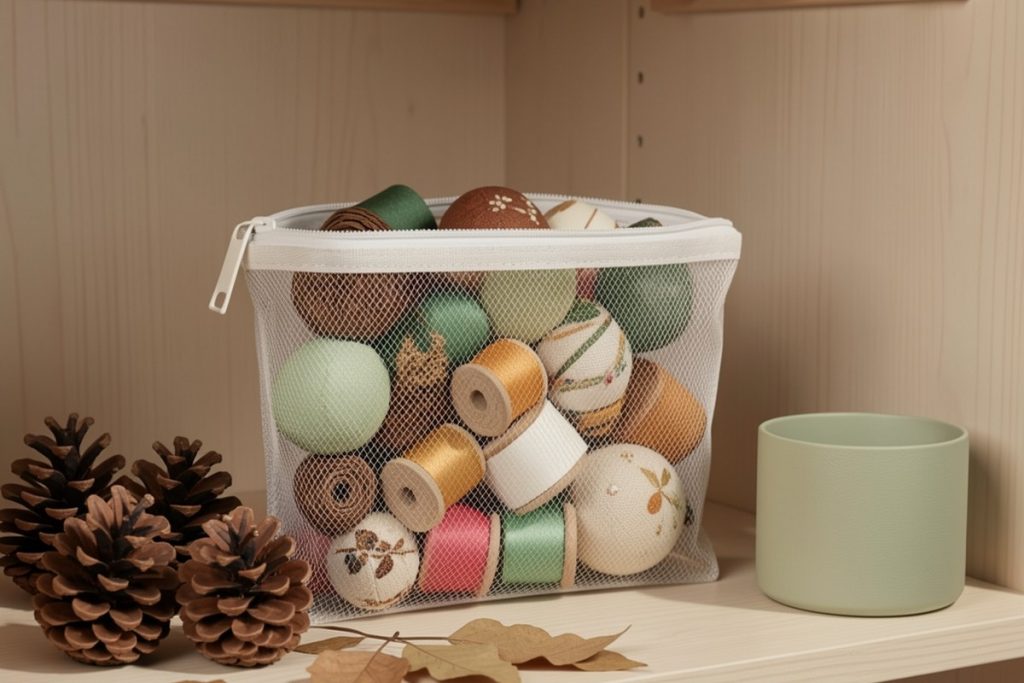
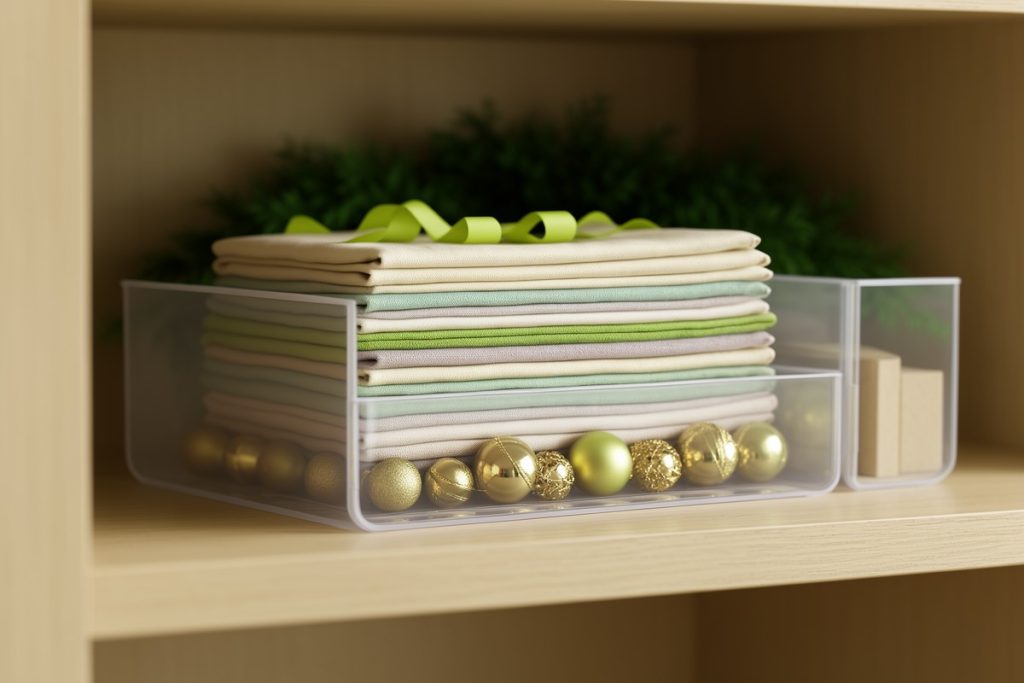
Different decorations need different kinds of protection. Soft fabric items can often be folded into breathable bags or fabric boxes, while delicate ornaments benefit from individual padding and a rigid container. Bulky wreaths and garlands need space to retain their shape. Small items such as hooks, ribbon, clips, battery-operated accents, and spare fasteners are easiest to manage in divided compartments or shallow drawers.
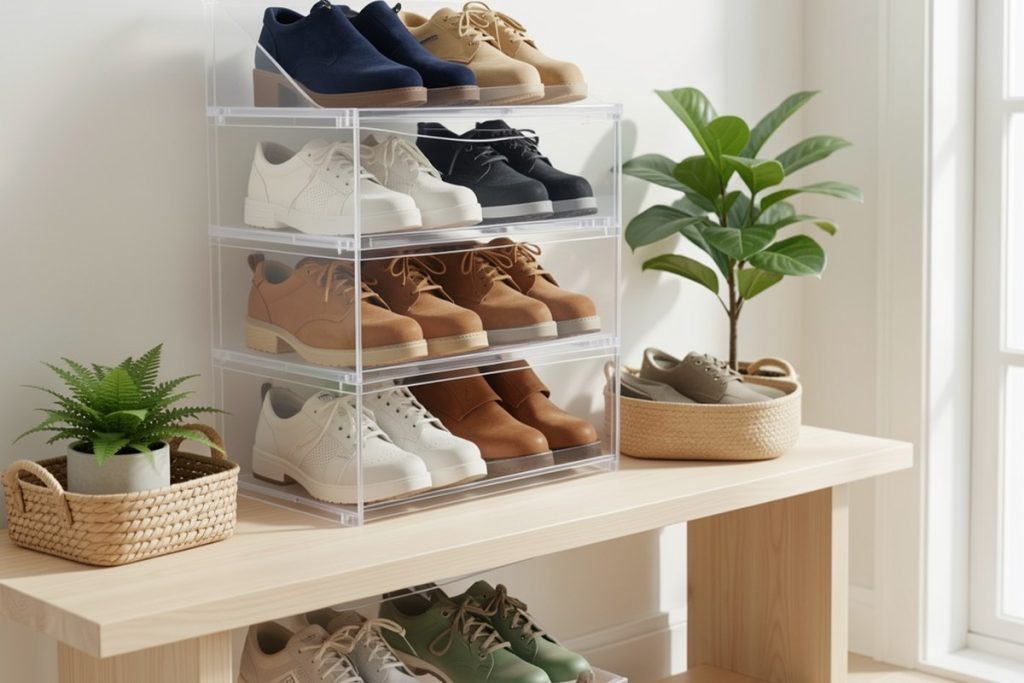
For small, loose pieces, the Vtopmart Clear Stackable Storage Drawers Set of 5 may be a practical option because its clear, stackable drawer format keeps compact supplies visible and grouped. It is better suited to lightweight, smaller items than oversized or especially fragile decorations, and you should check the available space and the product listing before deciding how much to place inside.
Avoid filling every container to the point that items are difficult to remove. Storage that technically fits everything but requires unpacking three layers to reach one ribbon is not efficient storage. Leave enough room to lift or slide items out without disturbing the rest.
Create a first-open bin for each season
The most useful container in your system is the one you open first. Fill it with the small group of items that immediately changes the room: a table runner, a wreath hook, a few accent pieces, seasonal candles, or the serving items you use for the first gathering.
This bin should not hold the entire season. Its purpose is to make the first 15 minutes of decorating feel easy. Store it near the front of your closet or on top of the other seasonal containers. When the season ends, return those items to the same bin so it is ready for the next year.
If your household has recurring events, create a separate “occasion” bin for items used at birthdays, dinner parties, or annual celebrations. That prevents event supplies from becoming mixed into general seasonal decor.
Protect decorations from common storage mistakes
Before packing, make sure decorations are clean and completely dry. Dust and moisture trapped in a container can make next year’s unpacking unpleasant, particularly for fabric, paper, natural materials, and unfinished wood. Let table linens air out before folding them, and avoid compressing delicate pieces under heavy boxes.
Lights deserve a quick inspection before they go away. Discard strands with damaged cords, loose connections, or signs of overheating rather than storing them for another year. The U.S. Consumer Product Safety Commission advises inspecting seasonal light sets and turning lights off before leaving home or going to bed. Keep candles and other heat-producing items away from materials that could ignite, and store them where they will not be exposed to excessive heat.
Use padding that will not shed fibers or transfer color onto delicate items. Plain tissue paper, clean fabric, or purpose-made protective material can work better than crumpled newspaper, which may mark light-colored surfaces. Keep battery-powered items separate from loose batteries when the manufacturer’s instructions recommend removal, and replace batteries that show corrosion.
Use a small-space storage map
Once everything is sorted, assign each category a location. The most accessible space should hold the next season’s first-open bin and the items you handle most often. Higher shelves can hold lightweight containers. Under-bed space works for flat, infrequently accessed pieces, while a cabinet may be better for items you use throughout the year.
| Storage location | Best use | Avoid storing there |
|---|---|---|
| Front closet shelf | First-open bin and small accents | Heavy boxes that could fall |
| Under-bed area | Flat textiles and low-profile decor | Items vulnerable to dust or moisture |
| High shelf | Lightweight, rarely used pieces | Glass, candles, or awkward containers |
| Interior cabinet | Tableware and compact supplies | Overfilled stacks that are hard to remove |
Keep containers off damp floors and away from radiators, heaters, and exposed plumbing. If your only option is a basement, garage, or attic, use extra care with temperature-sensitive, moisture-sensitive, and heat-producing items. The U.S. Fire Administration’s holiday safety guidance is a useful reference for reducing fire risks around seasonal decorations.
A 20-minute seasonal reset checklist
- Remove all decorations from their current storage spots.
- Discard damaged items and set aside repairs.
- Clean and dry reusable decorations before packing.
- Group items by season plus category or room.
- Place small pieces in visible drawers or compartments.
- Pad fragile items and avoid overfilling containers.
- Build a first-open bin for the next season.
- Record unusual items in a simple phone note or household inventory.
- Return each container to its assigned location.
At the end, take one photo of each open container before closing it. The photo gives you a visual inventory without requiring a detailed list, and it can help you decide what to buy—or not buy—next season. If you add something new, remove something you no longer use whenever possible.
Make the system easy to repeat
A seasonal storage system succeeds when it still works after a busy weekend of decorating. Keep the categories understandable, put frequently used items within reach, and make returning items easier than leaving them in a temporary pile.
Review the system once a year, preferably while everything is already out. Notice which containers were difficult to access, which categories grew too large, and which items were never used. Then make one small adjustment rather than redesigning the entire closet. In a small apartment, consistent small improvements create more usable space than a complicated organizing project.
Last reviewed: 2026-09-04