
Quick answer
A calming, screen-free bedtime routine works best when it is short, repeatable, and tied to the same cues each night. In 20 minutes, dim the room, finish basic preparations, choose one gentle sensory cue, and use slow breathing or a brief body scan. Keep the routine comfortable rather than perfect, and treat a diffuser as an optional atmosphere tool—not a sleep treatment.
Key takeaways
- Start your routine at the same time most nights so it becomes easier to follow.
- Use the first 10 minutes for practical tasks and the final 10 for calming activities.
- Keep screens, bright overhead lights, and stimulating conversations out of the routine.
- A diffuser or soft lamp can create a pleasant cue, but it cannot replace good sleep habits.
By Luna Reyes, Mindful Wellness Guide
Why a 20-minute routine can be enough
Many bedtime routines fail because they are too ambitious. A plan that requires an hour of journaling, stretching, meditation, tea preparation, and reading can feel like another obligation at the end of a long day. A shorter routine is easier to repeat, which matters more than creating an elaborate ritual you follow only occasionally.
The purpose of a bedtime routine is not to force yourself to fall asleep on command. It is to create a predictable transition between daytime activity and rest. Repeating the same small sequence gives you fewer decisions to make at night and helps separate your bedroom from work, entertainment, and unfinished tasks.
Think of the routine as a runway rather than a switch. You are gradually lowering stimulation, organizing the essentials, and giving your attention somewhere quieter to land.
The 20-minute screen-free bedtime plan
Minutes 20 to 15: Close the day
Begin by completing the practical tasks that commonly pull you back into activity. Brush your teeth, wash your face, set out clothes for the morning, and place your alarm where you can hear it without checking your phone. If you need to remember something, write a short note on paper before the routine begins.
Do not use this time to solve every problem from the day. A simple “tomorrow list” with no more than three items is enough. The goal is to give your mind a place to put unfinished tasks, not to start a new planning session.
Minutes 15 to 10: Change the room
Dim bright overhead lighting and use one warm, low lamp if possible. Reduce unnecessary noise, adjust the room temperature to your comfort, and make the bed inviting. Small environmental changes often work better than relying on motivation because they make the preferred behavior easier.
Keep your phone outside the bed if you can. If you use it as an alarm, enable do-not-disturb mode and avoid opening messages, social media, or news. A screen-free routine is less about a perfect ban and more about removing the content that keeps your attention alert.
Minutes 10 to 5: Add one gentle sensory cue
Choose one consistent cue that signals the evening is winding down. This could be a cup of caffeine-free tea, quiet instrumental music, a familiar lotion, or a soft light. Keep it simple: adding several new products or activities can make the routine feel like a project.
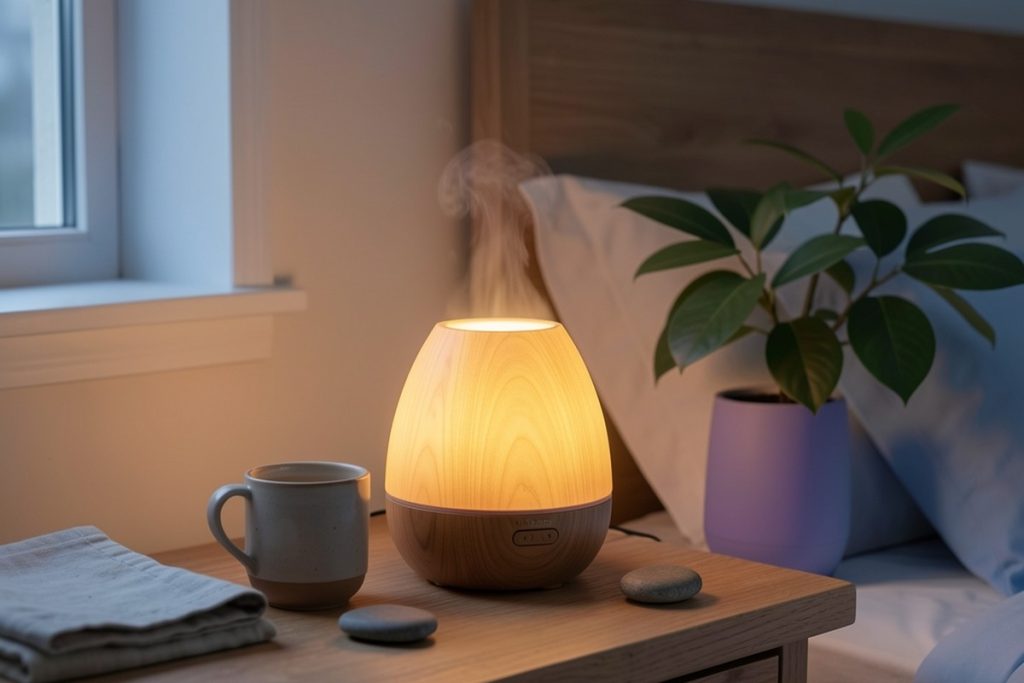
If you enjoy scent and want a single object that combines ambient light with optional aromatherapy, the SALKING 2-in-1 Ultrasonic Essential Oil Diffuser & Himalayan Salt Lamp is one possible fit. Its listed features include a 150ml reservoir, cool-mist diffusion, an auto-off function, Himalayan pink salt rock, and a wooden-grain finish. Use it for atmosphere, not as a treatment for insomnia or a substitute for medical care.
Start with the manufacturer’s directions and use only oils approved for the device. Essential oils can irritate some people, especially those with sensitivities, allergies, asthma, or migraine triggers. Stop if the scent causes headache, coughing, skin irritation, or breathing discomfort. If you live with pets or small children, check whether the specific oil is appropriate before using it in a shared room.
Minutes 5 to 0: Settle your attention
Lie down or sit comfortably and try six slow breaths. Let the inhale remain easy, then make the exhale slightly longer without straining. After that, notice your body from forehead to feet and release areas that are obviously tense. You do not need to empty your mind; simply return to the physical sensations of breathing whenever thoughts pull you away.
If counting breaths feels frustrating, use a neutral phrase such as “soften” on the exhale. The best technique is the one that feels calming rather than performative. When the 20 minutes are over, let sleep happen in its own time.
A practical bedtime checklist
- Finish brushing teeth, washing, and morning preparation before getting into bed.
- Write down up to three tasks for tomorrow instead of mentally rehearsing them.
- Dim the room and put your phone on do-not-disturb or outside reach.
- Choose one calming cue: tea, quiet music, gentle scent, or warm light.
- Use any diffuser according to its instructions and keep the reservoir clean.
- Take six slow breaths and allow your attention to rest on the exhale.
How to use a diffuser and humidifier safely
Ultrasonic devices disperse moisture into the air, so cleanliness matters. Empty leftover water rather than letting it sit, clean the reservoir as directed, and use the water recommended by the manufacturer. The U.S. Environmental Protection Agency advises regular cleaning of home humidifiers because standing water and mineral deposits can create problems when the device is operated.
Do not assume that a scented mist purifies a room or improves sleep quality. A pleasant smell may become a useful personal cue, but individual responses vary and research on aromatherapy for specific health outcomes remains limited. Keep the device away from the edge of a table, electrical splashes, and anything that could block ventilation. Never add oils to a device unless it is specifically designed for them.
What to do when the routine does not work
Give the routine at least several nights before judging it, but do not keep extending it when you are wide awake and frustrated. If you cannot sleep, leave the bed for a quiet, low-light activity and return when you feel sleepy. Avoid turning that wakeful period into a scrolling session.
Review the basics as well: a consistent wake time, enough opportunity for sleep, limited late-day caffeine, and daytime movement can matter more than any single bedtime product. If trouble falling asleep or staying asleep happens regularly, affects daytime functioning, or continues despite healthier habits, speak with a healthcare professional. Persistent insomnia may need a more structured evaluation and treatment than a home routine can provide.
Make the routine yours
A useful bedtime routine should feel reassuring, not restrictive. Keep the sequence stable, but adjust the details to your life. You might prefer reading a few pages of a paper book, stretching gently, listening to rain sounds, or sitting quietly with a warm drink. What matters is the pattern: finish practical tasks, lower stimulation, choose one calming cue, and stop asking your brain to be productive.
Start with the smallest version tonight. Twenty quiet minutes repeated consistently is more valuable than an elaborate routine that becomes another source of pressure.
Last reviewed: 2026-10-26
Sources
- Healthy Sleep Habits — National Heart, Lung, and Blood Institute
- Aromatherapy — National Center for Complementary and Integrative Health
- Use and Care of Home Humidifiers — U.S. Environmental Protection Agency