
Quick answer
Create a calming bedtime routine in a small bedroom by making the final 30–60 minutes predictable: dim the room, finish stimulating tasks, put tomorrow’s essentials in one place, and choose a quiet activity such as reading or gentle breathing. Keep the bedroom cool, dark, and uncluttered. A well-placed power strip can reduce cord mess, but it should support the routine—not become another device to use in bed.
Key takeaways
- Use the same short sequence each night instead of chasing a perfect routine.
- Reduce light, noise, clutter, and stimulating tasks before getting into bed.
- Keep charging cables and lamps accessible without placing electronics under bedding.
- Adjust the routine to your actual schedule, bedroom size, and sleep needs.
Why a small bedroom needs a simpler bedtime routine
A small bedroom can feel cozy, but it can also make relaxation harder. Laundry piles, bright chargers, work equipment, and tangled cables compete for attention because everything is within view. When the room has several jobs—sleeping, working, dressing, and storing belongings—it helps to give the space one clear evening purpose: winding down.
The goal is not to create a picture-perfect bedroom. It is to remove a few predictable sources of friction. You should be able to lower the lights, put your phone somewhere sensible, find what you need for the morning, and get into bed without starting another task.
Consistency matters more than complexity. A routine that takes 20 minutes and happens most nights is more useful than an elaborate ritual that becomes another obligation.
A practical 30-minute wind-down plan
| When | What to do | Keep it simple |
|---|---|---|
| 30 minutes before bed | End work, chores, or emotionally stimulating conversations. | Write down unfinished tasks so you do not have to mentally rehearse them. |
| 20 minutes before bed | Dim the main light and prepare the room. | Close curtains, adjust the temperature, and clear only the surfaces you can see from bed. |
| 10 minutes before bed | Complete a quiet personal routine. | Wash your face, brush your teeth, stretch gently, or read a few pages. |
| At lights-out | Put devices in their designated place. | Use an alarm clock or place your phone far enough away that you are not tempted to scroll. |
This sequence is flexible. If you go to bed at different times, keep the order rather than forcing the same clock time. The Centers for Disease Control and Prevention recommends a regular sleep schedule, a relaxing pre-bed routine, and turning off electronic devices before bed. Those suggestions are useful starting points, but your routine should fit your life rather than become a test you can fail.
Make the room visually quieter
In a compact room, visual clutter has an outsized effect because there is less distance between your bed and everything else. Start with the view from your pillow. Remove anything that reminds you of tomorrow’s obligations, such as open work bags, unfolded laundry, or paperwork. You do not need to organize the entire room; one clear sightline can be enough to make the space feel calmer.
Choose one soft light source for the final part of the evening. A shaded bedside lamp is usually more comfortable than a bright ceiling fixture. Keep the light warm and indirect, and avoid aiming it directly at your face. If you share the room, a small lamp on your side can be less disruptive than lighting the whole space.
Sound matters too. A closed door, soft furnishings, or a simple fan may reduce distracting background noise. Avoid turning the room into a collection of sleep gadgets. Start with the changes that cost nothing and add equipment only when it solves a specific problem.
Control charging cables without adding more stimulation
Charging equipment can be especially awkward in a small bedroom. A cable that barely reaches the bed encourages you to keep your phone beside your pillow. Multiple adapters can crowd the floor or bedside table, while loose cords collect dust and make cleaning harder.
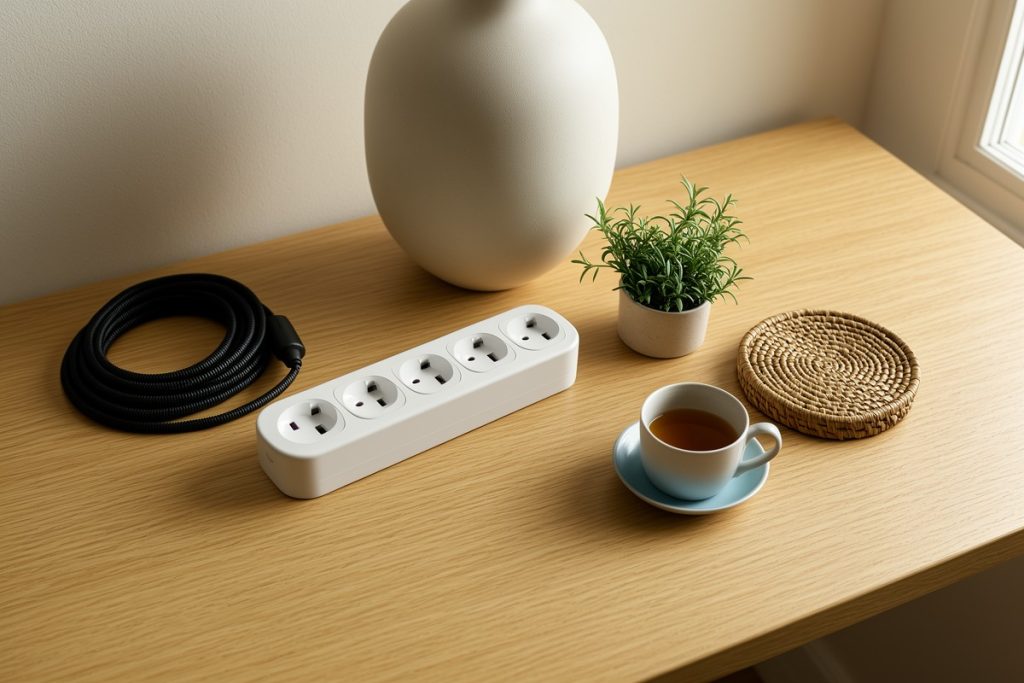
If the problem is limited outlet access rather than sleep itself, a 6Ft Surge Protector Power Strip with 8 Widely Outlets & 4 USB Ports | 3 Side Outlet Extender with 6 Feet Extension Cord, Flat Plug, for Home, Office, College Dorm Room Essentials, ETL, White may help organize a lamp and compatible charging equipment in one location. The listing describes its outlet and USB-port layout, but it is not a sleep aid and should not be treated as one. I have not independently tested it. Before using any power strip, check its instructions and condition, avoid overloading it or connecting strips together, and keep it away from bedding, liquids, heat, and walkways.
Place the strip where you can reach the switch or plug safely, but not where it becomes part of your bedtime entertainment. If possible, charge your phone across the room or outside the bedroom. The purpose of better cable organization is to make the room calmer and safer—not to make late-night scrolling more convenient.
Choose a wind-down activity that does not demand performance
Relaxation is easier when the activity has a clear stopping point. Try one of these options:
- Read a few pages of a familiar, low-stakes book.
- Write tomorrow’s three most important tasks, then close the notebook.
- Practice slow breathing for five minutes, focusing on a longer exhale.
- Listen to quiet audio with the display turned off.
- Do gentle stretches that feel comfortable rather than intense.
Do not turn these options into a productivity contest. If journaling makes you plan for an hour, choose breathing instead. If meditation makes you frustrated, try reading. A useful routine lowers stimulation; it does not require you to feel perfectly peaceful every night.
Adapt the routine when sleep is difficult
Notice what happens after several nights rather than judging the routine after one restless evening. You might discover that late caffeine, a warm room, worry about the next day, or a bright lamp is the real obstacle. Change one factor at a time so you can tell what helps.
If you are awake and increasingly frustrated, leave the bed for a quiet activity in dim light and return when you feel sleepy. Keep the activity boring and avoid checking the time repeatedly. Persistent sleep difficulties, loud snoring, gasping during sleep, or significant daytime sleepiness deserve a conversation with a healthcare professional.
The best small-bedroom bedtime routine is deliberately ordinary: fewer visible tasks, softer light, a reliable sequence, and a clear boundary between charging devices and sleeping. Build that foundation first. Accessories can make the setup neater, but the calming effect comes from how consistently the room supports rest.
Last reviewed: 2026-10-09