Quick answer
The best flameless candle lighter for indoor use should offer a protected ignition design, a clear safety control, rechargeable power, and a shape that reaches candle wicks without forcing your hand near the flame. A plasma-arc lighter can reduce reliance on an exposed flame, but it is not risk-free. Compare safety features, charging habits, reach, and return terms before buying.
Key takeaways
- Choose a lighter with a deliberate safety switch or activation control.
- USB recharging is convenient, but charging still requires a stable, supervised setup.
- Windproof and flameless describe the ignition method, not a guarantee of safe use.
- Keep any lighter away from children, flammable materials, and unattended candles.
Last reviewed: 2026-11-09
Why a flameless candle lighter can be useful
Lighting a candle with a standard match or disposable lighter is simple, but it can be awkward when the wick sits at the bottom of a deep jar. You may need to tilt the container, reach over a hot wax pool, or bring your fingers close to the flame. A long-neck flameless lighter addresses that specific problem by placing the ignition point farther from your hand.
Electric plasma-arc models create an ignition point between electrodes rather than using a conventional open flame. That makes them appealing for indoor candles, fireplaces, incense, and other small lighting tasks where wind can extinguish a traditional flame. The practical benefit is less about novelty and more about control: a narrow ignition tip can make it easier to reach a recessed wick.
However, “flameless” should not be interpreted as “harmless.” The arc can become hot, the lighter contains a rechargeable battery, and it is still being used around a candle flame and combustible materials. The National Fire Protection Association recommends keeping candles within sight, away from anything that can burn, and out of the reach of children and pets. Those habits remain important regardless of the ignition method.
What to look for when choosing one
1. A deliberate safety control
A safety switch, lock, or two-step activation system helps reduce accidental operation in a drawer or bag. Look for controls that are easy for an adult to understand but unlikely to activate from a casual bump. A safety feature is only useful if you actually use it, so avoid models that require a complicated sequence every time you light a candle.
Before buying, check whether the safety control is separate from the ignition button and whether the product instructions explain how to disable or lock the lighter. If the listing is vague about operation, treat that as a reason to research further rather than assuming the device has strong protection.
2. A useful neck and electrode position
The shape matters more than many buyers expect. A short lighter may work well for tealights but force your hand close to a jar candle. A longer neck can improve reach, while a slim tip may fit between the rim and wick. The trade-off is storage: an especially long design can be less convenient in a small drawer.
Consider the candles you actually use. Measure the depth of your favorite vessels, or at least inspect their opening and wick position. A lighter with a well-placed arc is more useful than one chosen only for its color or appearance.
3. Rechargeable power and charging habits
USB recharging avoids repeatedly buying disposable lighters and can make the device easier to keep ready. Still, rechargeable does not mean maintenance-free. Charge it with the supplied instructions, keep the charging area dry and uncluttered, and unplug it if the manufacturer advises doing so after charging. Do not use a device that becomes unusually hot, smells damaged, or shows signs of swelling.
Battery capacity and charging time vary by model. Unless those specifications are clearly published, do not assume a particular number of lights per charge. For occasional candle use, convenience may matter more than maximum capacity; for frequent use, published battery information becomes more important.
4. Wind resistance without exaggerated expectations
Plasma-arc lighters are often marketed as windproof because wind does not blow out an arc in the same way it can extinguish a flame. That can be helpful outdoors or near a drafty window. It does not mean the candle itself is safe in strong wind, nor does it remove the need to shield the candle and monitor it.
Wind resistance is also different from waterproofing. Keep the lighter away from rain, sinks, wet countertops, and spilled wax unless the manufacturer specifically gives it a suitable protection rating. A product can be useful in a breezy setting while still requiring dry storage.
One product worth comparing
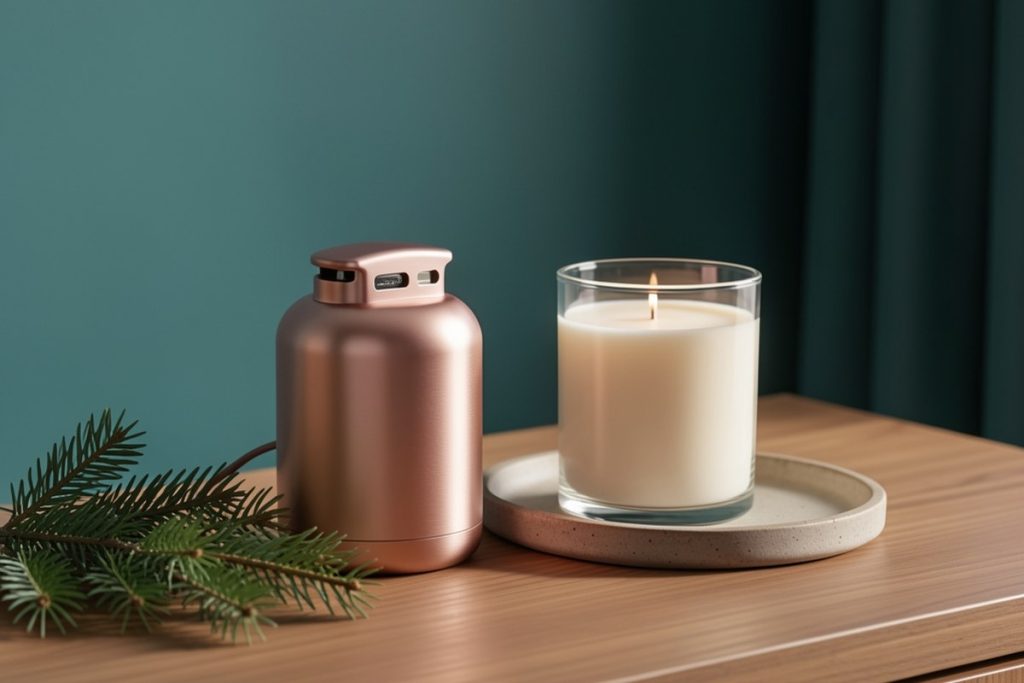
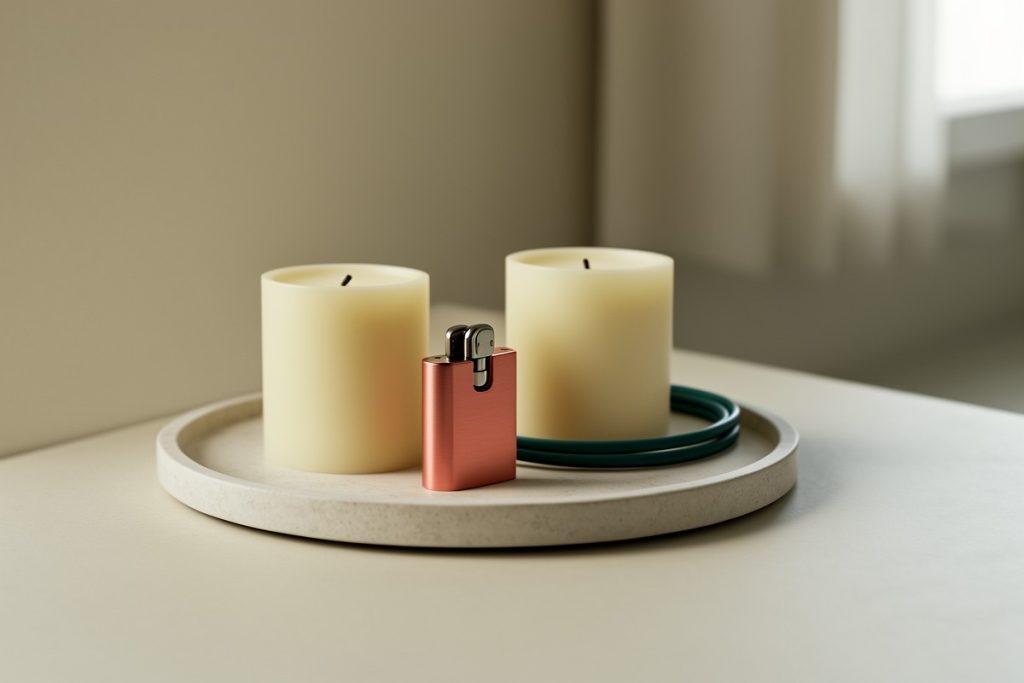
The FUKKUDA Electric Candle Lighter with Safety Switch – USB Rechargeable Windproof & Flameless Plasma Arc Lighter for Easter Basket Stuffers (Rose Gold) is a reasonable example to compare against this checklist. Its listing describes a safety switch, USB-rechargeable design, windproof operation, and flameless plasma-arc ignition.
Those features align with the main needs of someone lighting jar candles indoors: a control intended to reduce accidental activation, rechargeable operation, and an ignition method that does not depend on a conventional lighter flame. The rose-gold finish may also suit buyers who want a household tool that looks less disposable when left near a candle tray.
The limitations are equally important. The feature description alone does not establish how long a charge lasts, how durable the electrodes are, how comfortable the grip feels, or how well it performs with every candle shape. I have not independently tested this product, so treat the listing as a starting point rather than proof of long-term performance. Read the operating and charging instructions before use, and check the seller’s current terms before ordering.
A practical buying checklist
| Question | What a good answer looks like |
|---|---|
| Can it reach your candles? | The neck and tip can reach recessed wicks without tipping the jar. |
| How is it activated? | A clear safety switch, lock, or deliberate two-step control is included. |
| How does it charge? | The charging method and basic battery instructions are clearly stated. |
| Where will it be stored? | A dry, secure location away from children and heat sources. |
| What happens if it fails? | The listing provides understandable support, returns, or warranty information. |
How to use one more safely
Place the candle on a stable, heat-resistant surface before lighting it. Clear paper, curtains, decorations, and other combustible items from the immediate area. Keep the lighter pointed away from your body, and avoid placing the arc directly into liquid wax. Once the wick catches, move the lighter away and store it securely rather than leaving it beside the burning candle.
Never leave a burning candle unattended, even if it was lit with a flameless device. Extinguish the candle before leaving the room, going to sleep, or moving it. The U.S. Consumer Product Safety Commission’s candle-safety guidance likewise emphasizes keeping candles away from things that can catch fire and using stable holders.
For homes with children or pets, storage is especially important. A safety switch is not a substitute for physical separation. Keep the lighter locked away when it is not in use, and retire it if the casing, charging port, button, or arc area appears damaged.
Bottom line
A flameless candle lighter is most useful when it solves a specific nuisance: reaching a deep wick without bringing your hand close to an open flame. Prioritize reach, activation control, charging information, and sensible storage over decorative finish or broad marketing language. The example above has a feature set worth comparing, but buyers should verify instructions and expectations rather than assume every “windproof” or “flameless” claim eliminates ordinary candle and battery risks.