Quick answer
The best women’s carry-on essentials are the items that protect your comfort, health, plans, and personal routine without filling your bag. Start with identity documents and medication, then add a small toiletry system, versatile clothing layers, period-care supplies, chargers, and a few emergency basics. Pack by purpose, check airline rules, and avoid bringing full-size products you can easily replace.
Key takeaways
- Pack your carry-on around four priorities: documents, health, comfort, and access.
- Keep medication, essential toiletries, and one change of clothes with you rather than in checked luggage.
- Use a small organizer to prevent liquids, personal-care items, and emergency supplies from becoming one messy category.
- Check current airline, TSA, and destination rules before packing liquids, medication, or specialty items.
“Just in case” packing sounds sensible until your bag becomes heavy, crowded, and strangely difficult to use. A better approach is to build a carry-on around the moments when travel tends to become inconvenient: a delayed flight, lost luggage, an unexpected period, a dry hotel room, a dead phone, or a morning when you need to get ready quickly.
This women’s carry-on essentials checklist is designed for weekend trips, work travel, and longer journeys where you want useful options without packing your entire bathroom. It is not a list of products you must buy. It is a way to decide what earns space.
Start with the essentials you cannot replace easily
Your first layer should contain items that would be difficult, expensive, or stressful to replace at your destination. Keep these together in an easy-to-reach compartment, not buried beneath shoes and clothing.
- Passport or other required identification
- Wallet, payment card, and a small amount of local cash when appropriate
- Phone, charging cable, and power bank if permitted for your route
- Prescription medication and a copy of relevant prescription information
- Glasses, contact lenses, and necessary supplies
- Travel insurance, booking details, and emergency contact information
For international travel, keep medication in its original packaging when practical and confirm the destination’s rules before departure. The Centers for Disease Control and Prevention also recommends carrying important health and travel documents in both print and digital forms when possible.
Build a compact personal-care kit
Toiletries are where a thoughtful carry-on can become an overstuffed one. Instead of packing every product you use at home, separate your routine into three groups: items you need during transit, items you need on arrival, and items you can buy or skip.
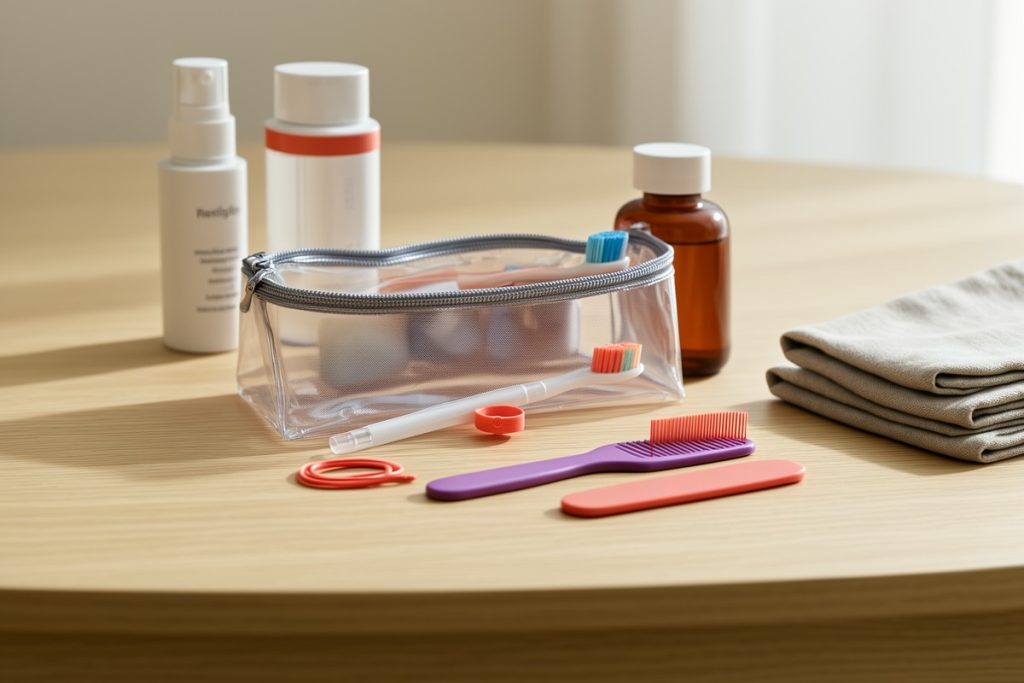
Your transit group might include lip balm, hand sanitizer, tissues, moisturizer, a toothbrush, toothpaste, deodorant, and any personal-care products you genuinely use several times a day. Your arrival group can include shampoo, conditioner, cleanser, sunscreen, hair products, and styling tools. If your accommodation supplies something reliably and you are comfortable using it, leave it behind.
A small organizer can make this easier. The Convenience Kits International kit may be worth comparing if you want one place for travel personal-care items, but check the current listing carefully for included contents, dimensions, and materials before deciding whether it fits your routine. A kit is useful only when it reduces rummaging; it is not automatically better than a pouch you already own.
For flights, separate liquids and gels according to the current security requirements for your departure airport. Rules can vary by airport, airline, route, and item type, so do not assume that a container accepted on one trip will be accepted everywhere.
Use a simple packing checklist for women’s travel essentials
| Category | Pack first | Decide based on the trip |
|---|---|---|
| Health | Prescriptions, glasses, basic pain relief, period-care products | Motion-sickness aid, allergy medicine, specialty supplies |
| Personal care | Toothbrush, toothpaste, deodorant, cleanser, moisturizer | Full hair routine, styling tools, backup cosmetics |
| Clothing | One change of underwear, comfortable layer, sleepwear | Extra shoes, formal outfit, bulky outerwear |
| Technology | Phone, cable, essential charger | Tablet, camera, extra adapters, laptop accessories |
| Comfort | Water bottle for after security, earplugs, small snack | Neck pillow, blanket, eye mask, reading material |
Do not forget period and health supplies
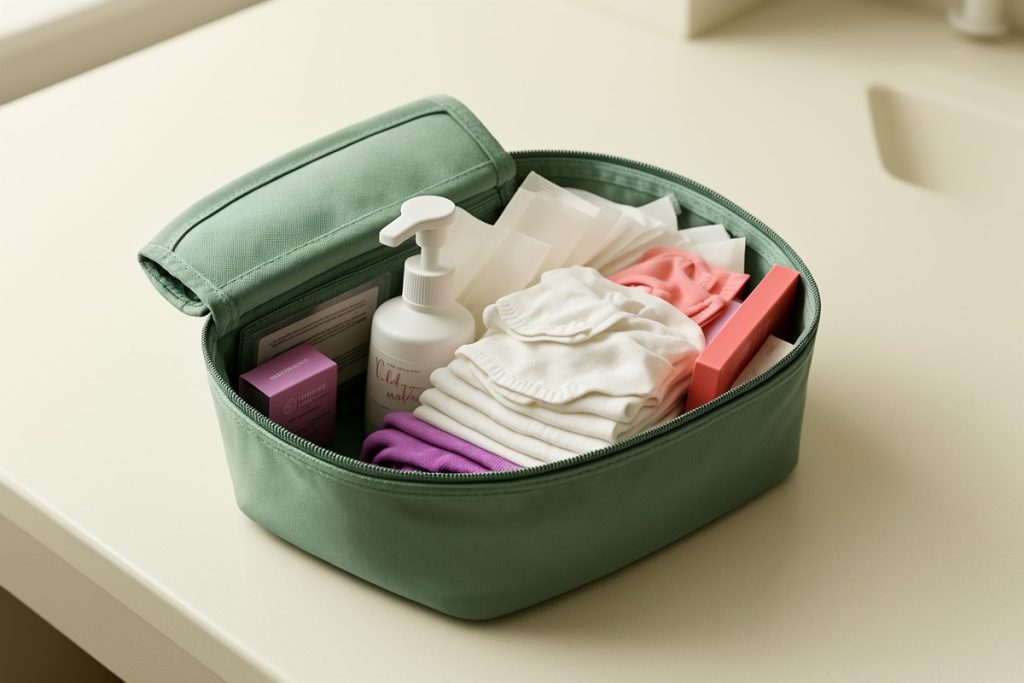
Period supplies deserve space even when your travel dates do not line up perfectly with your cycle. Stress, schedule changes, and limited shopping options can make an unexpected period more inconvenient than it needs to be. Pack the products you know work for you, plus a small margin rather than an entire month’s supply.
If you use prescription medication, keep it in your personal carry-on rather than a checked bag. The CDC’s travel guidance suggests considering destination-specific health risks and preparing a travel health kit. That does not mean carrying every item on a medical checklist. It means thinking honestly about what you may need and what would be difficult to find quickly.
For any medicine, supplement, or medical device, follow your clinician’s advice and check destination regulations. Personal comfort products are not a substitute for medical care, and unfamiliar symptoms should not be ignored simply because you are traveling.
Pack clothing for flexibility, not fantasy
Most overpacking happens when we pack for several imagined versions of the trip: the elegant dinner, the rainy afternoon, the spontaneous hike, and the perfectly coordinated photo. Start with the actual itinerary and choose pieces that can serve more than one purpose.
- Wear your bulkiest shoes and outer layer while traveling.
- Choose a neutral base with one or two accent colors.
- Pack one comfortable layer for cold planes and over-air-conditioned rooms.
- Bring underwear and socks for the trip, plus a small buffer.
- Add one outfit that feels presentable for an unexpected dinner or meeting.
- Use a laundry bag to keep worn clothing separate.
A lightweight scarf, overshirt, or cardigan often earns more space than a second statement outfit because it can provide warmth, coverage, or polish. Think in combinations rather than individual looks.
Make your carry-on easy to use in real life
The best packing system is the one you can operate while tired. Put items you will use in transit at the top: headphones, medication, a snack, tissues, and a cable. Keep toiletries in a removable pouch. Place a change of underwear and a fresh top near the opening so you can reach them without unpacking everything.
Before leaving, do a five-minute access test. Open the bag as if you were at an airport gate or hotel bathroom. Can you find your medication? Can you remove liquids quickly? Is your charger tangled under shoes? If the answer is no, reorganize before adding anything else.
A final carry-on check before you leave
- Confirm identification, reservations, and any destination-specific documents.
- Move prescriptions and essential health supplies into your personal bag.
- Check liquid, battery, and airline restrictions for your route.
- Remove duplicates and products you can comfortably skip.
- Add one change of clothes and a few period-care supplies.
- Charge essential devices and pack the correct cables.
- Leave a little space so the bag remains usable after the first day.
A good carry-on does not anticipate every possible inconvenience. It protects you from the predictable ones while leaving enough room to move through the trip comfortably. Pack for your real itinerary, your real routine, and the few essentials you would genuinely miss.
Last reviewed: 2026-11-23