
Quick answer
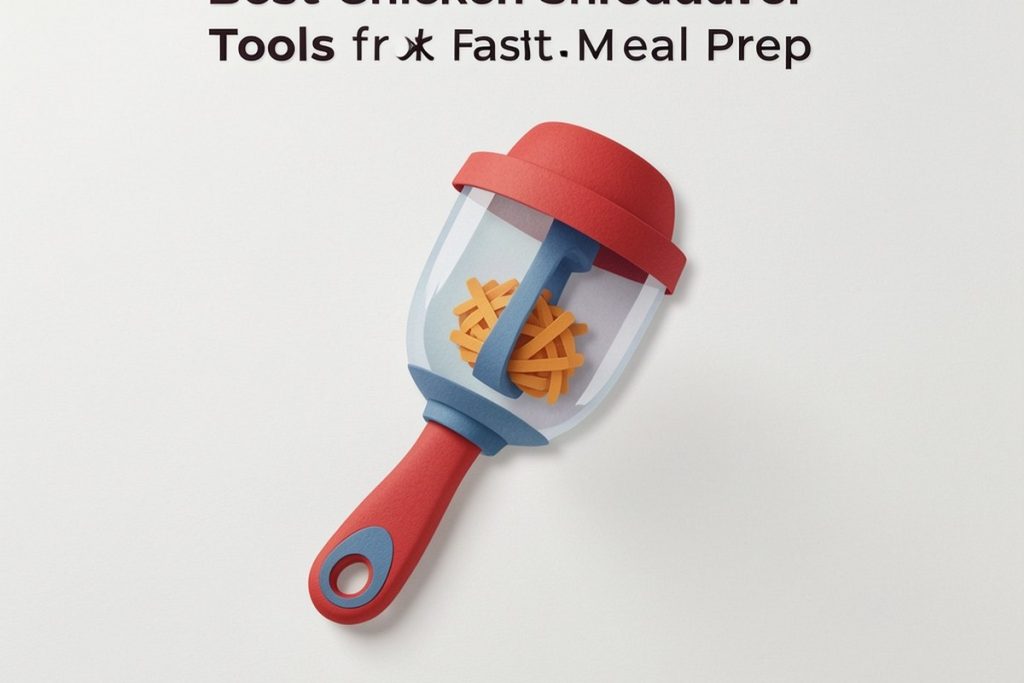
A dedicated chicken shredder tool with a clear chamber and twist mechanism can reduce shredding time from several minutes to under 30 seconds for a standard chicken breast. Unlike the classic two-fork method, these tools contain the meat, reduce mess, and work best with chicken cooled to roughly 150°F–160°F after resting. For home cooks doing weekly meal prep, they eliminate a repetitive task and produce consistent, restaurant-style pulled chicken texture.
Key takeaways
- Twist-style chicken shredders with non-slip bases turn cooked breast into pulled meat in seconds while keeping it contained.
- Chicken should be cooked to 165°F internally and slightly cooled before shredding to preserve texture and food safety.
- Clear chambers let you monitor progress and avoid over-shredding into mush.
- BPA-free plastic and top-rack dishwasher compatibility are the most practical quality markers.
- These tools also work for beef brisket, pork shoulder, and tender cooked vegetables.
The Real Cost of Fork-Shredding Chicken
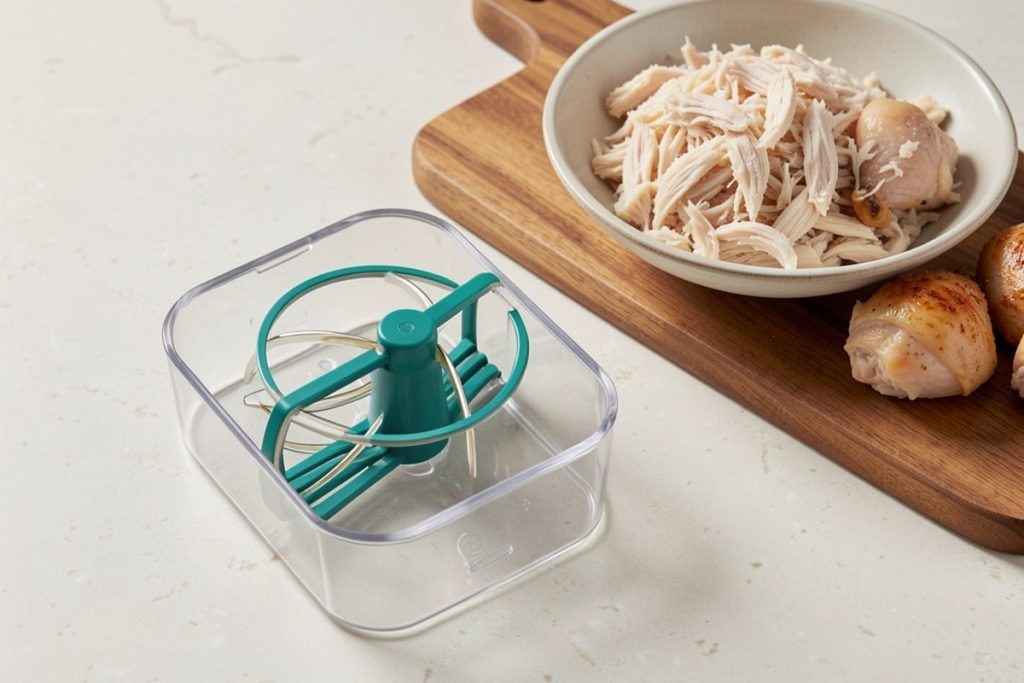
If you meal prep even a modest three pounds of chicken on Sunday, the two-fork method turns into a tedious, ten-minute arm workout. The meat slides across the cutting board, half of it ends up on the counter, and the texture comes out uneven—some pieces stringy, others chunky. Worse, the repetitive motion strains your wrists and shoulders. For anyone cooking in bulk, this bottleneck turns a simple protein into a chore that discourages healthy eating. A purpose-built tool solves the mess, the time sink, and the inconsistent results in one motion. Instead of wrestling with slipping forks, you load the chamber, twist the lid, and collect evenly shredded meat ready for salads, wraps, or grain bowls.
What Makes a Chicken Shredder Tool Worth Buying
Not every kitchen gadget earns its drawer space. A useful chicken shredder combines mechanical advantage with food-safe materials. Before adding one to your cart, confirm it hits these practical benchmarks:
- Twist or gear-driven mechanism: Look for a lid that twists to engage raised teeth or blades; simple spike plates without motion require you to do all the work.
- Non-slip base: Rubberized grips keep the chamber stable on counters while you turn the top.
- Transparent body: Visibility prevents over-processing so you don’t end up with baby-food texture.
- BPA-free material: Heat-resistant, food-grade plastic avoids chemical leaching during contact with warm meat.
- Dishwasher-safe parts: Top-rack safe designs save cleanup time after batch cooking.
- Capacity: A chamber wide enough for two large breasts cuts total prep time further.
Fork Method vs. Shredder Tool: Side-by-Side
Here is how the classic approach stacks up against a dedicated tool during a typical weeknight meal-prep session.
| Feature | Two Forks | Chicken Shredder Tool |
|---|---|---|
| Time per breast | 3–5 minutes | 10–30 seconds |
| Texture control | Uneven, manual | Consistent, mechanical |
| Mess level | High; shreds scatter | Low; contained chamber |
| Best use case | Single servings | Batch meal prep |
| Cleanup | Board + two forks | Tool parts, top-rack safe |
How to Shred Chicken Safely for Best Results
Speed only matters if the food stays safe to eat. The USDA recommends cooking chicken to an internal temperature of 165°F measured at the thickest part. Once it hits that mark, let it rest for five to ten minutes. Attempting to shred straight out of a 212°F boiling pot or a 425°F oven yields mushy strands and burns your fingers. Instead, work with chicken that has cooled to roughly 150°F–160°F. At this range, the muscle fibers are still pliable but firm enough to separate cleanly without tearing into a paste.
If you are shredding leftovers from the refrigerator, reheat them to at least 165°F first, then cool slightly before twisting. Always use a separate shredder for cooked meat than you use for raw prep, or wash the tool thoroughly with hot soapy water between tasks to avoid cross-contamination. Because chicken is a high-risk protein for bacterial growth, keeping your shredding gear clean is as important as cooking to temp.
A Reliable Pick for Weekly Meal Prep
If you want a tool that matches the criteria above, the NonSlip Chicken Shredder Tool Twist is a bestselling option worth considering. It features a clear chamber for visible shredding progress, a non-slip base that grips countertops, and BPA-free plastic construction. The twist mechanism works on chicken breast, beef, and other cooked proteins without relying on fragile spikes. It is marketed as a time-saving alternative to manual pulling and fits standard top-rack dishwasher cleaning. Because it is transparent, you can stop twisting the moment the meat reaches your desired consistency.
Cleaning and Maintenance Tips
Protein residue left in crevices causes odor and bacterial growth. After each use, disassemble the tool if the design allows, and rinse off loose meat immediately. Most quality models are top-rack dishwasher safe, but placing the unit on the upper rack prevents warping from excessive bottom-rack heat. If washing by hand, use a bottle brush or a small scrubber to reach between the shredding teeth. Dry every component thoroughly before storing; trapped moisture encourages mildew. Store the unit assembled in a dry drawer so the base and lid stay together and the teeth stay protected.
Other Foods That Work in a Shredder Tool
While chicken breast is the most common candidate, these tools handle any cooked protein that benefits from a pulled texture. Beef brisket and chuck roast shred well for tacos, sandwiches, or pasta sauce. Pork shoulder breaks down quickly for carnitas or BBQ plates. Beyond meat, cooked sweet potatoes, boiled beets, steamed squash, and roasted eggplant can be gently twisted into a mash-free crumble for salads, hashes, or stuffed peppers. The key is that the food should be cooked until tender but not waterlogged; excess moisture makes the chamber slippery and reduces the teeth’ grip. Avoid using the tool on raw vegetables or uncooked meat. Their dense fibers can jam the mechanism or chip the plastic teeth, and raw poultry residue introduces contamination risks that are harder to wash away from textured surfaces.
Sources
- Chicken Food Safety Charts — USDA Food Safety and Inspection Service
- Bisphenol A (BPA): Use in Food Contact Application — U.S. Food and Drug Administration
Last reviewed: 2026-08-10