
Quick answer
During a power outage, follow breaking news through at least two trusted channels: official emergency alerts or local authorities, plus a battery-powered radio or verified news outlet. Charge devices early, save key updates offline, and treat forwarded posts, dramatic videos, and unsourced screenshots as unconfirmed. Before sharing, check who issued the claim, when it was published, where it applies, and whether an accountable source confirms it.
Key takeaways
- Use official alerts, local agencies, and utility updates as your first source of information.
- Keep at least one backup channel, such as a battery-powered radio or a second device with saved contacts.
- Verify the source, date, location, and original context before reposting urgent claims.
- A wall charger can keep devices ready before an outage, but it is not a substitute for a power bank or generator.
By Milo Zhang, Event-Impact Interpreter
Last reviewed: 2026-08-14
Why power outages make breaking news harder to verify
A power outage does more than turn off the lights. It can interrupt home internet, reduce access to television news, drain phone batteries, and make it harder to distinguish an official update from a rumor spreading through group chats.
The information environment also changes during a fast-moving event. A storm, wildfire, infrastructure failure, severe weather warning, or public-safety incident may develop faster than formal statements can be published. Early reports can be incomplete, locations can be confused, and old photos or videos may be reposted as if they were new.
That does not mean every unofficial report is false. It means you should assign it the right status. An eyewitness post may be a useful lead, but it is not automatically confirmation. A message from an unknown account should not carry the same weight as a timestamped notice from an emergency-management agency, utility, weather service, or established newsroom with named reporting.
Build a two-channel information plan before the outage
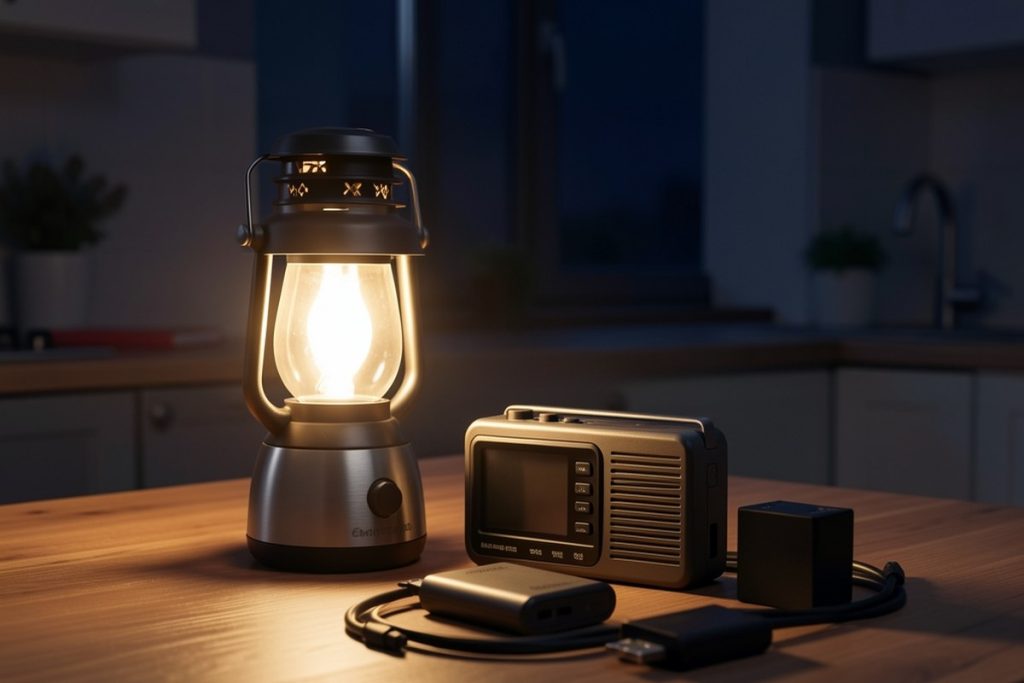
The best time to decide where you will get updates is before the emergency begins. Choose one official channel and one independent backup. Your official channel might be a local emergency-management office, utility provider, municipal alert system, or weather agency. Your backup could be a battery-powered or hand-crank radio, a trusted newsroom app, or a second device connected to a different network.
Ready.gov recommends preparing for emergencies with ways to receive alerts and maintain basic communication. The practical lesson is simple: do not rely on a single smartphone, app, or internet connection. A phone with a full battery is useful, but it is only one part of an information plan.
Save important information before the power fails. Download offline maps for your area, write down local emergency numbers, and store the websites or phone numbers for your utility and local government. If your area uses text alerts, enroll before you need them. Keep notification settings enabled for high-priority emergency messages, while turning off unnecessary alerts that consume battery and attention.
A wall charger is most useful before an outage, when electricity is still available. For a desk or travel setup, the GRAVASTAR 65W GaN Robot USB-C Charger with 3 Ports offers two USB-C ports, one USB-A port, and foldable legs according to its product listing. It should be viewed as a convenient multi-device charger, not as a battery backup: it cannot charge devices once the outlet loses power unless another power source is available.
Use a source ladder instead of a viral feed
When an event is unfolding, evaluate information in layers. Start at the highest level of accountability and move down only when necessary.
- Official emergency sources: Check local government alerts, emergency-management offices, utilities, fire departments, police departments, and weather agencies for instructions that affect safety or travel.
- Established news organizations: Look for reporting that identifies its sources, location, publication time, and what is still unknown.
- Direct witnesses and local organizations: These can provide useful on-the-ground details, but verify their claims before treating them as established facts.
- Social posts and forwarded messages: Use them as leads only. Anonymous claims, cropped screenshots, and emotionally worded posts need independent confirmation.
The Cybersecurity and Infrastructure Security Agency distinguishes between misinformation, disinformation, and malinformation. The distinction matters because inaccurate information can be shared accidentally, deliberately fabricated, or built from genuine material used out of context. You do not need to identify the sender’s motive before acting carefully. You do need to avoid presenting an unverified claim as fact.
Run this five-minute breaking-news verification check
Before forwarding a warning or posting it publicly, work through this short checklist:
- Source: Who first made the claim? Can you reach the original post, agency notice, interview, or report?
- Time: When was it published or recorded? A true image from yesterday may be misleading during today’s event.
- Place: Does the location match your area? Similar-looking streets, buildings, and weather conditions can cause mistakes.
- Evidence: Does the report explain how the information was obtained, or does it simply repeat “officials say” without detail?
- Confirmation: Can you find the same core fact through a second accountable source?
Pay particular attention to screenshots. They can hide the original account, date, location, and surrounding context. Instead of trusting the screenshot, search for the issuing organization’s current page or verified account. If the claim concerns an evacuation, road closure, shelter, curfew, or service interruption, check the responsible local authority directly.
What to do when trusted sources disagree
Conflicting reports do not always mean that one side is lying. Agencies may be working from different time windows, measuring different areas, or updating information at different speeds. A utility may report an outage estimate while a local authority is addressing public safety. A newsroom may describe what witnesses are reporting while officials are still confirming the facts.
Compare the scope of each statement. Ask whether the sources are discussing the same location, time, and question. “Power is returning” is not necessarily inconsistent with “thousands of customers remain without power” if restoration is happening in stages.
When the disagreement affects immediate safety, follow the most relevant official instruction for your location rather than choosing the most reassuring version. If no clear instruction exists, avoid risky action based on speculation. Use cautious language when sharing: “This has not been independently confirmed,” or “The local emergency office has not yet updated its guidance.”
Preserve battery and attention during a long event
Information access is a limited resource during an outage. Lower screen brightness, enable battery-saving mode, close background apps, and avoid repeatedly refreshing social feeds. Download or write down essential details instead of keeping several live pages open. If you have a power bank, reserve it for communication and safety information rather than entertainment.
Do not assume that every alert requires immediate action. Read the full message, identify the affected area, and look for an expiration time or follow-up instruction. An alert that applies to one neighborhood may not apply to another. If a message tells you to call a number, visit a location, or evacuate, verify that the instruction comes from a legitimate authority before acting—unless there is an immediate and obvious danger requiring emergency assistance.
A calm routine for sharing updates responsibly
During a major event, your own post can become part of the information stream that other people depend on. Share confirmed instructions and clearly sourced updates first. Separate what you know from what you suspect. Do not add dramatic details to make a report more compelling, and do not repost graphic or frightening material simply because it is receiving attention.
If you discover that you shared something inaccurate, correct it visibly rather than quietly deleting it. State what changed and link to the reliable update. That small habit helps prevent an early mistake from continuing through private messages and copied posts.
The goal is not to become a professional investigator every time the lights go out. It is to create enough redundancy that you can receive reliable information, verify urgent claims, and communicate without adding confusion. A charged device, a backup channel, and a five-minute source check provide a practical foundation for following breaking news when normal routines fail.