
Quick answer
The best avocado saver for a half avocado should fit snugly, protect the cut surface, stay stable in the refrigerator, and be easy to wash. A silicone produce holder can be useful if you regularly save avocados, lemons, tomatoes, or onion pieces. It will not prevent quality loss indefinitely, so prompt refrigeration, clean handling, and checking the food before eating still matter.
Key takeaways
- Choose a holder that matches the size and shape of the produce you usually save.
- Silicone produce holders are most useful for small, cut portions rather than large leftovers.
- Wash produce before cutting and refrigerate cut items promptly.
- Check dimensions, closure design, and cleaning instructions before buying.
- A dedicated saver is worthwhile only if it solves a repeated kitchen problem.
Why storing half an avocado can be awkward
Avocados are often sold or prepared in portions larger than one meal requires. Once cut, the exposed flesh can darken and become less appealing, while the soft shape makes ordinary storage methods inconvenient. Plastic wrap may not sit evenly over the surface, and a container that is too large can take up unnecessary refrigerator space.
The practical goal is not to make a cut avocado last forever. It is to create a simple barrier between the exposed produce and the surrounding air, keep the portion protected in the refrigerator, and make cleanup straightforward. The best storage method is usually the one you can use immediately after preparing a meal.
A purpose-built avocado saver may be useful for people who regularly use half an avocado at breakfast, save a lemon after cooking, or keep part of an onion for later. If those situations are uncommon in your kitchen, a small reusable container you already own may be the more sensible choice.
What to look for in an avocado saver
Not every produce holder is equally convenient. Before choosing one, consider four practical details.
Fit and capacity
A holder needs to accommodate the produce you normally buy. An avocado can vary considerably in size, and a holder that is too small may be difficult to close without pressing on the flesh. One that is too large may allow the food to shift around. Check the listed dimensions rather than assuming every “avocado saver” fits every avocado.
Protection for the cut surface
The design should cover the exposed portion consistently. A secure closure can help keep the cut side from rubbing against other items in the refrigerator. However, a holder is not an airtight freshness guarantee, and its performance will depend on the produce, the fit, handling, and storage time.
Ease of cleaning
Avocado oils, tomato juice, garlic residue, and onion odors can collect around seams or fasteners. A simple, washable design is easier to maintain than one with numerous small parts. Look for clear care instructions and consider whether the item can dry thoroughly between uses.
Versatility
A product that works with several types of small produce may offer more value than one designed for a single ingredient. Versatility is especially useful when you often save half a lemon, a tomato, a garlic bulb, or part of an onion. Still, confirm that each item in a multipack is suitable for the shapes and sizes you intend to store.
Where a four-piece silicone holder fits
If your recurring problem is storing small portions of cut produce, the Avocado Saver & Onion Storage, 4Pcs Silicone Fresh Produce Holder is a product worth considering. As an Amazon Associate, GetWitty may earn from qualifying purchases.
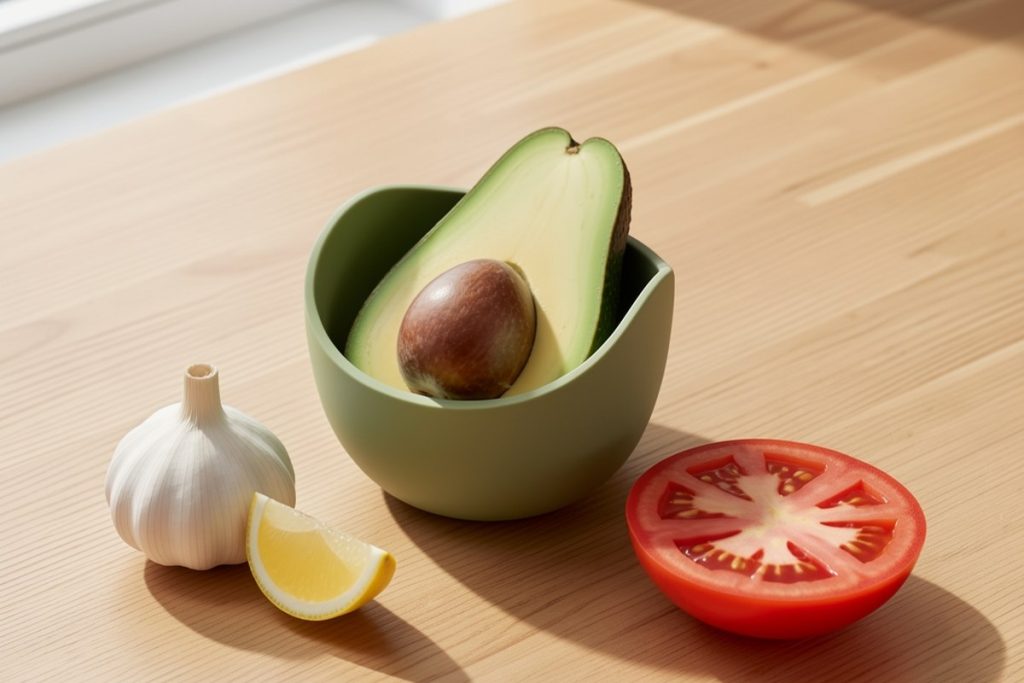
The listed set is described as four silicone holders for avocados and other produce, including tomatoes, lemons, garlic, and similar ingredients. Its strongest practical advantage is the multipurpose format: several holders can be available when more than one ingredient needs protection, without relying on disposable wrap each time.
The trade-off is that fitted produce holders are specialized tools. They may not be ideal for chopped avocado, large portions, unusually shaped leftovers, or ingredients that need to be stored in a larger sealed container. Before purchasing, check the current product page for dimensions, care instructions, and how the closure works. Do not assume the holder makes food shelf-stable or eliminates the need for refrigeration.
Avocado saver comparison
| Storage option | Best for | Main limitation |
|---|---|---|
| Fitted silicone holder | Half avocados and similarly sized produce | Capacity and shape may be limited |
| Small lidded container | Chopped produce or larger portions | Uses more refrigerator space |
| Reusable stretch wrap | Odd shapes and open bowls | Can be fiddly to clean and apply |
| Disposable plastic wrap | Occasional emergency storage | Creates recurring waste and may seal unevenly |
For one neatly cut avocado half, a fitted holder is convenient because it avoids searching for a correctly sized container. For diced avocado, a lidded container is generally easier to organize. For irregular produce pieces, reusable wrap can provide a more flexible fit. The right choice depends on the leftovers you actually create, not simply on which storage format looks most specialized.
A practical routine for storing cut produce
- Wash whole produce before cutting. The U.S. Food and Drug Administration recommends rinsing produce under running water, even when the skin or peel will not be eaten. Use a clean knife and cutting board, and do not use soap or commercial produce washes.
- Separate the portion promptly. Put the unused half or piece into its holder or container soon after preparation. Close it without crushing soft food.
- Refrigerate cut produce. Keep it away from raw foods and leaking packages. A storage accessory supports safe handling; it does not replace temperature control or ordinary refrigerator hygiene.
- Clean the holder after use. Remove residue, follow the manufacturer’s care guidance, and allow the item to dry fully before storing it.
- Inspect before eating. Discard produce with mold, unusual slime, or an off odor. Do not rely on a storage accessory to make questionable food safe.
Is a dedicated avocado saver worth buying?
A dedicated saver makes sense when you repeatedly use only part of an avocado or other small produce item, dislike disposable wrap, and want a predictable place to store leftovers. The value is mainly convenience: a storage step that takes seconds is more likely to become a consistent habit.
It is less compelling if you rarely save produce, mostly store chopped ingredients, or already have small containers that seal well. In that case, another specialized item may add drawer and refrigerator clutter without solving a meaningful problem.
Before buying, use this short checklist:
- Measure the refrigerator space where the holder will live.
- Compare the product dimensions with the produce you usually purchase.
- Confirm how the item closes and how it should be cleaned.
- Decide whether you will use the set for more than one ingredient.
- Choose a container instead if you mainly store chopped or large portions.
The balanced conclusion is simple: a silicone produce holder can be a useful short-term refrigerated storage tool for appropriately sized cut produce. It is not a promise that every avocado will remain appealing for the same amount of time, and it cannot replace clean preparation, prompt refrigeration, or sensible food checks.
Last reviewed: 2026-08-17
Sources
- 7 Tips for Cleaning Fruits and Vegetables — U.S. Food and Drug Administration
- Leftovers and Food Safety — U.S. Department of Agriculture Food Safety and Inspection Service