
Quick answer
A useful women’s travel hygiene kit should cover the problems most likely to arise between departures, bathroom stops, and hotel check-ins: a clean underwear change, period products, gentle wipes, hand sanitizer, tissues, and disposal bags. Keep everything in a small, accessible pouch inside your carry-on. Pack for your body, your destination, and the length of time you may be without easy access to supplies.
Key takeaways
- Pack a complete backup outfit, not just one hygiene item.
- Keep essentials in your carry-on and within easy reach.
- Choose products that match your size, skin sensitivities, and routine.
- Plan discreet disposal before you need it.
By Dr. Amara Okafor, Empowerment Psychologist
Why a small travel hygiene kit makes a big difference
Travel disruptions are rarely dramatic, but they can become stressful quickly. A delayed flight, missed connection, long road trip, unexpected period, spilled coffee, or sudden change in weather can leave you uncomfortable for hours. The goal of a hygiene kit is not to prepare for every possible problem. It is to give yourself a few practical options when your luggage is unavailable or the nearest shop is far away.
Think of the kit as a comfort buffer. It should be compact enough to carry daily, organized enough to use discreetly, and flexible enough for work travel, holidays, festivals, or visits with family. A good kit also reduces decision fatigue: instead of searching through a suitcase, you know exactly where the essentials are.
What to pack in a women’s travel hygiene kit
Start with the basics, then adapt the list to your travel plans. A two-hour train journey may need less than an overnight flight or a full day of sightseeing.
- One clean underwear change: Choose a familiar cut and size that you know you can wear comfortably.
- Period protection: Pack the product or combination you normally use, plus a little extra if your timing is uncertain.
- Gentle wipes or tissues: These can help when a restroom is poorly stocked, but they are not a replacement for washing.
- Hand sanitizer: A travel-size bottle is useful when soap and water are unavailable. The CDC’s hand hygiene guidance recommends washing with soap and water when possible.
- Small disposal bags: Opaque, sealable bags make it easier to manage used products privately until you reach a suitable bin.
- Optional comfort items: Add lip balm, a hair tie, pain relief you already use safely, or a spare pair of lightweight leggings.
If you are flying, check the size of any liquid, gel, or aerosol item before packing it. In the United States, the TSA’s liquids guidance generally limits carry-on containers to 3.4 ounces or 100 milliliters and requires them to fit within a single quart-sized bag. Solid products can simplify packing.
A five-minute packing checklist
Use this checklist before leaving home. Place the finished kit somewhere you can reach without unpacking your main suitcase.
- Check that the spare underwear fits comfortably and is appropriate for the length of your journey.
- Add enough period protection for the trip, with a margin for delays.
- Seal liquids and wipes so they cannot leak onto clothing or electronics.
- Include at least two disposal bags and a small packet of tissues.
- Put the pouch in your personal item or carry-on rather than checked luggage.
- Replace anything used as soon as you return home.
When an emergency underwear kit is worth considering
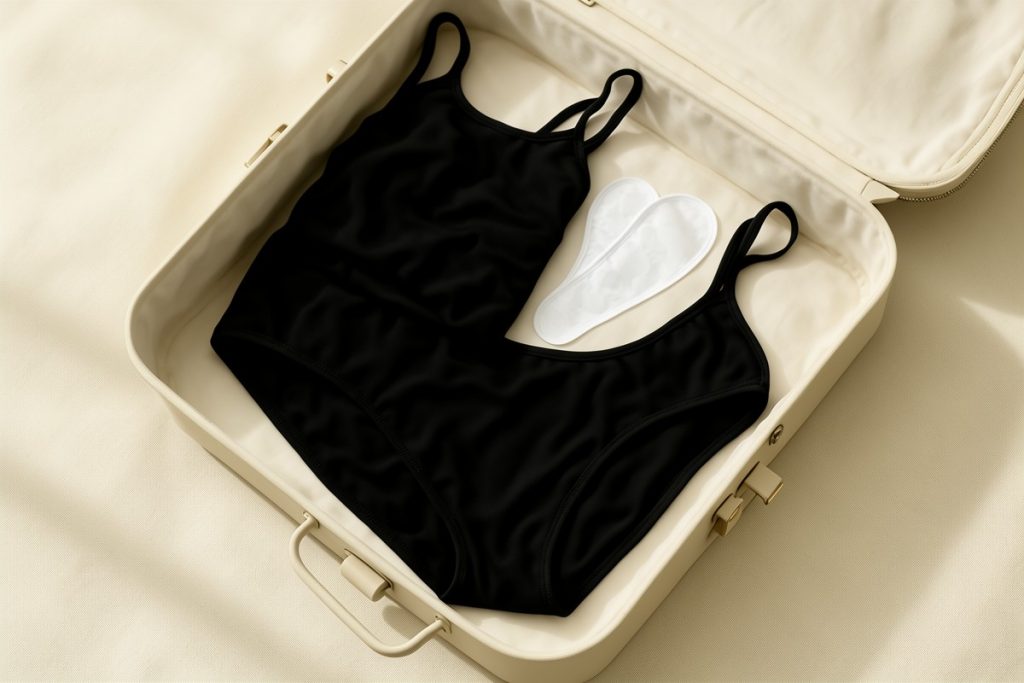
Some travelers prefer assembling these items individually. Others want a ready-made backup that takes up little space. The Emergency Panties® On-The-Go Underwear Kit is listed with a black seamless bikini, a fresh wipe, and a panty liner, with a stated plus-size fit of 1X–3X.
That combination may be useful for someone who wants a preassembled emergency option for a handbag, carry-on, office drawer, or car. It is not a complete travel hygiene system: you may still need your preferred period products, hand hygiene supplies, disposal bags, and a full change of clothes. Before choosing it, confirm that the listed size range and cut suit you, and review the included-item details. If you have sensitive skin, check the wipe’s ingredients and directions rather than assuming it will work for you.
How to keep the kit discreet and easy to use
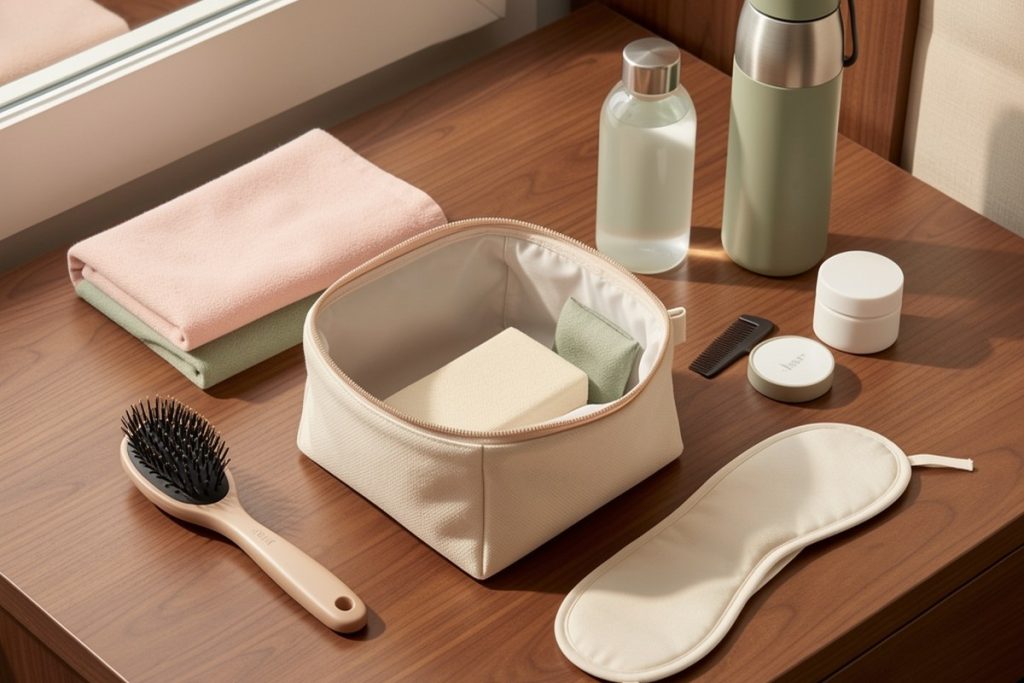
Organization matters as much as the contents. Use a washable pouch with a wide opening so you can find one item quickly. Keep clean items in one compartment and disposal bags in another. A dark or opaque pouch can provide privacy, while a flat shape is easier to slide into a tote or seat-back pocket.
Do not bury the kit beneath shoes, chargers, or toiletries. If you are traveling by plane, store it where you can reach it during a delay. On a road trip, keep it in the passenger area rather than the trunk. At a hotel, restock it while you are unpacking instead of waiting until the next morning.
Use hygiene products gently
Travel is not the time to experiment with unfamiliar fragrances, washes, or internal cleansing products. Follow the directions on any wipe, and use it only as intended. The Office on Women’s Health explains that douching is not necessary and can disrupt the vagina’s natural balance. Simple external cleaning and changing into dry, clean underwear are usually more sensible travel habits than trying to mask discomfort with heavily scented products.
Hand hygiene is especially important before and after changing period products or underwear. When soap and running water are available, use them. When they are not, hand sanitizer can be a temporary option until you can wash properly. Avoid touching clean items with visibly dirty hands, and keep used products away from the rest of your kit.
Know when travel discomfort needs medical attention
A travel kit can manage an inconvenience, but it cannot diagnose or treat a health problem. Seek medical advice for unusual bleeding, strong or persistent odor, significant itching, sores, fever, severe pelvic pain, or symptoms that continue after you return. If you are pregnant, recently postpartum, or managing a known condition, ask your clinician what supplies or precautions make sense for your itinerary.
Last reviewed: 2026-09-04