
Quick answer
The best automatic can opener is one that removes repetitive twisting without creating new hassles. The Kitchen Mama Auto Electric Can Opener is worth considering if you want hands-free operation, a battery-powered design, and a stated smooth, food-safe edge. Before buying, confirm battery requirements, can compatibility, cleaning instructions, storage space, and how carefully the separated lid must be handled.
Key takeaways
- Automatic operation is most useful when manual handle-turning feels tiring, awkward, or repetitive.
- The Kitchen Mama model is battery-operated, so convenience depends on having compatible batteries available.
- A stated smooth-edge design may reduce sharp exposed edges, but the cut lid still requires careful handling.
- Check the instructions for can sizes, cleaning, battery access, and storage before purchasing.
- A manual opener may be the better choice if you open cans rarely or want a tool with no batteries.
Last reviewed: 2026-09-11
Why an automatic can opener can be useful
Opening a can is usually a minor kitchen task, but the manual motion can become surprisingly inconvenient. A traditional opener requires repeated turning, steady pressure, and enough grip strength to keep the tool aligned. That is manageable for occasional use, yet frustrating when you prepare canned ingredients several times a week.
An automatic opener changes the process. Instead of rotating a handle throughout the cut, you position the device and let its mechanism travel around the lid. That can make quick meals easier to prepare and reduce the amount of repetitive wrist movement involved.
The best reason to buy one is a specific recurring problem: manual opening is uncomfortable, slow, or inconvenient for you. Automatic does not automatically mean better for everyone. You still need to manage batteries, clean the appliance appropriately, store it somewhere accessible, and handle the detached lid safely.
What the Kitchen Mama automatic opener offers
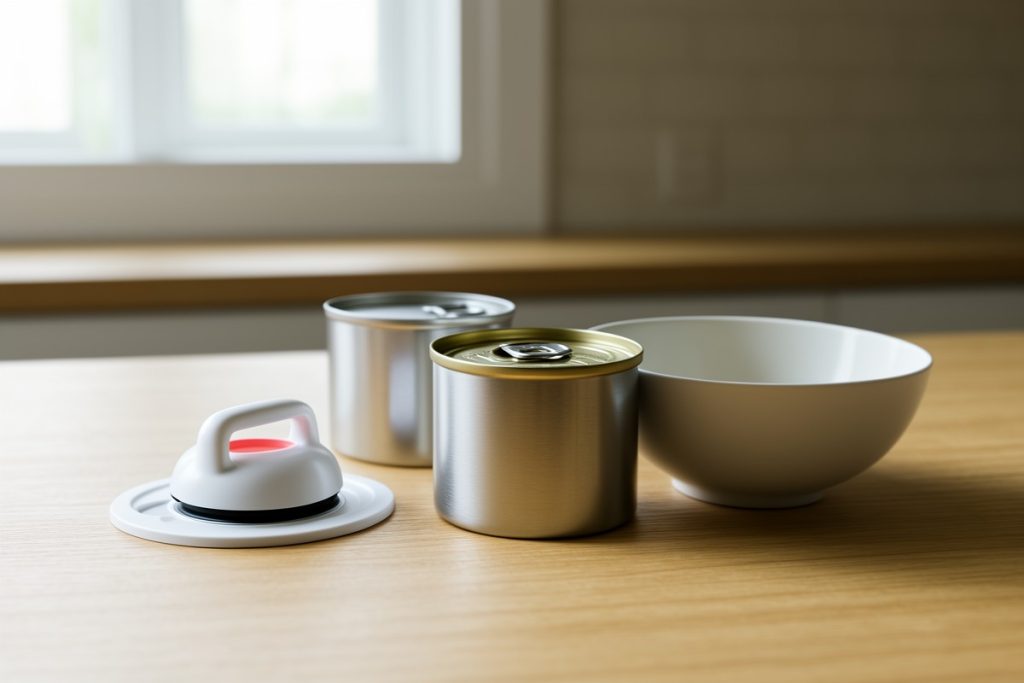
The Kitchen Mama Auto Electric Can Opener, White is listed as automatic, hands-free, battery-operated, and designed to produce a smooth, food-safe edge. Those features directly address the main frustrations people have with manual openers: repeated twisting and concern about a rough cut around the lid.
The white finish is visually neutral, which may suit kitchens where appliances are stored on an open counter. Its battery-powered design also avoids the need for a power cord during use. That is convenient for flexible placement, but it means the opener is only useful when the correct batteries are installed and sufficiently charged.
It is important not to overread the product description. A smooth-edge claim describes the intended cutting design; it is not a reason to touch the cut rim casually or assume every can will behave identically. Cans differ in size, shape, lid construction, and condition. Review the current instructions before using the opener with containers outside your normal routine.
Automatic versus manual can openers
The right choice depends on which inconvenience you are trying to avoid. An automatic model can reduce repetitive hand movement, while a manual opener is simpler and does not depend on batteries.
| Consideration | Automatic opener | Manual opener |
|---|---|---|
| Physical effort | Less repeated turning during the cut | Requires continuous handle movement |
| Power | Uses compatible batteries | Works without batteries or electricity |
| Control | Convenient once positioned correctly | Offers direct feedback as you cut |
| Storage | Needs a dedicated appliance space | Often fits in a utensil drawer |
| Best fit | Frequent use or reduced grip comfort | Occasional use and maximum simplicity |
Choose an automatic opener if the turning motion is the part you want to eliminate and you have a practical place to keep the device. A manual opener may offer better value if you only open cans occasionally, dislike replacing batteries, or want a tool that remains ready after years in a drawer.
What to check before buying
- Can compatibility: Look for instructions covering the sizes and lid types you use most. Do not assume an automatic opener will work with oversized, unusually shaped, damaged, or heavily dented cans.
- Battery requirements: Confirm the battery type and check whether the compartment is straightforward for you to access. If you rely on the opener regularly, storing spare batteries nearby can prevent an avoidable interruption.
- Cleaning instructions: Find out which parts can be wiped, whether the cutting area must remain dry, and how food residue should be removed. Do not immerse a motorized housing unless the instructions specifically allow it.
- Storage: Measure the shelf, cabinet, or drawer where the opener will live. A convenient tool becomes less useful if it is buried behind appliances or difficult to retrieve.
- Lid handling: Even with a smooth-edge design, lift the separated lid carefully and dispose of it promptly. Keep cut metal away from children and pets.
How to use one safely
Begin with a stable, dry work surface and inspect the can before opening it. A can that is swollen, leaking, badly rusted, or deeply dented may indicate a food-safety problem and should not be treated as a normal opening task. The U.S. Department of Agriculture recommends paying attention to the condition of canned containers and discarding cans that show signs of spoilage or damage.
Position the opener according to its instructions, keep fingers away from the cutting area, and allow the mechanism to complete its cycle. Do not force the appliance if it slips, stalls, or makes an unusual sound. Stop and check the alignment rather than repeatedly restarting it on the same can.
After the lid separates, avoid running a finger along the rim to test it. Transfer the food carefully, discard the lid, and clean the food-contact area as directed. The Food and Drug Administration also recommends following safe food-handling practices, including keeping kitchen equipment clean and preventing contamination between surfaces.
Who should buy an automatic can opener?
This type of opener makes the most sense for people who open cans regularly and want to reduce repeated wrist or hand movement. It may also help in a shared kitchen where different users prefer a start-and-stop operation rather than a manual crank. The strongest purchase case is practical: the same small task causes enough friction that removing it would improve your routine.
It may not be the right fit if your top priority is zero battery management, opening unusual containers, or keeping your kitchen tools as small and simple as possible. A manual opener can remain the smarter choice for occasional use. You should also compare the product instructions and return terms before buying, because comfort, fit, and storage preferences vary from one kitchen to another.
Bottom line
An automatic can opener is a worthwhile convenience when manual twisting is the annoying step between you and a meal. The Kitchen Mama model has a relevant feature set: hands-free operation, battery power, automatic cutting, and a stated smooth, food-safe edge. Its trade-offs are equally clear: battery dependence, storage requirements, and the need to verify can compatibility. Buy this style for a defined everyday problem, not simply because automatic sounds more advanced.