
Quick answer
Build a purse self-care kit around the problems you actually encounter: dry lips, loose hair, minor clothing mishaps, and a quick need to freshen up. Choose five to seven compact essentials, store them in one washable pouch, and review the contents weekly. The goal is not carrying everything; it is making small, useful resets easy to reach.
Key takeaways
- Choose items based on your routine rather than an idealized “perfect day.”
- Keep the kit to five to seven essentials so it stays light and usable.
- Group products by function: comfort, grooming, clothing fixes, and convenience.
- Use travel sizes only when they are genuinely easier to carry or replace.
- Reset the pouch once a week and remove anything you have not used in a month.
Start with the problems your day actually creates
A useful purse self-care kit is not a miniature bathroom. It is a small response system for the predictable annoyances that interrupt your day. Maybe your lips feel dry after commuting, your hair tie disappears before lunch, or a coffee drip lands on your blouse before a meeting. Those are the moments worth planning for.
Before buying anything, think through a typical week. Consider your commute, work setting, social plans, weather, and how often you spend time away from home. Someone moving between an office and evening classes may need different items from someone working outdoors, traveling between appointments, or caring for children.
Write down three recurring problems and build from there. This simple step prevents a common mistake: filling a pouch with attractive “just in case” items that add weight but do not improve your day.
Use four practical categories
Most compact self-care kits work best when their contents fall into a few clear categories. You do not need something from every category, but the framework makes editing easier.
- Comfort: lip balm, hand moisturizer, tissues, or any personal-care item you regularly reach for.
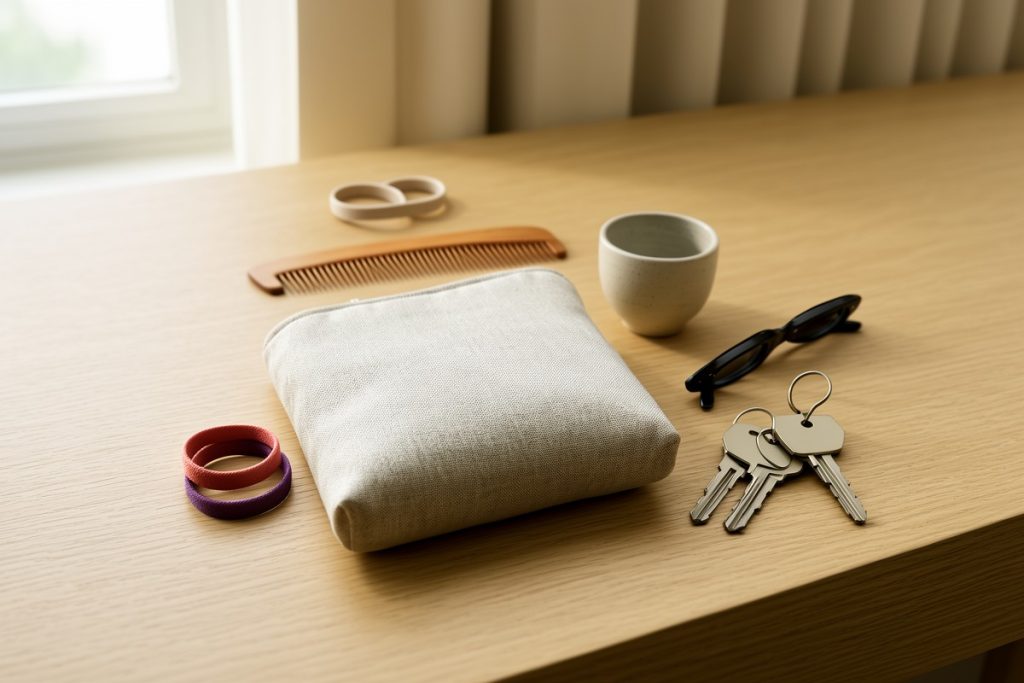
- Grooming: a small comb, hair ties, clips, a nail file, or another tool that solves a specific problem.
- Clothing fixes: a stain-removal pen, a few safety pins, or a tiny sewing repair option if your schedule calls for it.
- Convenience: a spare charging cable, earplugs, medication you already use as directed, or a reusable shopping bag folded into its own pocket.
Keep personal medication in its original labeled packaging when possible, and follow the instructions that came with it. For cosmetics and personal-care products, check the ingredient list and directions before use, especially if your skin is sensitive or you are trying something new.
Choose a container that makes the kit easier to use
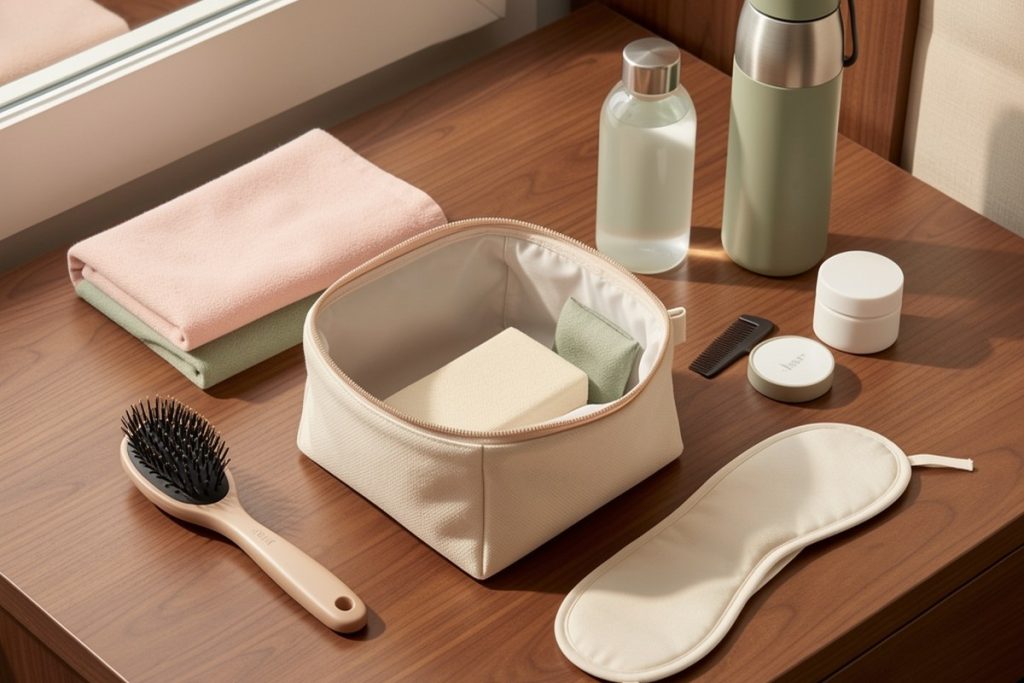
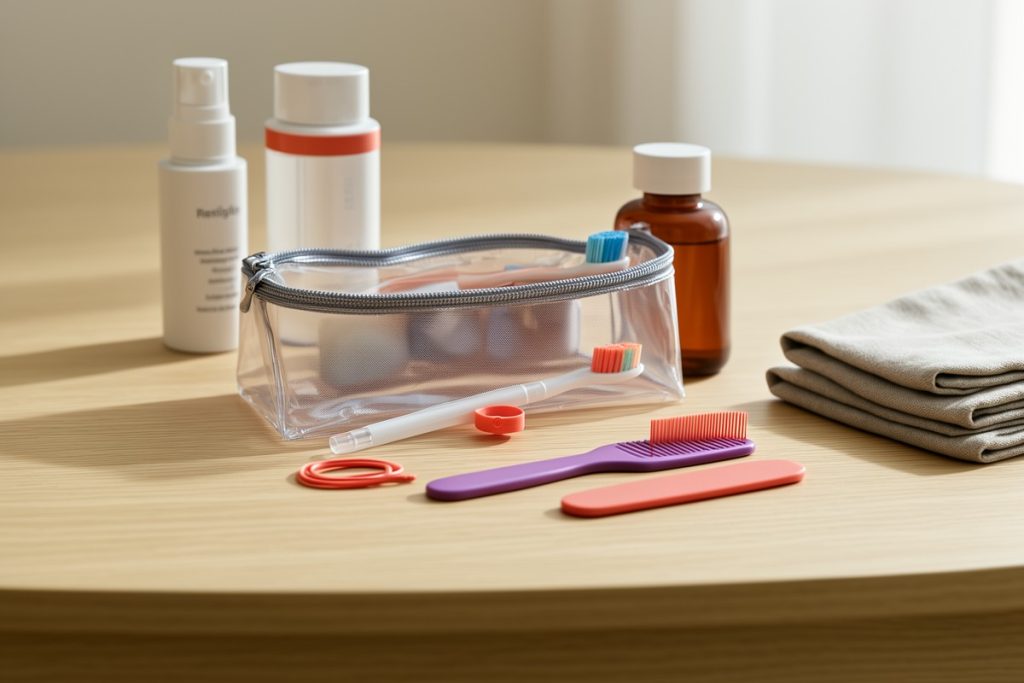
The best pouch is usually soft, washable, and small enough to fit into the section of your purse you can reach without unpacking everything. A zippered fabric pouch protects loose items and makes it simple to move the kit between bags. A clear pouch can improve visibility, while an opaque pouch may be preferable for privacy or a more polished look.
Avoid choosing the largest container you own. Extra space encourages accumulation. If an item does not fit comfortably, first ask whether it deserves a place in the kit rather than automatically upgrading the pouch.
Keep frequently used items near the top or in a small inner pocket. The kit should reduce friction, not create another layer of searching. If you repeatedly empty the whole pouch to find one item, the problem is probably the layout rather than the contents.
Build a simple lip-care option
Lip care is a sensible place to start because it is compact and easy to forget until you need it. Look for a product whose texture, scent, and ingredients suit you, and check the current label before purchasing. If you prefer a familiar everyday option, Burt’s Bees is one product to consider, but it is not automatically the right choice for everyone.
Keep the balm clean and avoid sharing it. If your lips become persistently painful, cracked, swollen, or irritated, stop using a product that seems to worsen the problem and consider speaking with a qualified healthcare professional. A purse kit can support everyday comfort; it should not replace medical advice.
Pack for your real schedule, not every possibility
Instead of creating one overloaded kit, make small adjustments for different types of days. Your everyday version might contain lip care, a comb, hair ties, tissues, and a stain solution. A travel version could add earplugs and a small laundry bag. A long-workday version might include hand moisturizer, a snack, or a spare accessory.
| Day type | Useful additions | What to leave out |
|---|---|---|
| Office or appointments | Stain solution, comb, hair tie, lip care | Full-size duplicates |
| Travel day | Earplugs, tissues, charging cable, reusable bag | Anything restricted or difficult to identify |
| Evening plans | Small mirror, hair accessory, compact grooming tool | Items you will not use after leaving home |
The table is a starting point, not a prescription. If you never use a mirror, do not carry one because a lifestyle checklist says you should. Personal systems become sustainable when they reflect your life rather than someone else’s routine.
Use this five-minute weekly reset
Choose one consistent day to refresh the pouch. A weekly reset prevents expired, empty, sticky, or forgotten items from taking over.
- Empty the pouch onto a clean surface.
- Discard wrappers, dried-out products, and anything past its useful condition.
- Wipe the inside of the pouch according to its care instructions.
- Replace only the items you used or genuinely expect to need.
- Return the pouch to your most-used bag or storage spot.
Pay attention to what comes back untouched month after month. That item may belong at home, in your desk drawer, or nowhere at all. The purpose of a small kit is dependable access, not preparedness for every imaginable inconvenience.
Avoid the most common purse-kit mistakes
Carrying duplicates. One lip product and one grooming tool are usually enough. Multiple versions create clutter and make it harder to notice when something is missing.
Ignoring heat and moisture. A purse left in a warm car or humid room can be a poor storage environment for some personal-care products. Follow product storage instructions and move anything sensitive when necessary.
Choosing appearance over function. A beautiful pouch is a bonus, but it should open easily, stay clean, and fit your routine. A plain container that you use is better than a stylish one that becomes frustrating.
Making the kit a second handbag. If the pouch becomes heavy, edit it. Your daily essentials should make your schedule easier, not turn every outing into a moving day.
Make the kit feel like support, not another obligation
A good purse self-care kit is quiet infrastructure. It gives you a few practical options when the day changes, without asking you to carry your entire home. Start with the smallest version that solves your most common problems, test it during an ordinary week, and revise it based on evidence from your own routine.
The most effective kit may look different from the ones shown online. That is a strength. When every item earns its place, the pouch becomes lighter, easier to maintain, and much more likely to help when you actually need it.
Last reviewed: 2026-09-11
Sources
- Cosmetics & U.S. Law — U.S. Food and Drug Administration