
Quick answer
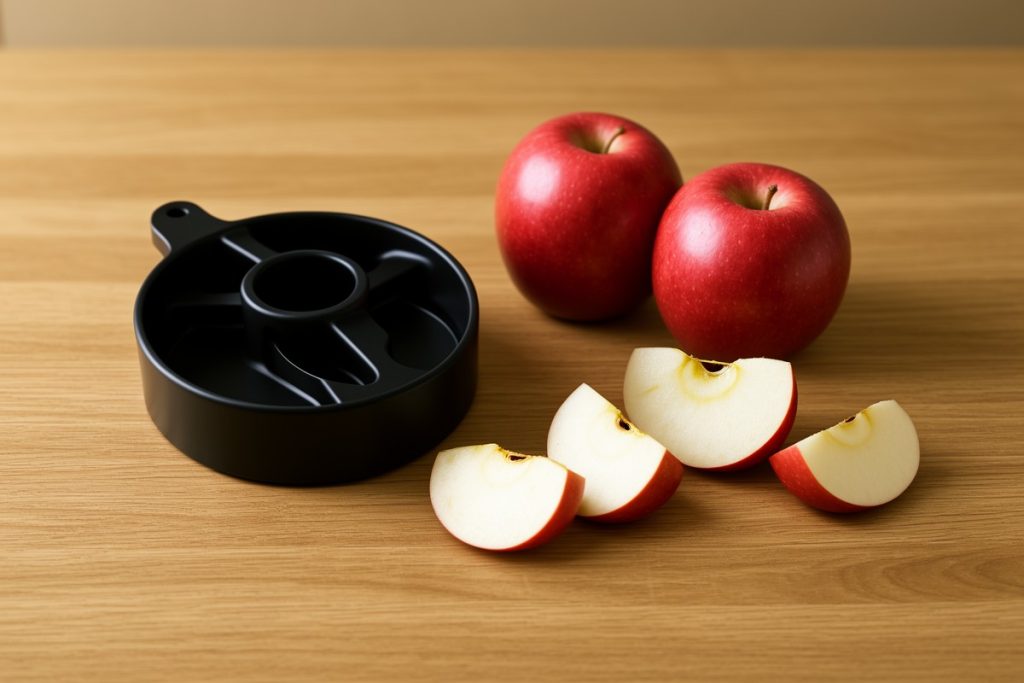
A mini fruit slicer is worth considering if you regularly prepare small portions for lunches, snacks, or salads and want a faster, more consistent process than cutting every piece by hand. It should complement—not replace—a good kitchen knife. Prioritize a stable design, easy cleaning, suitable food sizes, and clear safety instructions over flashy claims or a long list of supposed uses.
Key takeaways
- A compact slicer is most useful for repeatable prep with the fruits it is designed to hold.
- It is not an all-purpose replacement for a knife, cutting board, or careful food preparation.
- Check dimensions, supported foods, cleaning instructions, and dishwasher guidance before buying.
- Wash produce before cutting, clean the tool promptly, and refrigerate cut fruit safely.
By Nate Cooper, Value-Driven Gear Expert
When a mini fruit slicer actually earns counter space
The best reason to buy a small kitchen gadget is not novelty. It is repetition. If you pack fruit several mornings a week, make quick salads, or prepare snacks for more than one person, a tool that simplifies the same small task can save enough effort to become genuinely useful.
A mini fruit slicer makes the most sense when you want relatively even pieces without setting up a larger appliance. It can also reduce the number of steps between washing produce and serving it. That convenience matters most during rushed breakfasts, school-lunch preparation, and short work-from-home breaks.
There is a limit, however. A compact slicer has a fixed working area and a specific cutting mechanism. Large fruit, unusually shaped produce, very firm foods, or ingredients outside the tool’s intended use may be easier and safer to handle with a stable cutting board and a conventional knife. Treat the gadget as a specialist, not a universal kitchen solution.
What to check before choosing one
1. Match the tool to your regular produce
Start with your actual routine. Do you mostly prepare small fruit for yogurt, berries for a bowl, or ingredients for a simple salad? Or do you often cut large apples, melons, citrus fruit, and dense vegetables? A compact design may be convenient for the first group but frustrating for the second.
Read the product instructions rather than assuming that every fruit is suitable. Look for guidance about maximum size, firmness, pits, seeds, and whether the food needs to be halved first. A tool that works well within its intended range is more useful than one marketed as capable of doing everything.
2. Look for a stable, controlled cutting process
Stability matters more than speed. The slicer should sit securely on the work surface or allow you to maintain firm control without awkward force. Avoid using any compact cutter while holding food loosely in the air. If the produce shifts, stop and reset rather than pushing harder.
Inspect the cutting area before use. Blades should not appear bent, loose, or damaged, and plastic parts should not have cracks that could affect alignment. If the design includes multiple pieces, understand how they fit together before placing food inside.
3. Make cleanup part of the buying decision
Small kitchen tools can become annoying when food gets trapped in narrow gaps. Check whether the parts separate as intended, whether the cutting surface is accessible for rinsing, and whether the manufacturer provides clear cleaning instructions. Never assume a component is dishwasher-safe unless the listing or manual says so.
For easier cleanup, rinse the tool soon after use, remove visible residue, and dry it fully before storage. Prompt cleaning is especially important when fruit juice and pulp can collect around seams or cutting edges.
How this compact set fits the use case
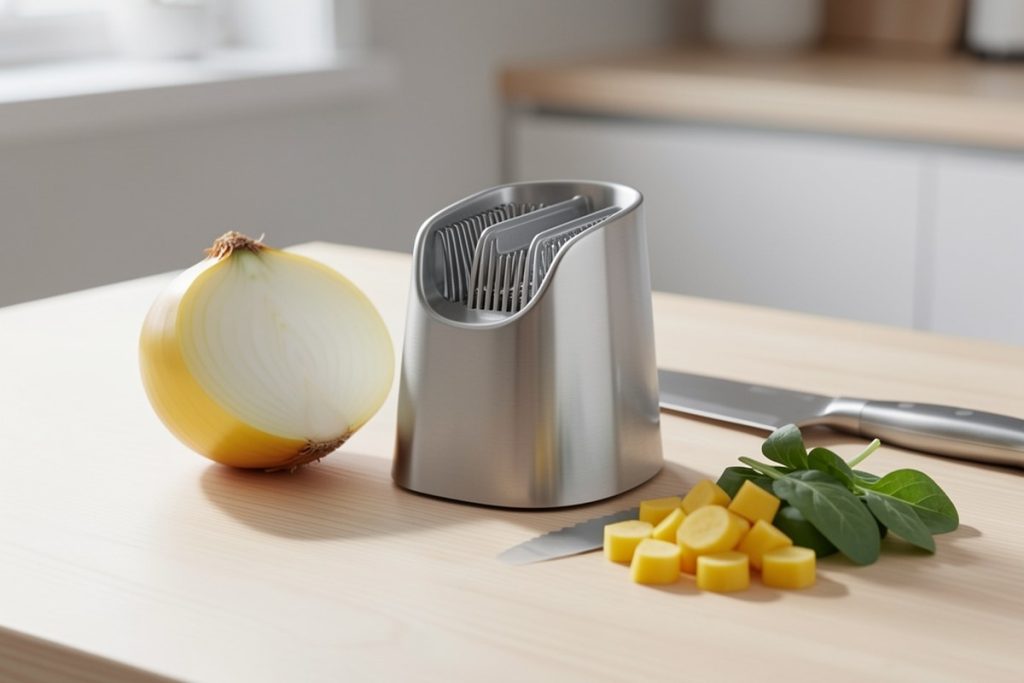
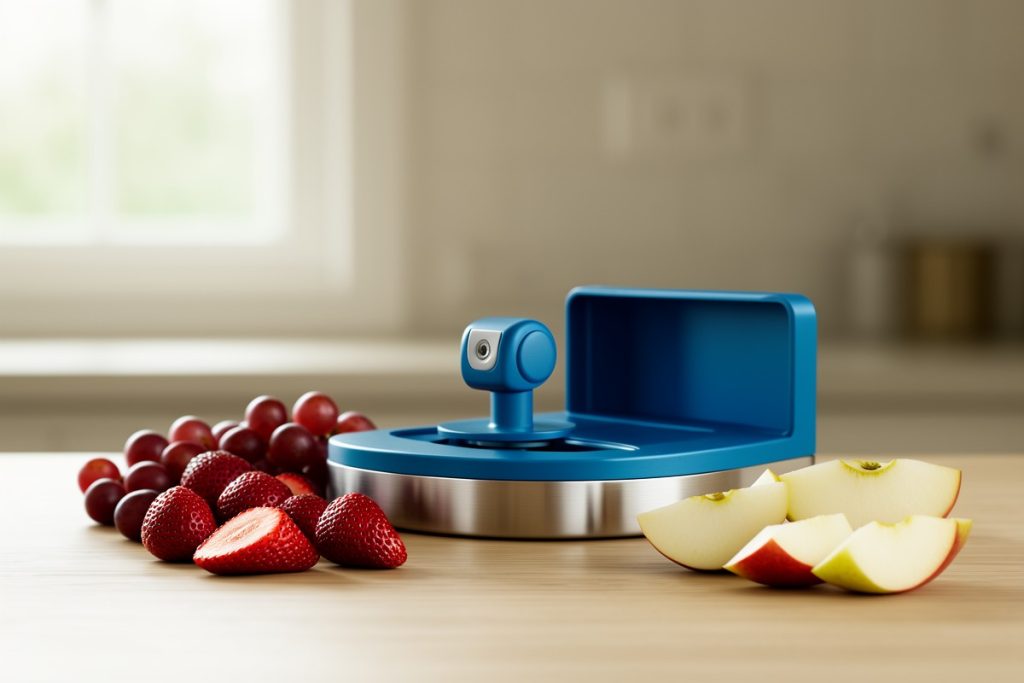
The Tulobi 2-Piece Fruit Slicer Set, Stainless Steel, Mini Cup Slicer, Quick Salad Maker, Creative Kitchen Gadget (Navy Blue + Cyan) is a reasonable candidate for shoppers who want a small, dedicated fruit-prep tool rather than a countertop appliance. Its listed two-piece format and stainless-steel construction point toward compact, repeated prep.
That description does not establish that it will suit every fruit, replace a knife, or be effortless to clean. Before purchasing, confirm the current listing’s dimensions, included components, recommended foods, care instructions, and any dishwasher guidance. Those details are more important than the color or the number of tasks suggested in the product name.
Mini slicer versus a kitchen knife
| Need | Better fit | Why |
|---|---|---|
| Repeated portions of suitable small produce | Mini slicer | Can reduce repetitive motions and create more uniform pieces within its working range. |
| Large, firm, or irregularly shaped fruit | Knife and stable cutting board | Offers more control over size, angle, and cutting direction. |
| Mixed salad preparation | Both | Use the slicer for compatible ingredients and a knife for everything it cannot safely accommodate. |
| Minimal cleanup | Knife | A knife and board may have fewer small parts to wash and dry. |
A practical fruit-prep workflow
Begin with a clean work surface and wash whole produce under running water before cutting. The U.S. Food and Drug Administration advises washing produce even when you plan to peel it, because contamination on the surface can transfer during cutting. Do not use soap or detergent on fruit.
Next, remove damaged areas, stems, pits, or other parts the tool is not designed to handle. Cut large items into suitable pieces only if the instructions allow it. Keep fingers away from the cutting mechanism, and stop if the produce becomes difficult to move through the tool.
After serving, refrigerate cut fruit promptly. The FDA recommends refrigerating perishable produce within two hours, or within one hour when temperatures are above 90°F. Store prepared fruit in a clean, covered container and keep it separate from raw foods that could contaminate it.
Five-point buying checklist
- Purpose: Can it handle the produce you prepare most often?
- Capacity: Will the cutting area fit your usual portion size?
- Control: Does the design look stable and straightforward to operate?
- Cleaning: Can you reach the areas where juice and pulp may collect?
- Storage: Can the pieces be kept together without creating a drawer full of loose parts?
Bottom line
A mini fruit slicer is a practical purchase when it solves a narrow, recurring problem: preparing suitable fruit portions quickly with less repetitive cutting. It is not automatically better than a knife, and it should not be judged by dramatic claims about versatility. Choose based on compatibility, control, cleanup, and storage. If those basics fit your routine, a compact slicer can be a useful addition to a lunch-prep setup; if not, a quality knife may remain the better value.
Last reviewed: 2026-09-18
Sources
- Selecting and Serving Produce Safely — U.S. Food and Drug Administration
- Fruits and Vegetables: Safe Handling — U.S. Department of Agriculture Food Safety and Inspection Service