
Quick answer
A door that will not latch usually has an alignment problem, not a failed lock. Tighten loose hinge screws, check whether the latch meets the strike plate, and adjust the plate only after confirming the door is hanging squarely. Clean and lightly lubricate the latch. If the frame is warped, the door is an exterior security door, or the lock still will not engage, stop adjusting and call a qualified professional.
Key takeaways
- Check the hinges before moving the strike plate; a sagging door can make every other adjustment misleading.
- Use the latch marks on the strike plate to identify whether the plate needs to move up, down, inward, or outward.
- Make small adjustments and test the door after each one.
- Do not rely on a door that will not fully latch, especially an exterior, fire-rated, or child-safety door.
Last reviewed: 2026-09-18
Identify what is actually failing
Close the door slowly and watch the latch. There are three common situations:
- The latch hits the edge of the strike plate. The door or plate is misaligned.
- The latch enters the opening but does not stay engaged. The plate may be too shallow, the latch may be dirty, or the door may be springing back.
- The door rubs against the frame before it closes. A loose hinge, shifted frame, swelling, or a warped door may be creating the problem.
Do not begin by filing metal or enlarging the strike-plate opening. That can hide the original problem and leave the latch with less material to hold against.
Gather simple tools and inspect the door
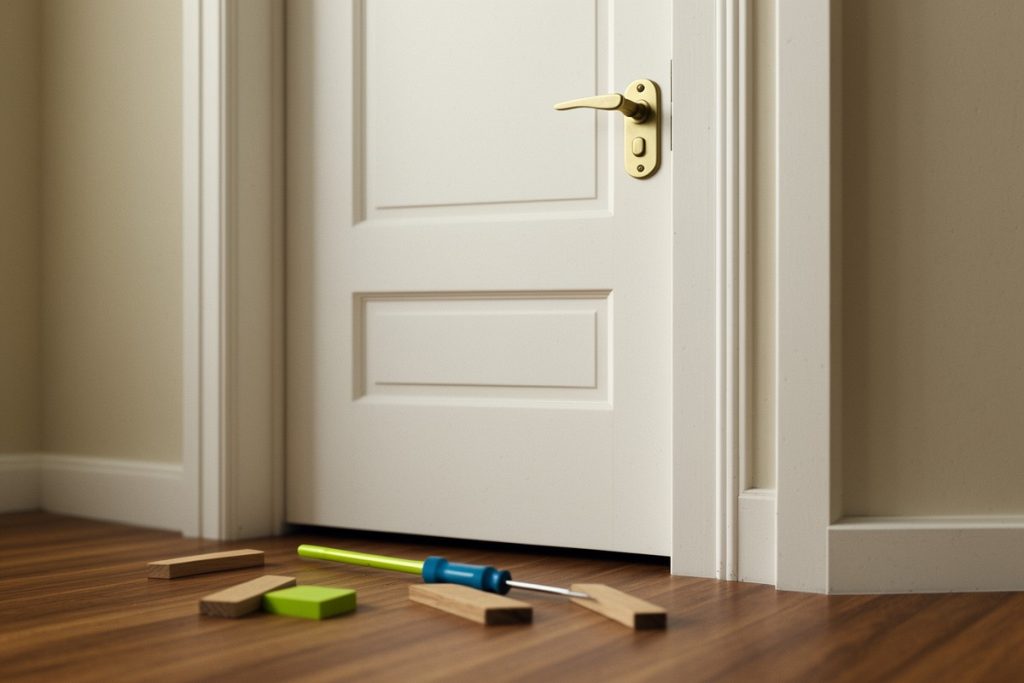
For most interior doors, you need a screwdriver that fits the hinge and strike-plate screws, a flashlight, a pencil, and a small amount of dry or silicone-based lubricant. A level can help, but careful observation is often enough.
Open the door and check every hinge screw. If a screw turns without tightening, the wood around it may be stripped. Replace one loose screw at a time with a longer screw of the same general diameter, provided it will not pass through the frame or interfere with the door. Avoid overtightening; pulling the hinge too hard can distort the frame.
Look at the gaps around the closed door. An even gap suggests the door is positioned reasonably well. A gap that widens noticeably from top to bottom, or a door that lifts when you push the handle, points to hinge or frame movement rather than a simple strike-plate issue.
Fix the likely cause in the right order
1. Tighten and reset the hinges
Start with the top hinge because it carries much of the door’s weight. Tighten its screws, then check the middle and bottom hinges. Close the door after each adjustment. If the latch now lines up, the repair may be complete.
If the top hinge is pulling away from the frame, do not keep forcing the screws. The screw holes may need a proper wood repair, such as carefully fitted wood plugs, before the hinge can hold securely.
2. Read the contact mark
Apply a thin pencil mark to the sloped face of the latch, then close the door gently. Open it and inspect the strike plate. The mark shows where the latch is contacting. If the mark is above the opening, the latch needs to meet the plate lower; if it is below, the opposite is true. A mark on the outer edge can indicate that the plate needs to move toward the door stop or away from it.
Make sure the latch itself moves smoothly. Press the handle several times with the door open. If it sticks, wipe away dust and apply a small amount of appropriate lubricant. Avoid flooding the mechanism, because excess lubricant can attract grit.
3. Adjust the strike plate by millimeters
Remove the strike-plate screws and shift the plate slightly in the direction indicated by the contact mark. Reinstall the screws, close the door, and test the latch. One or two small adjustments are safer than moving the plate a large distance at once.
If the plate needs to move farther than its screw holes allow, you may need to reposition it and carefully deepen the wood recess with a sharp chisel. Work slowly and remove only the material needed for the plate to sit flat. A plate that sits proud of the frame can prevent the door from closing cleanly.
4. Check depth and pressure
The latch should enter the strike-plate opening without being forced. If it enters but the door pops open when you release the handle, the latch may not be reaching far enough into the opening. The strike plate may need a small adjustment toward the door stop, or the latch mechanism may need replacement.
Check whether weatherstripping, paint buildup, or a swollen edge is pushing the door away from the frame. Never remove large amounts of material from an exterior door without first checking for water damage or frame movement.
| What you observe | Likely cause | Best first step |
|---|---|---|
| Top corner rubs; latch sits low | Loose or shifted hinge | Tighten the top hinge |
| Latch hits above the opening | Strike plate is too high | Shift the plate slightly downward |
| Latch enters but door springs open | Insufficient engagement or pressure | Check plate depth and latch movement |
| Door rubs along one entire edge | Swelling, warping, or frame movement | Inspect the frame before sanding |
Use this short testing checklist
- Open and close the door five times without turning the handle.
- Confirm the latch clicks into place each time.
- Push the closed door gently near the handle; it should stay latched.
- Turn the handle and confirm the latch retracts fully.
- Lock the door only after the latch works smoothly with the door closed.
If the door works only when you lift, shove, or pull it, the alignment is not truly fixed. Those extra movements can also stress hinges and hardware over time.
Know when to stop and get help
Call a qualified carpenter or locksmith if the frame is visibly twisted, the door is part of a fire-rated assembly, the deadbolt will not extend fully, or an exterior door no longer provides reliable security. A locksmith is also the better choice when the problem is inside the lock body rather than at the strike plate.
Use extra caution when repairing doors in older homes. Sanding or cutting painted surfaces can create hazardous dust if older coatings contain lead. Review the EPA’s lead-safe renovation guidance before disturbing questionable paint. Wear eye protection when chiseling, and use hand tools according to basic workplace safety guidance rather than rushing a stubborn adjustment.
A broader reference for future home repairs
If this small fix reveals that you want a single reference for other common household problems, The Complete DIY Guide to Home Repair and Maintenance may be useful as a general home-repair guide. Its scope is broader than a door-latch adjustment, so it can provide a starting point for common repairs and preventive checklists. For lock dimensions, replacement parts, and installation requirements, still follow the door or hardware manufacturer’s instructions.