
Quick answer
Choose watercolor if you want portable supplies, transparent layers, and easy cleanup; acrylic if you want a versatile, forgiving medium that dries quickly; or oil if you prefer slow blending and richer texture. For most beginners, acrylic is the practical all-purpose starting point, but your available space, painting time, and preferred visual style matter more than choosing the supposedly “best” medium.
Key takeaways
- Watercolor suits portable, light-filled paintings and small workspaces.
- Acrylic is flexible, affordable to practice with, and works on several surfaces.
- Oil offers extended blending time but needs more careful cleanup and ventilation.
- Start with a limited palette and one simple subject instead of buying a large kit.
Choosing your first paint medium can feel harder than actually making your first painting. Retail shelves are full of colors, brushes, surfaces, mediums, and tools, while beginner advice often treats one option as universally easiest. A better approach is to match the medium to your habits. Think about where you will paint, how long you can work at a time, and whether you enjoy transparent washes, bold layers, or gradual blending.
Watercolor, acrylic, or oil: which is right for you?
Choose watercolor for portability and transparent layers
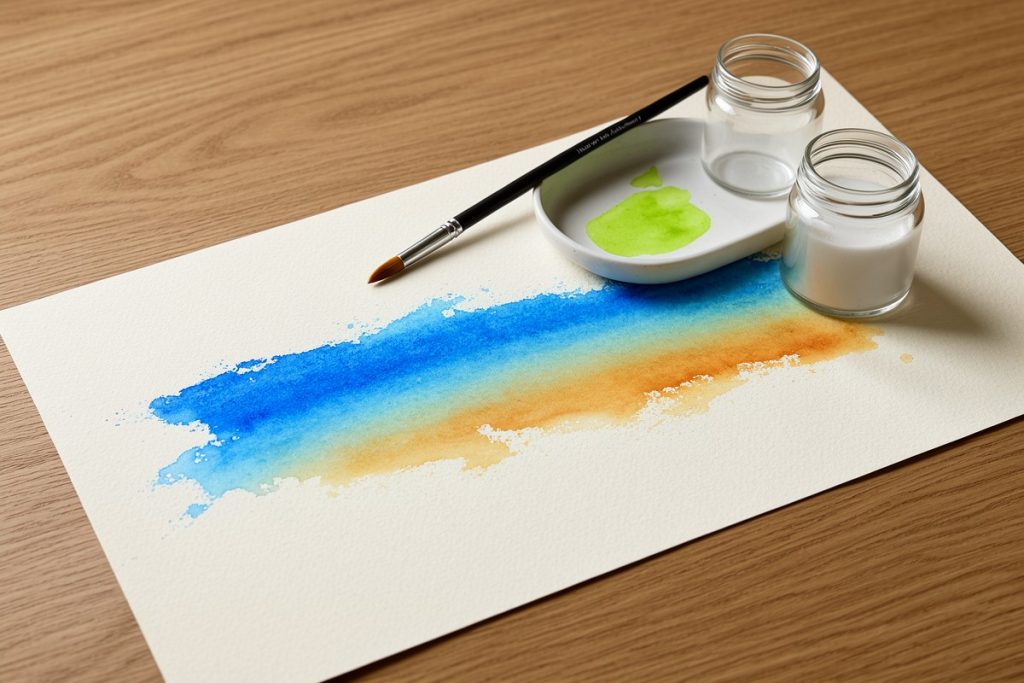
Watercolor is a strong choice if you want a compact setup and a clean, airy appearance. The paint is diluted with water and usually applied in transparent layers, allowing the paper to contribute to the finished image. This makes watercolor especially effective for skies, plants, travel sketches, loose landscapes, and other subjects where lightness matters.
Its main challenge is planning. Pale areas often need to remain unpainted, so covering everything with white later is not always the same as preserving the original brightness. Watercolor also dries quickly, which is helpful when you want to work in short sessions but less helpful when you are trying to blend a large area slowly.
Choose acrylic for the most flexible beginner setup
Acrylic is often the most practical first medium because it can be used for thin washes, opaque shapes, textured marks, and detailed layers. It works on prepared canvas, canvas board, and some heavy papers. Because it is water-based, routine brush cleanup is simpler than with oil, although dried acrylic can become difficult to remove from tools and palettes.
Fast drying is both acrylic’s advantage and its learning curve. You can build a painting without waiting days between layers, but colors may dry on your palette or become difficult to blend on the surface. Mix smaller amounts, lightly mist a palette when appropriate, and work in manageable sections. Acrylic is a sensible option for someone who wants to experiment with different styles without committing to a specialized studio routine.
Choose oil for slow blending and rich surface effects
Oil paint is suited to beginners who enjoy taking their time and want to soften transitions, adjust edges, or move wet paint across the surface. Its slower drying process can make blending more forgiving. It also supports thick, visible brushwork as well as smooth passages.
The trade-offs are more significant cleanup, longer drying times, and greater attention to ventilation and material handling. Oil paint should be used with an oil-compatible surface and the cleaning products recommended for the materials you buy. Read the manufacturer’s safety guidance rather than assuming that every oil product behaves the same way.
Compare the three mediums before buying supplies
| Medium | Best for | Beginner challenge | Simple first project |
|---|---|---|---|
| Watercolor | Portable, transparent paintings | Controlling water and preserving light areas | A three-color sky and tree |
| Acrylic | Flexible, quick practice | Blending before the paint dries | A still life with three objects |
| Oil | Slow blending and rich texture | Cleanup, drying time, and ventilation | A small limited-palette landscape |
This comparison is a starting point, not a ranking. Any of these mediums can produce detailed, loose, realistic, or abstract work. The best choice is the one you are willing to use repeatedly.
Match the medium to your space and schedule
Your workspace may decide the question before your artistic preferences do. A kitchen table or shared room generally favors watercolor or acrylic because both can fit into a relatively compact setup. Oil painting requires a more deliberate plan for ventilation, surface protection, and cleanup. Never rely on a closed container or casual storage arrangement to solve a ventilation problem.
Also consider the length of your typical sessions. Watercolor and acrylic allow visible progress during a short break. Oil may be more satisfying if you can leave a painting safely set up and return to it over several sessions. If you often paint while traveling, watercolor is usually the easiest to pack. If you want one medium that can handle studies, craft projects, and finished paintings, acrylic offers broad flexibility.
Build a small beginner supply kit
Resist buying every color at once. A limited palette teaches you how colors mix and makes it easier to understand why a painting looks muddy or balanced. For watercolor, begin with a modest pan or tube set, watercolor paper, two brushes, a pencil, and a clean water container. For acrylic, choose a few colors, one medium brush, one detail brush, a suitable surface, and a palette that can be cleaned easily.
For oil, start with a small paint set, oil-compatible brushes, a prepared surface, a palette, and the cleaning and safety supplies recommended by the manufacturer. Check the product instructions before combining paints, mediums, solvents, or varnishes from different systems. The exact tools will vary, but buying less gives you room to learn what you actually use.
Make your first painting deliberately simple
Choose one object with clear light: a mug, piece of fruit, houseplant, or small outdoor view. Spend a few minutes making a loose sketch, then test your color mixture on scrap material or an unused section of the palette. Establish the largest shapes first. Add details only after the basic light and dark pattern is working.
- Choose one subject and one main light source.
- Limit yourself to three to six colors.
- Test mixtures before applying them to the main surface.
- Pause halfway through and inspect the painting from a distance.
- Clean brushes according to the paint manufacturer’s instructions.
Repeating the same subject is more useful than constantly starting new, ambitious paintings. On the second attempt, change only one factor, such as color temperature, brush size, or composition. That makes it easier to identify which decision improved the result.
Use a beginner book as a reference, not a substitute for practice
If you want guided exercises while comparing mediums, How to Paint: A Complete Beginner’s Guide to Watercolors, Acrylics, and Oils is a relevant reference because it covers all three paint types and includes materials information alongside step-by-step projects. Its broad coverage may help you compare approaches in one place. It cannot replace choosing a suitable surface, reading safety instructions, or practicing consistently, and you do not need to complete every project before trying another medium.
Avoid the most common beginner mistakes
New painters often buy too many colors, use an unsuitable surface, or expect expensive supplies to solve a composition problem. Paint quality matters, but it cannot compensate for unclear values, rushed observation, or a painting session without a manageable goal. Another common mistake is switching mediums after one frustrating attempt. Every medium has a different learning curve.
Choose one medium for your next three paintings. Keep brief notes about what felt easy, what dried too quickly, which tools you used, and what you would change next time. Watercolor can teach restraint, acrylic can teach layering and decisiveness, and oil can teach patience and edge control. Your own repeated observations are more reliable than a universal claim about the best paint for beginners.
Last reviewed: 2026-09-28