
Quick answer
Build a seven-day carry-on toiletry kit around your actual routine, trip length, and access to replacements. Prioritize personal essentials, keep carry-on liquids within TSA limits, choose solid alternatives when practical, and separate leak-prone items. A preassembled travel kit can save planning time, but inspect its contents and sizes before depending on it.
Key takeaways
- Pack irreplaceable personal items before convenience products.
- Keep carry-on liquids in containers no larger than 3.4 ounces or 100 milliliters.
- Use solids and secondary bags to reduce spills and save space.
- Treat a premade kit as a starting point, not a complete personal routine.
The best women’s travel toiletry kit is not the one with the most products. It is the one that lets you get ready comfortably without taking over your carry-on. For a weeklong trip, the goal is a compact, repeatable system that covers your essentials and leaves room for clothing, medication, electronics, and anything you may bring home.
Start by separating your products into three groups: items you must have, items that are convenient, and items that are easy to replace. Prescription products, specialty skincare, menstrual supplies, contact-lens supplies, and a specific hair or skin formula usually belong in the first group. A third bottle of “just in case” product probably does not.
Choose products based on the trip, not your bathroom shelf
Your destination and itinerary should determine what goes into the kit. A city break with easy access to pharmacies requires a different setup from a remote vacation, business travel, or a camping trip. Consider these questions before packing:
- Will you carry the kit through airport security?
- Will you have access to laundry, a hotel shop, or a nearby pharmacy?
- Will weather affect your hair, skin, or makeup routine?
- Are there products you cannot easily replace at your destination?
For a short, urban trip, you may be able to leave behind backup products and styling extras. For a destination wedding, outdoor trip, or longer stay, it may be worth prioritizing products that protect comfort and confidence. This approach is more useful than following a universal checklist that assumes every traveler has the same routine.
Use TSA’s liquid rule as a packing constraint
For flights departing from or within the United States, TSA’s 3-1-1 liquids rule generally allows liquids, aerosols, gels, creams, and pastes in carry-on bags only when each container holds 3.4 ounces, or 100 milliliters, or less. These containers should fit in one quart-size bag. Check the official TSA guidance before leaving because screening requirements and exceptions can vary by item and circumstance.
Do not wait until the night before a flight to discover that a favorite bottle is too large. Decant daily-use products into suitable travel containers, or choose a solid alternative when one works for you. Solid shampoo, bar cleanser, deodorant sticks, powdered cosmetics, and dry sheet products can reduce liquid volume and spill risk.
Keep your liquids bag near the top of your carry-on. If security staff need to inspect it, you should be able to remove it without unpacking your clothes. If you are traveling with medically necessary liquids or prescription items, review TSA’s medication guidance and follow any instructions from your healthcare professional.
A practical seven-day carry-on toiletry checklist
Use this list as a starting point, then remove anything that does not match your routine:
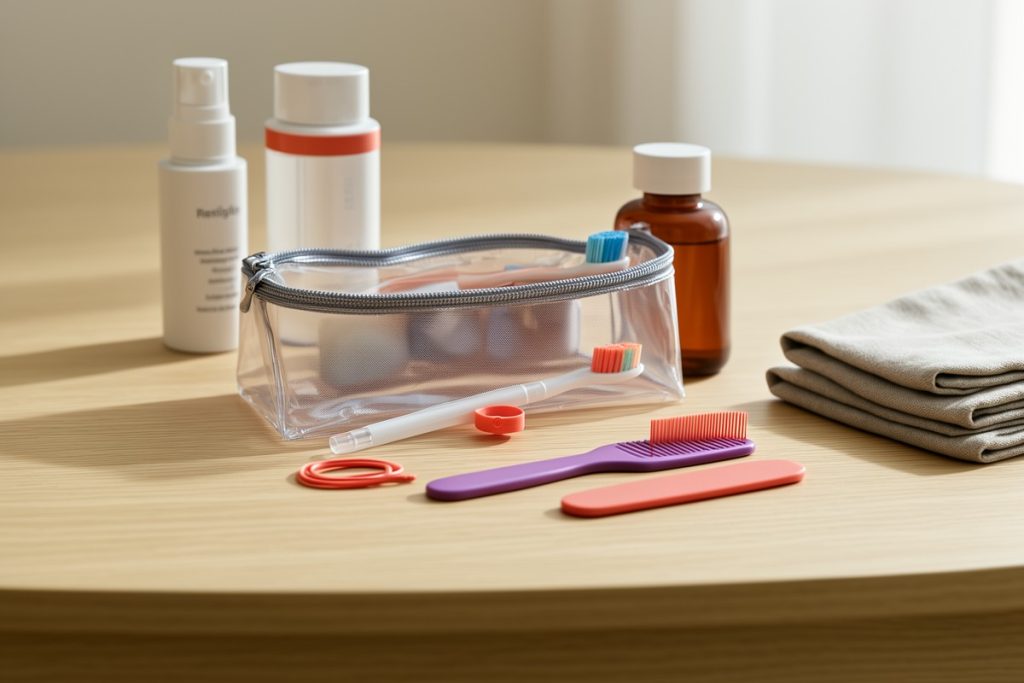
- Toothbrush, toothpaste, floss, and any other daily oral-care essentials.
- Cleanser, moisturizer, sunscreen, deodorant, and the skincare products you use consistently.
- Shampoo, conditioner, or styling products in compliant sizes or solid formats.
- A compact brush or comb, hair ties, clips, and one genuinely useful styling tool.
- Menstrual products, contact-lens supplies, prescription items, or other personal necessities.
- A small makeup selection rather than your entire collection.
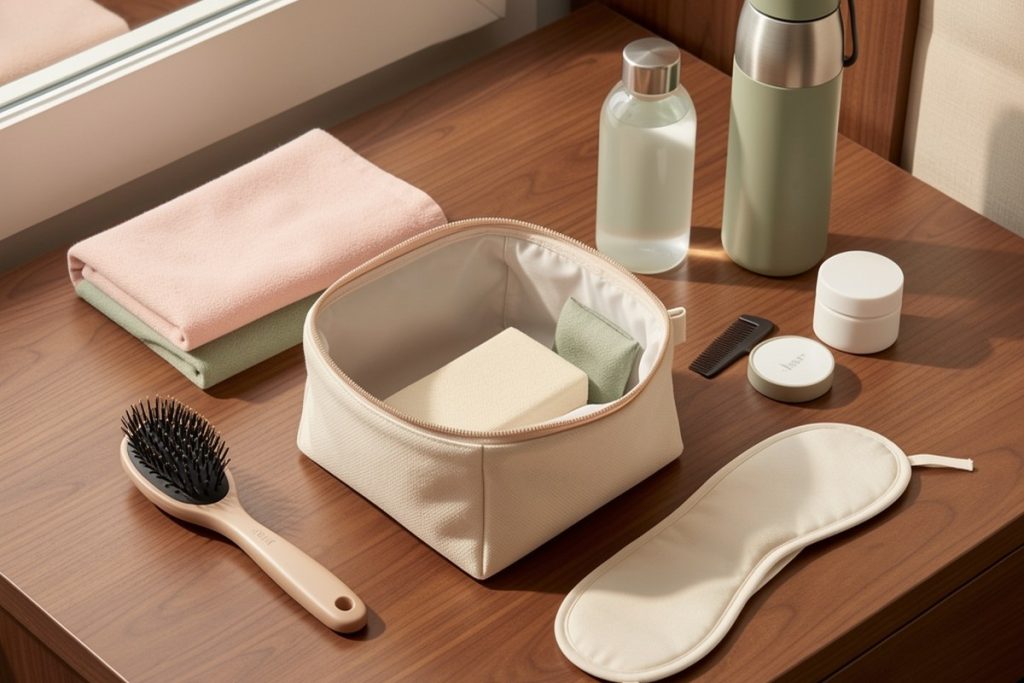
- A zippered organizer and one secondary leak-resistant bag.
Make the list personal. If you do not wear makeup, you do not need to pack a “basic makeup kit.” If your hair requires a particular product, prioritize that formula and simplify another category. The most efficient kit reflects your real habits instead of an idealized travel routine.
Decide what to decant, buy, or leave behind
| Product type | Best approach | Why it helps |
|---|---|---|
| Daily liquid used in small amounts | Decant into a suitable travel container | Reduces weight and wasted space |
| Leak-prone product | Use a solid alternative or secondary bag | Protects clothing and other belongings |
| Rarely used item | Leave it home if replacement is easy | Prevents “just in case” clutter |
| Specialty or prescription item | Pack it first and plan ahead | Replacement may be difficult or unsuitable |
Decant only products that remain easy to identify and use in the new container. Avoid transferring items if you are unsure whether the formula will stay stable or whether you might confuse it with another product. For prescription products and destination-specific health supplies, use the original packaging when appropriate and follow professional or official travel guidance.
When a preassembled travel kit makes sense
A premade kit can be useful if you are building a spare for a work bag, replacing basic travel supplies, or trying to avoid starting from an empty drawer. Its main benefit is convenience: several travel items are gathered in one place, which can make packing faster.
One option to compare is the Convenience Kits International travel kit. It may suit someone who prefers a ready-made starting point, but it should not be treated as a complete substitute for personal planning. Check the current listing for exact contents, sizes, and ingredients before buying. If it duplicates products you already own or leaves out an essential part of your routine, a customized kit may be the better choice.
Another practical approach is to create a permanent travel shelf at home. Keep an empty organizer, refillable containers, spare hair ties, and a written packing checklist together. Restock the shelf after each trip so your next packing session takes minutes rather than becoming a full bathroom inventory.
Prevent leaks and organize by frequency of use
Tighten every cap, wipe the outside of liquid containers, and place spill-prone items in a separate sealed bag. Do not pack bottles that are cracked, swollen, or difficult to close. Keep liquids away from clothing when possible, even inside a toiletry pouch.
Organize the kit by when you use each item. Morning products can stay together, while shower products and occasional makeup can go in separate sections. Put the items you will need immediately after arrival near the top. This makes the kit easier to use in a small hotel bathroom and easier to repack before heading home.
Complete a ten-minute predeparture check
Before closing your bag, remove duplicates and confirm that the liquids bag closes comfortably. Check that personal essentials are physically packed rather than merely remembered. Look at products you use infrequently for damage or expiration, and make sure your kit can be reached without unpacking your entire carry-on.
A well-built toiletry kit is a small system, not a miniature bathroom. Pack for your actual routine, respect the rules for your journey, and leave enough flexibility to handle the unexpected without carrying everything you own.
Last reviewed: 2026-09-28