
Quick answer
To shave sensitive skin with fewer razor bumps, soften the hair with warm water, use a slippery fragrance-free shaving product, and shave lightly in the direction of growth. Rinse the blade often, avoid repeated passes, and moisturize afterward. If bumps keep returning, trimming may be gentler than a close shave, and persistent pain or pus deserves medical advice.
Key takeaways
- Preparation matters: soften hair and skin before the razor touches them.
- Short, light strokes with the direction of hair growth usually create less irritation than chasing an ultra-close shave.
- A fresh, clean razor and minimal repeated passes can reduce friction.
- Post-shave care should focus on calming the skin rather than aggressive scrubbing.
- Recurring or infected-looking bumps may need a dermatologist’s guidance.
Why sensitive skin develops razor bumps
Razor bumps are not simply a sign that you used the “wrong” razor. They can happen when a shaved hair curves back into the skin, causing inflammation. Hair texture, shaving direction, pressure, skin sensitivity, and how closely the hair is cut can all play a part.
Some people notice bumps most often on the bikini line, underarms, legs, or face. Tight clothing and repeated friction can make already-irritated skin feel worse. The goal is not to force a perfectly smooth result every time. A better goal is a comfortable shave that does not leave your skin feeling hot, tight, or scratched.
Use this five-step shaving routine
1. Soften the hair first
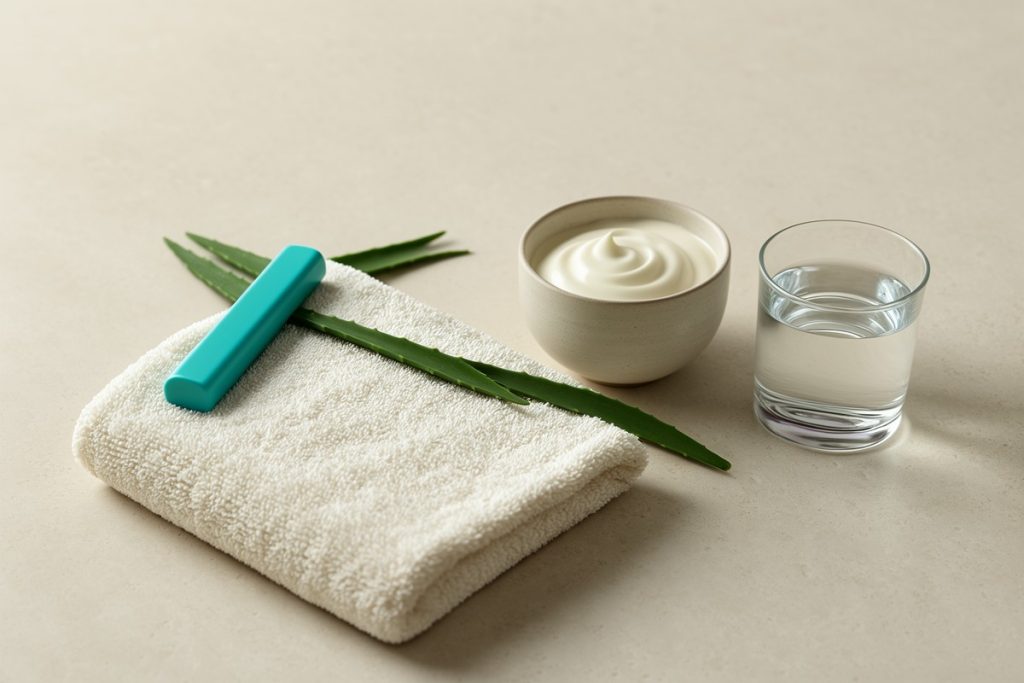
Shave near the end of a warm shower or hold a warm, damp washcloth over the area for several minutes. Softer hair generally requires less pressure to cut. Avoid shaving dry skin unless the product you are using specifically says it is designed for dry use.
Cleanse gently to remove sweat, deodorant, sunscreen, and body products. Skip harsh scrubs, rough brushes, and vigorous exfoliation immediately before shaving. They can add friction before the razor has even made contact.
2. Choose slip over a squeaky-clean finish
Apply a generous layer of shaving cream, gel, or another product that helps the razor glide. If your skin reacts easily, a fragrance-free formula may be easier to tolerate, although “fragrance-free” does not guarantee that every ingredient will suit you. Give the product a minute to soften the hair instead of rinsing it off immediately.
Do not substitute a dry bar of soap simply because it is nearby. A product that leaves the skin tight or dragging can encourage you to press harder, which increases irritation.
3. Let the razor do the work
Use a clean, sharp razor and hold it gently against the skin. Take short strokes in the direction the hair grows, rinsing the blade after each stroke or two. Avoid stretching the skin tightly or repeatedly going over the same patch to remove every last trace of stubble.
Shaving against the grain may produce a closer result, but it can also increase the chance of irritation and ingrown hairs for some people. If you are prone to bumps, start with the direction of growth. You can decide whether you need a second pass only after seeing how your skin responds.
4. Rinse and calm the skin
Rinse away remaining product with lukewarm water, then pat the area dry with a clean towel. Apply a plain, fragrance-free moisturizer while the skin still feels slightly damp. This helps reduce the tight, dry feeling that can tempt you to scrub or scratch.
For the rest of the day, reduce avoidable friction where possible. Choose breathable clothing, avoid pressing a tight waistband against freshly shaved skin, and be cautious with strongly scented body products. If you shave your underarms, waiting before applying a fragranced deodorant may be more comfortable.
5. Give irritated skin a break
Do not shave over skin that is actively bleeding, raw, very painful, or covered with inflamed bumps. Pause until it has settled. Picking at bumps can worsen inflammation and increase the chance of discoloration or infection.
If the same area repeatedly develops bumps despite gentler technique, consider leaving a small amount of stubble with a trimmer. A close shave is optional; comfortable skin is the more useful outcome.
Razor choices: which approach fits your skin?
| Approach | May suit | Trade-off |
|---|---|---|
| Cartridge razor | People who want a smooth finish and are willing to focus on technique | Close shaving can be irritating when pressure or repeated passes are involved |
| Electric trimmer | People who prioritize fewer bumps over completely smooth skin | Usually leaves some visible stubble |
| Professional hair-removal service | People seeking a different long-term routine | Can cost more and may still irritate sensitive skin |
If you prefer a cartridge format, Schick Hydro Silk is one option to compare. It is not a guarantee against razor bumps, and the product alone cannot replace careful preparation, light pressure, and a clean blade. Follow the package directions and stop using any product that consistently causes burning or a rash.
A practical pre- and post-shave checklist
- Before: Warm the skin, cleanse gently, and apply a slippery shaving product.
- During: Use a clean razor, light pressure, short strokes, and the direction of hair growth.
- After: Rinse, pat dry, moisturize, and avoid immediate friction or heavily fragranced products.
- Next time: If bumps persist, try fewer passes, a less-close trim, or advice from a dermatologist.
When razor bumps need medical attention
A few small bumps after shaving may settle with time and less irritation, but do not assume every bump is a routine ingrown hair. Contact a healthcare professional if the area becomes increasingly painful, hot, swollen, or filled with pus; if redness spreads; or if you develop a fever. Persistent or widespread bumps may need a tailored diagnosis and treatment plan.
It is also worth seeking advice if shaving problems are affecting your confidence or making you avoid clothing, exercise, or activities you enjoy. A dermatologist can discuss hair-removal alternatives and help distinguish ingrown hairs from conditions that look similar.
The most sustainable routine is the one your skin tolerates
There is no prize for getting the closest shave possible. For sensitive skin, a slower routine with warm water, enough glide, fewer passes, and simple aftercare is often more useful than adding stronger products or scrubbing harder. Test changes one at a time so you can tell what helps. If smooth skin consistently comes with painful bumps, a little stubble may be the healthier trade-off.
Last reviewed: 2026-10-02
Sources
- Ingrown hair: Diagnosis and treatment — Mayo Clinic
- Ingrown hairs — NHS