
Quick answer
The best handheld car vacuum for quick cleanups is compact, easy to store, simple to empty, and equipped for both broad surfaces and narrow gaps. Look for a rechargeable cordless design with a useful brush or crevice attachment, but do not confuse strong suction claims with proven deep-cleaning ability. A small handheld model is ideal for crumbs, dust, pet hair, and light debris between full vehicle cleanings.
Key takeaways
- Choose portability and easy emptying before chasing the highest advertised suction number.
- A crevice tool matters for seat rails, console seams, and the edges of floor mats.
- A brush attachment is more useful for textured upholstery and loose pet hair than a bare nozzle.
- Handheld vacuums handle maintenance cleaning well but are not a substitute for occasional deep cleaning.
Why a small car vacuum can be worth keeping nearby
Vehicle messes are usually small but persistent: snack crumbs under a child seat, grit on the driver’s floor, dust around the gear selector, or pet hair caught in upholstery. The problem is not always a lack of cleaning equipment. It is the friction involved in getting a large vacuum out, finding an outlet, and maneuvering a bulky hose inside a compact cabin.
A handheld vacuum earns its place by making short cleanups practical. You can deal with a spill of dry debris before it spreads, clean the footwell while refueling or charging elsewhere, and remove dust from storage pockets without turning the task into a weekend project. That convenience is the main reason to buy one.
It is best to think of the device as a maintenance tool. It keeps a reasonably clean vehicle presentable between more thorough cleanings. It may not lift deeply embedded sand or years of pet hair as effectively as a full-size vacuum with a powered brush head.
What to look for in a handheld car vacuum
1. A shape that fits the cabin
A car-friendly vacuum should be narrow enough to reach between seats and around the center console. A bulky body can be frustrating even if its motor is powerful. Check the overall shape, nozzle length, and whether the device can be stored in a door pocket, trunk organizer, or garage cabinet without taking over the space.
Foldable designs can be convenient when storage space is limited, but the hinge should not make the vacuum awkward to hold or clean. The most useful form is the one you will actually keep accessible.
2. Attachments for different surfaces
A bare nozzle is fine for loose crumbs on a floor mat, but it is less effective in seams and textured upholstery. A crevice attachment helps reach seat rails, console gaps, and the narrow edges where debris collects. A soft brush can loosen dust from vents, dashboards, fabric, and carpet before suction removes it.
Do not judge an attachment set by quantity alone. Two well-matched tools are more helpful than a large collection that is difficult to store or rarely fits the vehicle’s problem areas.
3. Battery and charging practicality
Cordless operation makes a vacuum easier to use around a vehicle, but battery convenience depends on charging habits. Consider where the device will live and whether you can recharge it after each use. A vacuum that is stored in the trunk but charged only in the house may be unavailable when you need it.
For rechargeable products, follow the manufacturer’s charging and storage instructions. The U.S. Consumer Product Safety Commission provides general guidance on using and storing products with lithium-ion batteries, including avoiding damaged batteries and using the recommended charger.
4. A low-maintenance dust cup and filter
Emptying the dust cup should be quick and reasonably clean. A transparent cup can help you see when it needs attention, while a washable or replaceable filter can make ongoing ownership easier. Before buying, look for clear instructions about filter cleaning, replacement parts, and whether the filter must be completely dry before reuse.
Filter care matters because a clogged filter can reduce airflow and make the vacuum feel weaker. Empty the cup before it becomes packed, particularly after collecting fine sand, soil, or dusty debris.
Which features matter for common car messes?
| Car mess | Useful feature | What to check |
|---|---|---|
| Crumbs and dry snack debris | Wide opening or short nozzle | Easy emptying and a stable grip |
| Seat seams and console gaps | Crevice tool | Attachment length and fit |
| Dust on vents and upholstery | Soft brush | Brush stiffness and gentle contact |
| Pet hair on fabric | Strong airflow and agitation | Whether the tool can loosen hair without pulling fabric |
| Sand and floor grit | Good seal and adequate capacity | Filter access and cup size |
A practical candidate for light vehicle cleaning
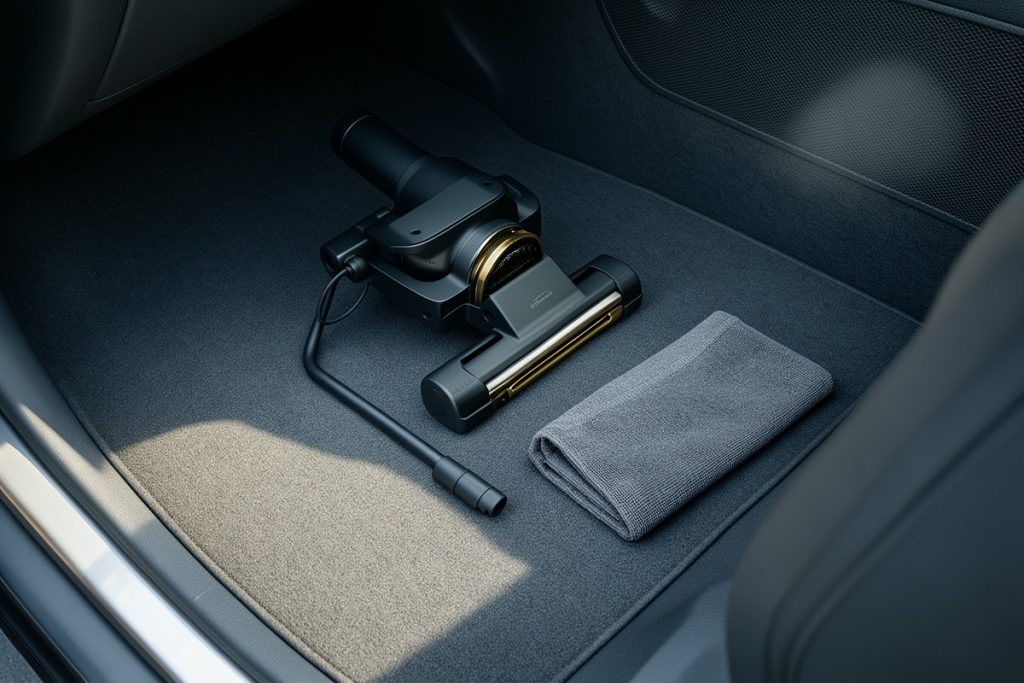
The Saker Handheld Car Vacuum Portable Cordless17000Pa HL132 Black is a reasonable candidate for shoppers who want one compact device for quick car and household touch-ups. Its listing describes a cordless handheld format with a brushless motor, air-duster blower function, rechargeable design, foldable body, brush, and intended use across cars, homes, offices, and pet-related messes.
Those listed features make it relevant to the quick-cleanup use case, especially if you want a vacuum that can do more than collect crumbs. The blower function may be useful for shifting loose dust from tight areas before vacuuming, but the listing alone does not establish real-world battery endurance, noise level, filtration performance, or how well it handles embedded pet hair. Those are the details to verify before purchase.
It is also worth checking the included accessories, charging method, filter replacement process, and return terms. A product can have an appealing specification sheet and still be a poor fit if its attachments are awkward or its dust cup is inconvenient to maintain. Treat the advertised suction figure as one data point, not a guarantee that it will outperform every larger vacuum.
How to clean a car without making a bigger mess
- Remove bottles, floor mats, and other loose items first.
- Work from the top down so dust from the dashboard does not settle on a freshly cleaned floor.
- Use a brush attachment on vents and textured upholstery, applying light pressure.
- Use the crevice tool around seat rails, console seams, and door pockets.
- Empty the dust cup before storage and clean the filter according to the product instructions.
- Keep wet spills separate from a vacuum unless the device is specifically rated for liquids.
For routine vehicle care, NHTSA recommends following the vehicle manufacturer’s maintenance schedule and addressing issues before they become larger problems. Cleaning is not a substitute for mechanical maintenance, but a tidy cabin makes it easier to notice loose items, damaged mats, or other interior issues that need attention.
Quick buying checklist
Before ordering, confirm these points:
- Can it reach the narrowest area you need to clean?
- Does it include a crevice tool and a suitable brush?
- Is the dust cup simple to remove and empty?
- Are charging, filter-cleaning, and replacement-part instructions clear?
- Will you have a convenient place to store and recharge it?
- Does the product’s intended use match dry debris rather than liquid spills?
If the answer is yes to most of these questions, a handheld model can be a sensible addition to a vehicle-cleaning routine. If you regularly deal with deep sand, heavy pet hair, or large amounts of debris, a full-size vacuum or professional interior cleaning may still be the better tool.
Last reviewed: 2026-10-05