
Quick answer
To sleep better on a long flight, plan your sleep window around your destination, reduce light and noise, dress in comfortable layers, and bring reliable support for your head and body. A travel blanket can help with temperature and comfort, but it cannot replace good timing, an eye mask, earplugs, or medical advice when sleep problems are persistent.
Key takeaways
- Choose a realistic sleep period based on when you need to be awake after landing.
- Use layers, an eye mask, and earplugs to control the conditions you can control.
- Pick a blanket for warmth and portability, not as a guaranteed sleep aid.
- Be cautious with alcohol, sedatives, and sleep supplements, especially when flying alone or managing a health condition.
Why sleeping on a plane is difficult
Airplane sleep is challenging for practical reasons: the seat limits movement, the cabin environment is unfamiliar, and light, announcements, engine noise, and nearby passengers can interrupt your rest. Your body clock may also be working against you if the flight crosses time zones or departs during your usual waking hours.
There is also a difference between resting and getting restorative sleep. Closing your eyes for an hour may feel helpful, but it does not guarantee the same benefits as a normal night of sleep. The American Academy of Sleep Medicine recommends that most healthy adults regularly sleep at least seven hours per night, so a long flight should be treated as one part of your broader sleep plan rather than a complete substitute for a night in bed.
The useful goal is not to create a perfect bedroom at 30,000 feet. It is to remove the biggest sources of discomfort and give yourself a reasonable opportunity to rest.
Plan your sleep window before boarding
Start by looking at your destination’s local time and deciding whether sleeping on the flight will help you arrive closer to that schedule. If you land in the morning, a longer period of rest may be useful. If you arrive in the evening, staying awake for more of the flight may make it easier to sleep at night once you reach your accommodation.
This does not need to be exact. A simple plan is enough: identify the part of the journey when you want to sleep, then avoid filling that period with a large meal, unnecessary screen use, or tasks that can wait. If your itinerary includes a connection, keep your plan flexible. A short rest may be more realistic than trying to force several uninterrupted hours.
Seat choice is also personal. A window seat may make it easier to lean against the wall and avoid being disturbed, while an aisle seat offers easier access to the bathroom and more freedom to stand when safe. Choose based on the type of interruption that bothers you most.
Build a simple in-seat sleep system
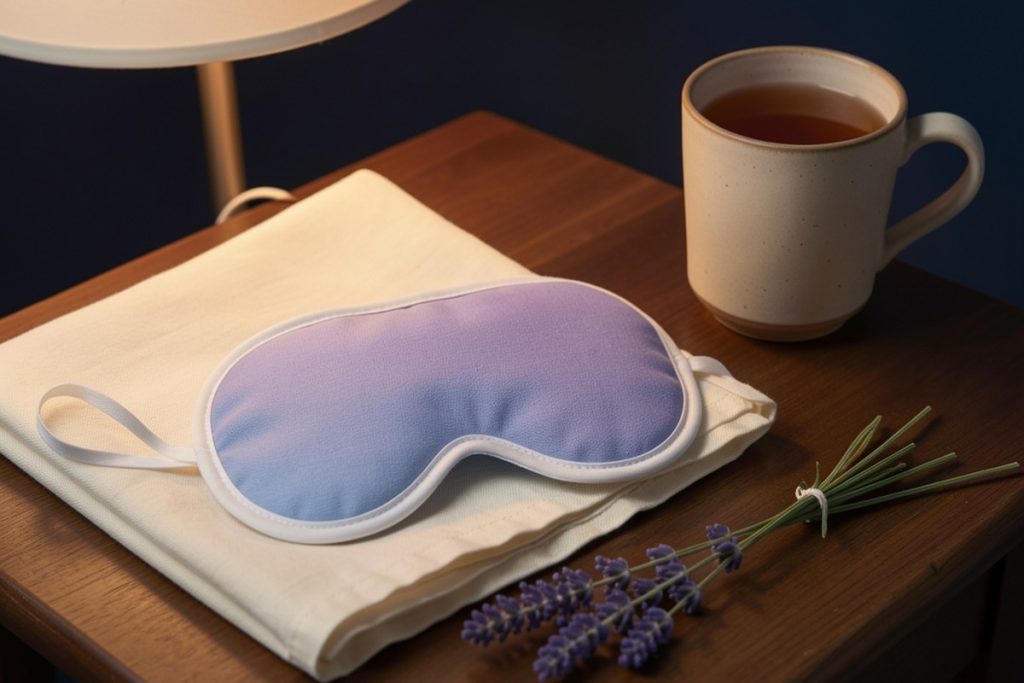
Comfort usually improves when you address several small problems at once. Wear loose, breathable clothing and bring an extra layer because cabin temperatures can feel different from one flight to the next. An eye mask can reduce unwanted light, while earplugs or comfortable noise-reducing headphones may soften announcements and background sounds.
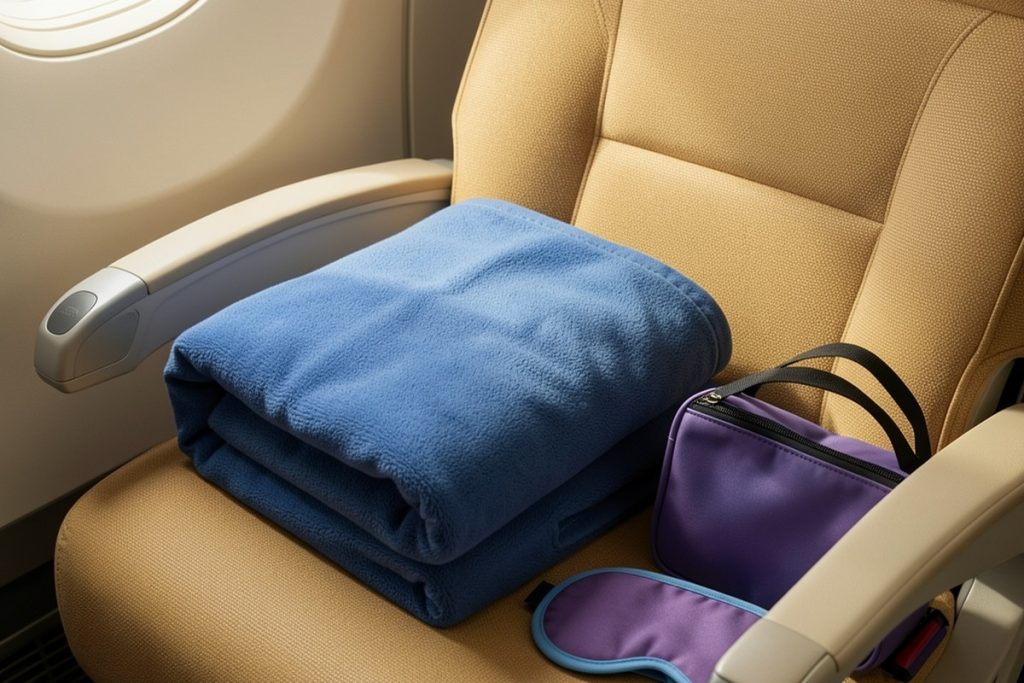
A blanket is most useful for temperature and tactile comfort. The BEDELITE Travel Blanket with Bag is designed as a 65-by-40-inch fleece travel blanket and includes a bag, luggage sleeve, backpack clip, and a foldable pillow format. Those features may suit someone who wants a portable layer that is easier to carry than a full-size blanket. It is still worth checking the dimensions and material against your own preferences: some travelers want substantial coverage, while others prioritize the smallest possible bag.
Keep expectations realistic. A blanket will not solve noise, bright light, an awkward seat, or an uncomfortable neck position. Think of it as one component of a sleep kit rather than the central solution. If you tend to get cold, it may be more useful than relying on the airline to provide a consistent layer.
A practical long-flight sleep checklist
| When | What to do |
|---|---|
| Before leaving home | Check the destination time, pack layers, and place your sleep items where you can reach them easily. |
| After boarding | Set up your seat area before you feel tired: blanket, eye mask, earplugs, water, and neck support if you use one. |
| Before trying to sleep | Use the bathroom, adjust your seat safely, silence avoidable alerts, and choose a realistic rest period. |
| After waking | Open the window shade if appropriate, drink water, move gently when safe, and follow the local schedule after landing. |
Be careful with alcohol, medication, and melatonin
Alcohol may make you feel drowsy, but it can also fragment sleep and leave you feeling worse after landing. It is not a dependable strategy for airplane sleep. Caffeine can also interfere with rest, so consider its timing if you are trying to sleep later in the journey.
Do not experiment with prescription sedatives or over-the-counter sleep products for the first time on a flight. Medication can cause next-day grogginess, interact with other substances, or affect people differently at altitude and in a confined setting. Melatonin may be appropriate for some travelers, but timing and dose matter, particularly when crossing time zones. Ask a clinician or pharmacist for individualized guidance if you take medication, are pregnant, have a chronic condition, or have previously reacted badly to sleep aids.
What to do after you land
Once you arrive, use the local schedule as your guide rather than taking a very long nap automatically. If you land during the day, natural light and gentle activity may help you stay oriented to the new time. If you arrive near bedtime, a calm wind-down routine can make it easier to transition into sleep.
Give yourself room to recover. One poor flight does not mean you have a sleep disorder. However, persistent difficulty sleeping, loud snoring, repeated breathing pauses, or severe daytime sleepiness deserves medical attention. These symptoms can point to a problem that a blanket, supplement, or travel routine cannot fix.
The most realistic way to sleep better in the air
Good airplane sleep comes from reducing friction, not chasing a perfect setup. Decide when you want to rest, make the seat darker and quieter, keep your body comfortably warm, and avoid strategies that create new problems the next day. A compact blanket can be a sensible comfort item if warmth is one of your main obstacles, but the best result usually comes from combining it with sensible timing and a few dependable basics.
Last reviewed: 2026-10-12
Sources
- Recommended Amount of Sleep for a Healthy Adult: A Joint Consensus Statement of the American Academy of Sleep Medicine and Sleep Research Society
- About Sleep and Sleep Disorders — Centers for Disease Control and Prevention
- Sleep Deprivation and Deficiency — National Heart, Lung, and Blood Institute