Quick answer
A calming evening routine works best when it is simple, repeatable, and easy to finish before bed. Dim the lights, step away from stimulating tasks, prepare tomorrow’s essentials, and choose one soothing cue such as quiet music, gentle stretching, or a familiar scent. Treat aromatherapy as optional—not a guaranteed sleep treatment—and keep any diffuser clean and used according to its instructions.
Key takeaways
- Begin winding down about 30 to 60 minutes before you want to sleep.
- Use the same short sequence each night so your routine feels automatic rather than demanding.
- A diffuser may add a pleasant sensory cue, but essential oils are not a substitute for sleep care or medical advice.
- Control humidity, clean the device regularly, and stop using scented products if they irritate your breathing or skin.
Many evening routines fail because they become another project to manage. A long checklist can make bedtime feel like homework, especially when you are already tired. A better approach is to create a small “landing zone” between the demands of the day and sleep: fewer bright lights, fewer decisions, and a few predictable actions that tell your mind the day is ending.
Start with a short, repeatable wind-down window
Choose a realistic starting point, such as 30 minutes before bed. You do not need to transform your entire evening. Begin by completing practical tasks that might otherwise keep your mind active: set out clothes, place your phone on its charger, check tomorrow’s first appointment, and lower the room lighting.
Keep the order consistent. For example, you might tidy one small surface, wash your face, make a caffeine-free drink, read a few pages, and get into bed. The sequence matters more than the individual activities. When the same actions happen in the same general order, you spend less energy deciding what to do next.
Avoid turning the routine into a test of discipline. If you miss one step, continue with the next one. The goal is not a perfect night; it is a gentler transition that you can repeat on ordinary weekdays as well as weekends.
Reduce stimulation without making the evening boring
Wind-down time should feel pleasant, not like punishment. Replace high-intensity activities with lower-stimulation alternatives. You could listen to quiet music, stretch slowly, sketch, read a paper book, take a warm shower, or write down the concerns you want to revisit tomorrow.
Bright light and stimulating content can make it harder to feel ready for sleep. Consider moving entertainment out of bed and using a chair or sofa instead. This creates a clearer distinction between relaxing before bed and trying to sleep. If you use a device in the evening, lower its brightness, silence nonessential alerts, and avoid content that reliably makes you anxious or emotionally activated.
Keep the room comfortable and reasonably cool, quiet, and dark if possible. These environmental changes are often more dependable than adding another wellness product. A diffuser can support the atmosphere, but it should complement the basics rather than carry the entire routine.
Use scent as an optional relaxation cue
A familiar scent can make a room feel calmer, but aromatherapy should be approached with modest expectations. The National Center for Complementary and Integrative Health notes that research on aromatherapy is still limited for many proposed benefits, and essential oils can cause unwanted reactions for some people. Enjoying a scent is a valid reason to use it; claiming that it will treat insomnia is not.
If you already like essential oils, choose one mild scent and use it consistently for a short period. Stop if you notice headache, coughing, throat irritation, nausea, skin discomfort, or worsening breathing symptoms. Avoid applying undiluted oils directly to your skin unless you have appropriate guidance, and follow product instructions carefully around children, pets, and anyone with sensitivities.
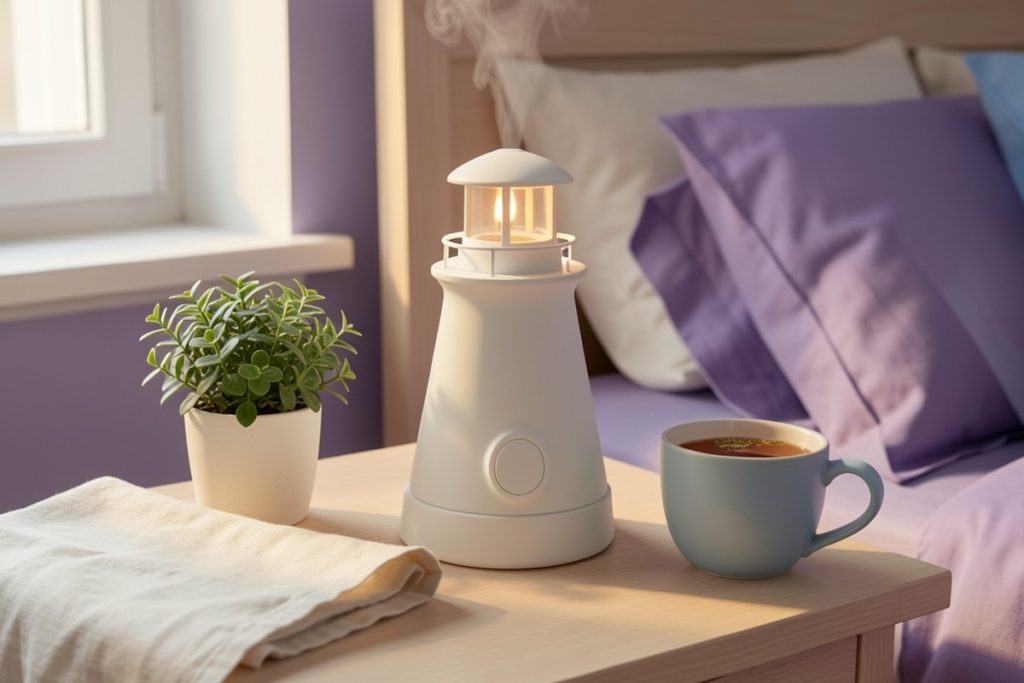
For readers who want a single device for occasional room mist and scent, the HealthSmart 500ML Essential Oil Diffuser for Large Rooms, Cool Mist Humidifier and Aromatherapy Diffuser, Adjustable Timer, Mist Mode and 7 LED Light Colors, White is one option to compare. Its listed features include a 500-milliliter capacity, adjustable timer, mist modes, and seven LED light colors. Those features may be convenient, but they do not guarantee better sleep. Check the manual to confirm which oils are suitable, how much water to use, and whether the device should be used as a humidifier or diffuser in a particular setting.
Keep humidity and diffuser use under control
More mist is not automatically better. Excess indoor humidity can encourage mold and other moisture problems, while a poorly maintained humidifier can disperse minerals or microorganisms into the air. The U.S. Environmental Protection Agency recommends following the manufacturer’s cleaning directions, changing standing water regularly, and avoiding conditions that make the room damp.
Make cleaning part of the routine rather than an occasional afterthought. Empty leftover water after use when the instructions call for it, rinse or clean the reservoir as directed, and allow removable parts to dry. Do not add oils to a water reservoir unless the manufacturer specifically designed that model for oil use. Some devices can be damaged by oils even if they look similar to aromatherapy diffusers.
Use the light feature sparingly if it keeps you alert. A soft, warm glow may feel comforting earlier in the evening, but a dark bedroom is usually a better choice once you are trying to sleep. You can also use the timer so the device does not run all night unnecessarily.
Try this seven-day evening routine
Test the routine for one week without changing several variables at once. Start at the same approximate time each night and use this simple sequence:
- First five minutes: Dim the lights, silence nonessential notifications, and prepare anything needed for the morning.
- Next ten minutes: Wash up, change into comfortable clothes, or take a warm shower.
- Next ten minutes: Read, stretch gently, journal, or sit quietly with a non-caffeinated drink.
- Final five minutes: Enter the bedroom, turn off unnecessary lights, and leave the remaining tasks for tomorrow.
After each night, note only three things: when you began winding down, how rested you felt the next morning, and whether anything in the routine felt irritating or inconvenient. Do not judge the routine by one poor night. Look for patterns across several days, then keep the parts that genuinely help and remove the rest.
Know when to look beyond a bedtime routine
A routine can improve the conditions around sleep, but it cannot solve every sleep problem. If you regularly struggle to fall asleep, wake repeatedly, wake too early, or feel excessively tired during the day, discuss the pattern with a healthcare professional. Loud snoring, gasping during sleep, persistent pain, or major mood changes also deserve professional attention.
The most sustainable evening routine is usually the least dramatic one. Choose a short sequence, repeat it often, keep scented products optional, and maintain any water-based device carefully. Wellness tools can make a room feel more inviting, but consistent habits and appropriate medical support matter more than a single gadget.
Last reviewed: 2026-11-06