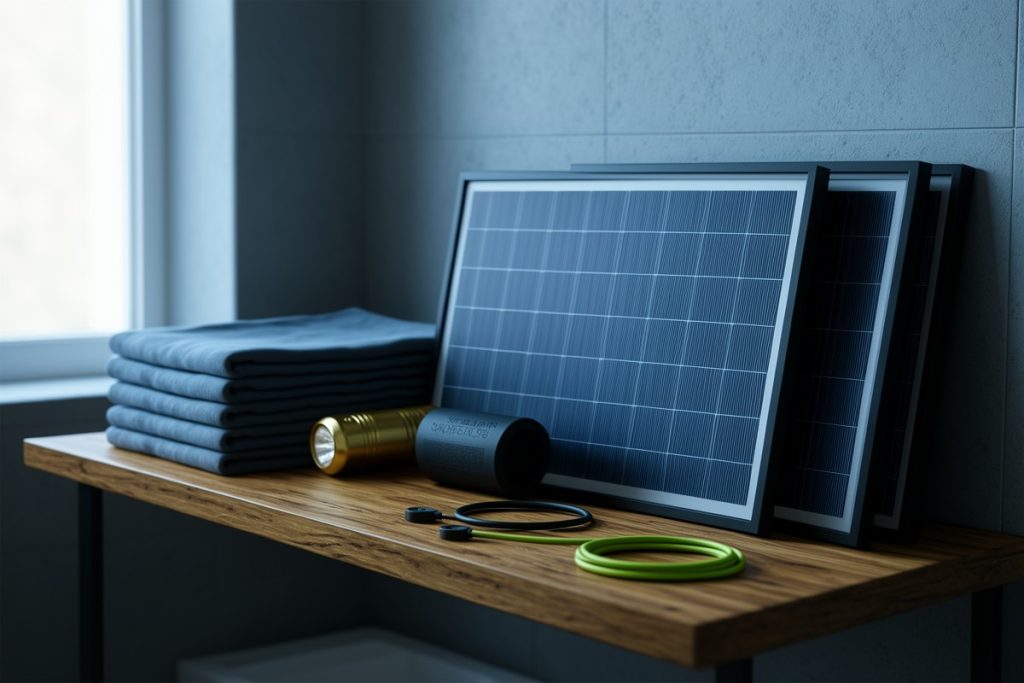

When most people picture off-grid solar, they imagine a cabin in the woods. But a growing wave of city dwellers is building energy independence from balconies, small rooftops, and sunny apartment windows. Urban solar isn’t always about disconnecting from the grid completely—it’s about resilience, lower utility bills, and making the most of the space you already have.
Urban solar simply looks different from rural setups. You might not own an acre of south-facing roof, but you probably have a balcony, a windowsill, or access to a community solar garden. For many renters and homeowners in dense neighborhoods, a hybrid approach works best: stay grid-connected while chipping away at your reliance on it with small-scale generation.
Start with a realistic energy audit. An apartment dweller using 300 kWh per month needs a very different setup than a suburban household. Portable panels, balcony-mounted micro-inverters, and compact battery stations can offset daily essentials like lighting, device charging, and even a mini fridge. Every watt you generate yourself is a watt you don’t pay for.
Planning is where urban solar projects succeed or fail. Cities bring unique hurdles: HOA restrictions, shading from neighboring buildings, fire-code rules for balcony equipment, and tricky utility interconnection policies. Understanding your local landscape before you buy a single panel will save you money and headaches down the road.
If you are serious about mapping out a long-term urban solar strategy, *Off-Grid Solar Power for Sustainable Urban Living: A Practical Guide to Understand, Plan, Choose and Maintain the Right System for Long-Term Success* offers a grounded look at the planning and maintenance side of city-based systems. You can find it here: https://amzn.to/4xiSjYO. It walks through the fundamentals without assuming you own a sprawling property, making it a useful companion for apartment dwellers and small-space homeowners alike.
Maintenance matters more in urban environments than people think. Pollution, bird droppings, and limited access for cleaning mean even a small setup needs regular attention. The upside? Urban systems are usually compact and easier to troubleshoot. A quick monthly wipe-down and a glance at your charge controller keeps most balcony or window units running efficiently.
Battery safety is another essential piece of the urban puzzle. If you are storing energy in an apartment or attached townhome, choose certified battery systems designed for indoor or semi-enclosed spaces. Proper ventilation and temperature control are not optional details—they are what keep your setup safe and effective over the long haul.
The hardest part is often the mindset shift. Urban solar is not about perfection; it is about progress. A single panel powering your remote-work setup during the day teaches you how solar behaves in your specific environment. That hands-on knowledge becomes the foundation for bigger upgrades when you move, buy a home, or gain access to more roof real estate.
Cities are the future of distributed energy. Rooftops, balconies, and window ledges are becoming part of a cleaner, more resilient grid. You do not need to wait for a house in the country to start generating your own power. You just need a plan that fits your actual life, your actual space, and your actual budget.