
You do not need to tear down drywall or rewire your entire house to run a reliable AI smart home. The honest answer is that most renters and homeowners can support a growing collection of smart speakers, security cameras, and AI hubs by upgrading the way they use existing wall outlets. Strategic outlet extenders with built-in surge protection and USB charging can give older homes the modern power foundation that connected devices demand, often in under five minutes of setup time.
As someone who translates tech specs into everyday decisions, I see this question constantly: can a 1970s ranch or a pre-war apartment actually handle always-on microphones, video doorbells, and mesh Wi-Fi nodes without an electrician? The short answer is yes, provided you stop treating your outlets like they are only for lamps and phone chargers. Smart home gear has different power needs than traditional electronics, and understanding those differences keeps your devices online and your home safe.
Why AI Smart Home Gear Is Pickier About Power Than Your Lamp
Artificial intelligence devices in the home are rarely truly off. A smart speaker waits for a wake word. A security camera buffers footage to local storage. A hub listens for zigbee or z-wave signals from sensors. This always-on behavior means they draw small but steady amounts of electricity around the clock, and they despise power fluctuations. A vintage lamp flickers and keeps shining. A smart hub hit with the same electrical noise can drop offline, corrupt a firmware update, or simply fail to reconnect without a manual restart.
Many AI devices also ship with USB power bricks rather than standard plugs. If your bedroom or office only has two outlets, you quickly end up with a pyramid of adapters, a power strip on the floor, and a rat king of cables behind your nightstand. That clutter is not just ugly. It creates heat, blocks airflow around devices, and turns a simple Alexa routine into a fire hazard. Modern outlet expanders solve this by combining surge protection, standard AC ports, and direct USB charging into the wall plate itself.
How to Tell If Your Current Outlets Are Limiting Your Setup
Before you buy anything, walk through the rooms where you plan to place smart devices. Look at the outlets with an honest eye. If you are already doubling up on splitters or running an extension cord to create a third plug, your infrastructure is crying for help. Here are the clearest warning signs that your power situation needs an upgrade before you add more AI gear:
- Adapter overload: You have stacked two or more cube taps or travel adapters on a single outlet to keep devices running.
- Random reboots: Your smart display or hub restarts itself when the microwave, vacuum, or space heater turns on elsewhere in the room.
- Zero native USB: Every smart device requires a separate wall wart because your outlets do not offer direct USB-A or USB-C charging ports.
- Floor cord runs: You are using power strips on carpets or in walkways because wall outlets are too far from where AI devices need to live.
If two or more of those sound familiar, your problem is not the smart devices. It is the delivery system. Fixing the outlet situation first will save you hours of troubleshooting phantom Wi-Fi issues and factory resets that were actually caused by inconsistent power.
What to Look for in a Smart Home Power Hub
Not every outlet extender is built for a tech-heavy lifestyle. Some are glorified splitters with no safety features. Others take up so much horizontal space that they block the second socket and defeat the purpose. When you are shopping for a power solution specifically to support AI and smart home devices, prioritize features that protect electronics and reduce cable clutter.
| Feature | Why It Helps Your Smart Home Setup |
|---|---|
| Surge Protection | Shields always-on AI hubs and cameras from electrical spikes caused by storms or grid switching. |
| USB-A & USB-C Ports | Powers modern smart displays, sensors, and hubs directly without bulky wall adapters. |
| Pass-Through AC Outlets | Lets you keep lamps, printers, or legacy devices connected alongside new smart gear. |
| Integrated Night Light | Provides hallway visibility at night without requiring extra smart bulbs or voice commands. |
| Compact Wall Design | Avoids floor clutter from power strips and keeps cables tidy in tight spaces like behind desks. |
The ideal unit acts like a mini charging station that hugs the wall. You want enough juice to run a smart speaker, a tablet display, and a phone simultaneously without daisy-chaining extra hardware.
A Practical Starter Option for Tight Spaces
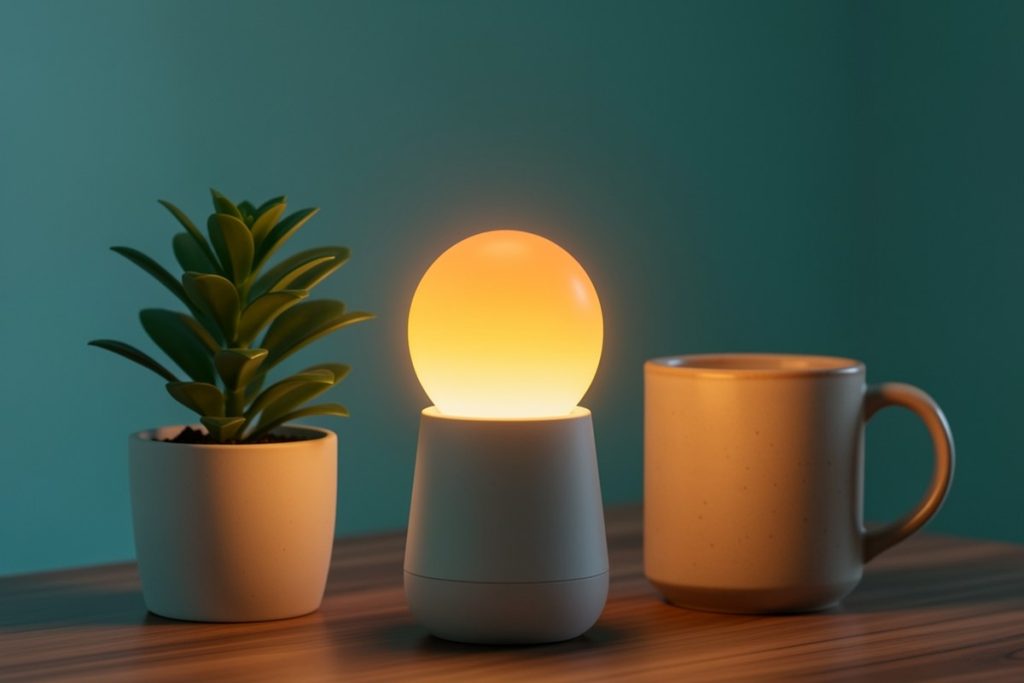
If you are looking for one do-it-all unit to test the waters, the Outlet Extender with Night Light is a balanced starting point. It combines surge-protected AC outlets with multiple USB ports, including USB-C, so you can power newer smart home gear alongside everyday electronics. The built-in night light is genuinely useful in hallways or bedrooms where you want soft visibility without shouting at a voice assistant or fumbling for a phone at 2 a.m.
It installs directly into a standard wall outlet, which means no cords trailing across the floor and no furniture rearranging to hide a power strip. For renters especially, that wall-hugging design is a major advantage because it leaves no marks and requires no landlord approval. Just be sure to check the total wattage demands of the devices you plan to plug in, and treat it as a distribution hub rather than an invitation to overload the circuit.
Where to Place Power Hubs for Maximum AI Coverage
Location matters almost as much as the hardware itself. AI smart home devices need both stable power and strong network signals, so your outlet upgrade should happen in spots that serve double duty. The central living area is an obvious choice because it typically houses the main smart speaker or display that controls routines. However, do not overlook secondary zones.
Bedside tables are prime real estate for outlet extenders because they host sleep trackers, phone chargers, and smart displays used as alarm clocks. A hallway outlet near bedrooms can power motion sensors and provide that integrated night light for safer midnight navigation. Home offices benefit from concentrated charging where your router, smart desk accessories, and backup batteries live. In each case, the goal is to create one clean power anchor per zone rather than stretching cords from room to room.
One practical tip: avoid plugging your primary AI hub into the same outlet extender as a high-draw appliance like a window air conditioner or space heater. Even with surge protection, those appliances create electrical noise that can confuse sensitive smart home controllers. Give your brain devices their own clean power path whenever possible.
When DIY Power Upgrades Hit Their Limit
Outlet extenders are powerful bandages, but they are not magic. If your home has two-prong ungrounded outlets, aluminum wiring, or a breaker panel that predates the internet, you need an electrician before stacking any smart home gear onto those circuits. Warning signs include warm outlet faceplates, burning smells, breakers that trip weekly, and lights that dim dramatically when the refrigerator kicks on. Those issues signal underlying electrical capacity problems that no consumer surge protector can fix.
Similarly, if you are planning a whole-home system with dozens of PoE cameras, hardwired smart blinds, and a server rack, you have outgrown plug-in solutions. At that scale, a licensed professional can add dedicated circuits, install modern grounded outlets, and calculate load balancing so your AI ecosystem has room to grow safely.
Last reviewed: 2026-08-05