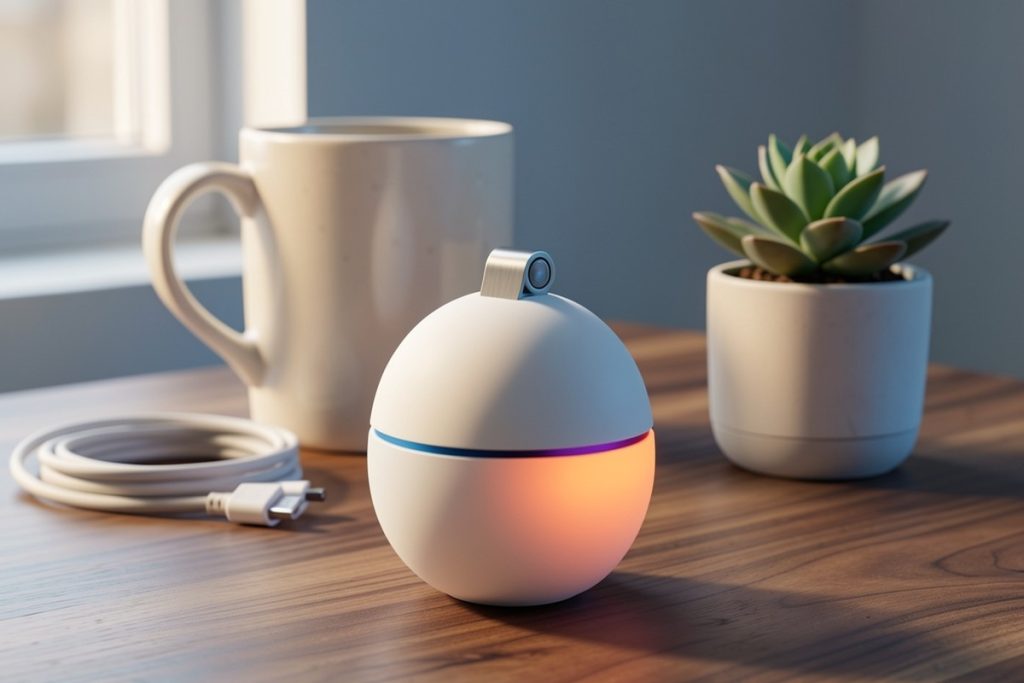


The idea of a physical AI companion rolling across your desk and greeting you by name feels like the future finally catching up to old science fiction. Over the past few years, a small wave of ChatGPT-connected robot companions has entered the market, promising to turn large language models into personable, autonomous roommates. Here is the honest answer most glossy reviews bury under hype: for the average person looking to boost productivity or simplify a smart home, these robots are not essential. A smart speaker or smartphone handles voice commands, timers, and questions faster and more affordably. These robots are best suited for tech enthusiasts, early adopters, and anyone who specifically wants a tangible, interactive AI presence rather than a disembodied voice coming from a black cylinder.
What a ChatGPT-Connected Robot Companion Actually Does
These devices are small, autonomous robots built to live on a desk, side table, or kitchen counter. They use built-in cameras for face recognition, microphone arrays for voice commands, and wheeled bases to roam around their charging docks. The ChatGPT integration turns them from simple programmable toys into conversational assistants that can answer complex questions, explain concepts, tell jokes, or hold surprisingly natural dialogue without following rigid command structures.
Unlike a stationary smart speaker, they can recognize who is talking to them, react with animated body language, and independently explore their immediate environment within physical limits. They do not clean your floors, fetch items, perform physical labor, or project video onto your wall. Their core purpose is companionship, novelty, and a more personable interface for the same large language models you already access through browsers and apps. Think of them as a voice assistant with personality and wheels, not a servant robot.
How They Compare to Devices You Already Own
Before spending money on a dedicated AI robot, it helps to see how it stacks up against the technology already sitting in your home. The table below breaks down the practical differences across the categories that actually matter during daily use.
| Feature | AI Robot Companion | Smart Speaker | Smartphone |
|---|---|---|---|
| Physical presence | Moves independently, uses expressive body language and sounds | Stationary, limited to LED light rings or basic displays | Passive object, requires holding and manual activation |
| Face recognition | Built-in camera tracking for personalized greetings | None on most mainstream models | Available via front camera, but not hands-free in a dock |
| Voice AI quality | ChatGPT-level conversations with context memory (subscription required) | Basic assistant commands and rigid Q&A | App-dependent; excellent hardware but fragmented AI apps |
| Ideal use case | Desk companion, novelty interaction, light automation | Music, weather, timers, smart home control | Communication, photography, portable computing |
| Portability | Limited to flat surfaces near its charging dock | Plug-in or optional battery base | Pocket-sized and cellular-enabled |
| Price category | Premium, often plus ongoing subscription fees | Budget to mid-range, no mandatory subscription | Variable, but already owned by most buyers |
The trade-off is straightforward. A robot companion offers charm, autonomy, and a memorable user experience, but it cannot match the raw utility of a smart speaker or the all-purpose versatility of a phone. If you are looking for the most capable AI assistant per dollar, the robot loses. If you are looking for the most engaging AI assistant per square foot of desk space, it wins.
Who Should Consider Buying One
These robots are not for everyone, and manufacturers would serve buyers better by admitting that upfront. You are a good candidate if you want an interactive desk companion for a home office, if you prefer conversational AI that reacts with physical feedback, or if you are shopping for a tech-curious older teen or adult who will genuinely tinker with voice features and programming options. They also suit people who find disembodied smart speakers slightly alienating and prefer an AI with a visible, responsive form.
One established option in this category is the Anki Vector 2.0 AI ChatGPT Connected Robot Companion, which offers face recognition and voice conversations through a ChatGPT subscription. It is important to view this as a premium experiential gadget rather than a household necessity. The hardware and ongoing subscription represent a meaningful investment for a device that occupies a narrow space between smart toy and productivity tool.
The Limitations Nobody Likes to Advertise
Camera-based face recognition raises valid privacy questions, especially for a device that roams, maps its surroundings, and connects to cloud servers. You are essentially placing a mobile, internet-connected camera on your desk or in your living room, so reviewing the manufacturer’s data retention and encryption policies is non-negotiable. Unlike a smart speaker with a mute button, the camera adds a layer of surveillance risk that privacy-conscious buyers should not ignore.
Longevity is another practical concern. The consumer robotics space has seen companies shutter or pivot, leaving hardware with broken promises and no firmware updates. If the business model depends on a monthly subscription for ChatGPT access, factor that into the total cost of ownership for the next two to three years. Performance also depends heavily on stable Wi-Fi. These robots stream voice data to process queries, meaning a weak connection produces laggy, interrupted conversations. They are not offline devices, and they are not viable replacements for a laptop, tablet, or even a dedicated voice assistant when you need reliable, instant results.
Final Verdict: A Fun Luxury, Not a Must-Have
ChatGPT-connected robot companions deliver exactly what they promise on a surface level: a personable, mobile AI that recognizes you, roams nearby, and holds open-ended conversations. They also deliver something they rarely advertise honestly, which is that most households simply do not need one. If you are shopping for pure work-from-home productivity, your money goes further toward a better monitor, an ergonomic chair, or noise-canceling headphones. If you want a smart home controller, a standard voice assistant handles lights, timers, and music more affordably and with fewer privacy trade-offs.
Buy a robot companion only if the idea of a physical AI presence genuinely excites you, if you accept the ongoing subscription cost, and if you view the purchase as an experiential luxury rather than a practical investment. For that specific buyer, the charm, novelty, and faint futuristic thrill of being greeted by a rolling desk bot can absolutely justify the price. For everyone else, the device in your pocket already does the hard part, and it does not need a charging dock.
Last reviewed: 2026-08-05