
Quick answer
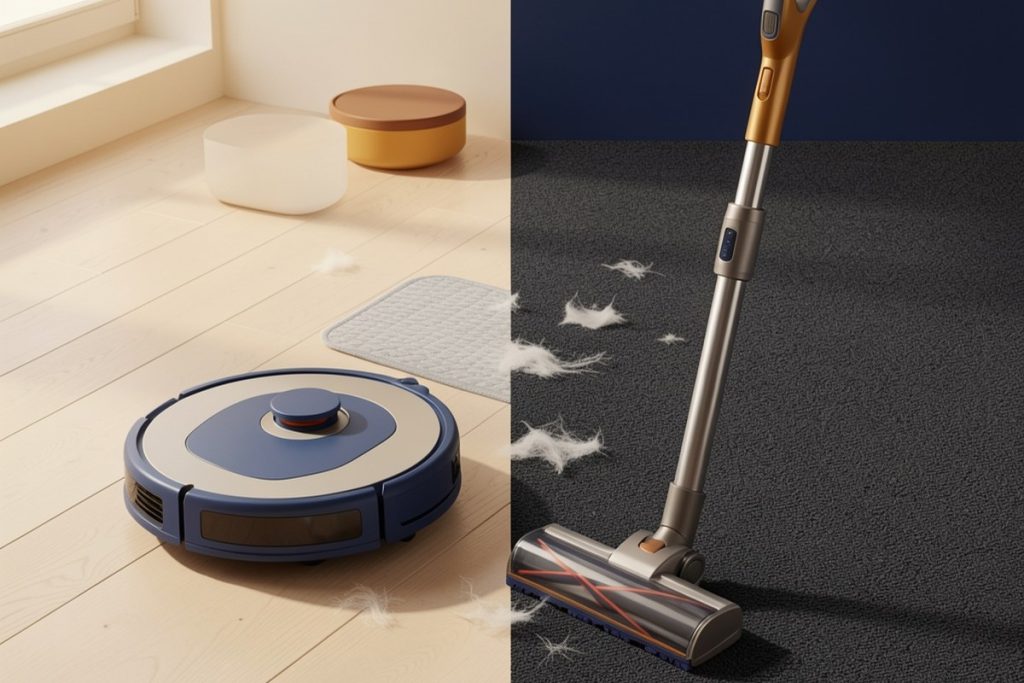
A robot vacuum is best for keeping everyday pet hair under control across open floors, while a stick vacuum remains better for stairs, furniture, corners, and sudden messes. Compare navigation, brush design, dust handling, floor compatibility, maintenance, and warranty terms—not just suction numbers. For many pet owners, the most practical choice is a robot for routine cleaning plus a handheld or stick vacuum for targeted work.
Key takeaways
- Choose a robot vacuum for scheduled maintenance across accessible floors.
- Choose a stick vacuum when stairs, upholstery, corners, or quick spot cleaning matter most.
- Published suction figures are useful for comparison, but they do not predict every real-world result.
- Pet owners should examine brush access, filter care, bin capacity, dock design, and replacement-part availability.
By Ruby Santos, Honest Consumer Advocate
Start with your home, not the headline specification
The best vacuum for pet hair depends less on a dramatic specification and more on where the hair collects. A robot vacuum can make sense in a mostly single-level home with open areas, hard floors, and low-pile rugs. It can run while you are working or away, helping prevent loose hair from accumulating between deeper cleanings.
A stick vacuum is more flexible. You can carry it upstairs, use attachments on a sofa, clean around a feeding station, or deal with a small spill immediately. It also gives you direct control over stubborn areas. That flexibility matters if your pet sleeps on furniture, sheds heavily in one room, or tracks litter into tight corners.
Before comparing models, map your actual problem: Which rooms collect the most hair? Are there thresholds, cords, toys, or delicate rugs? Do you need to clean stairs? If the answer to several of these questions is yes, a robot may be a helpful maintenance tool rather than a complete replacement for a conventional vacuum.
Five features worth comparing for pet hair
- Navigation and coverage: Laser navigation and smart mapping can help a robot plan repeatable routes, but the layout still matters. Check whether the unit can handle your thresholds and whether you can create no-go areas. A robot cannot clean a blocked space it cannot enter.
- Brush access: Pet hair can wrap around a roller or side brush. An anti-tangle design may reduce that problem, but it does not eliminate maintenance. Look for a roller that can be removed without awkward tools and a side brush that is easy to inspect.
- Dust handling: A larger bin or self-emptying dock can reduce how often you handle debris. However, the useful interval depends on the amount of hair, dust, and litter in your home. Treat a stated interval as a testing point, not a promise for every household.
- Floor compatibility: Confirm whether the vacuum is intended for hard floors, carpet, or both. Pay attention to rug height, wet-mopping restrictions, and transitions between surfaces. “Mop combo” does not automatically mean it can deep-clean carpet or remove dried stains.
- Maintenance and ownership: Compare the cost and availability of filters, brushes, bags, mop pads, and batteries. A low-maintenance routine is only useful if replacement parts are easy to obtain.
Robot vacuum versus stick vacuum at a glance
| Consideration | Robot vacuum | Stick vacuum |
|---|---|---|
| Best role | Routine floor maintenance | Targeted or deep cleaning |
| Pet hair on open floors | Convenient for frequent passes | Fast when you direct the cleaning |
| Stairs and upholstery | Usually unsuitable | Usually better with attachments |
| Daily effort | Lower after setup | Requires hands-on use |
| Common drawback | Can miss blocked or awkward areas | Needs storage and your time |
How to judge suction and runtime claims
Numbers can help you sort products, but they should not make the decision by themselves. A published suction value is measured under particular conditions and does not describe brush contact, airflow through the filter, navigation, or how well the machine handles your specific rug. Use the figure as one comparison point, then look for information about the cleaning head and floor types.
Runtime deserves similar caution. A quoted maximum may apply to a lower-power mode on an unobstructed floor. Higher suction, carpet cleaning, navigation, and repeated trips to a dock can change how long a robot operates before recharging. If your home is large, check whether the robot can resume where it stopped and whether its mapping system supports multiple areas.
Where a robot-and-mop combo can fit
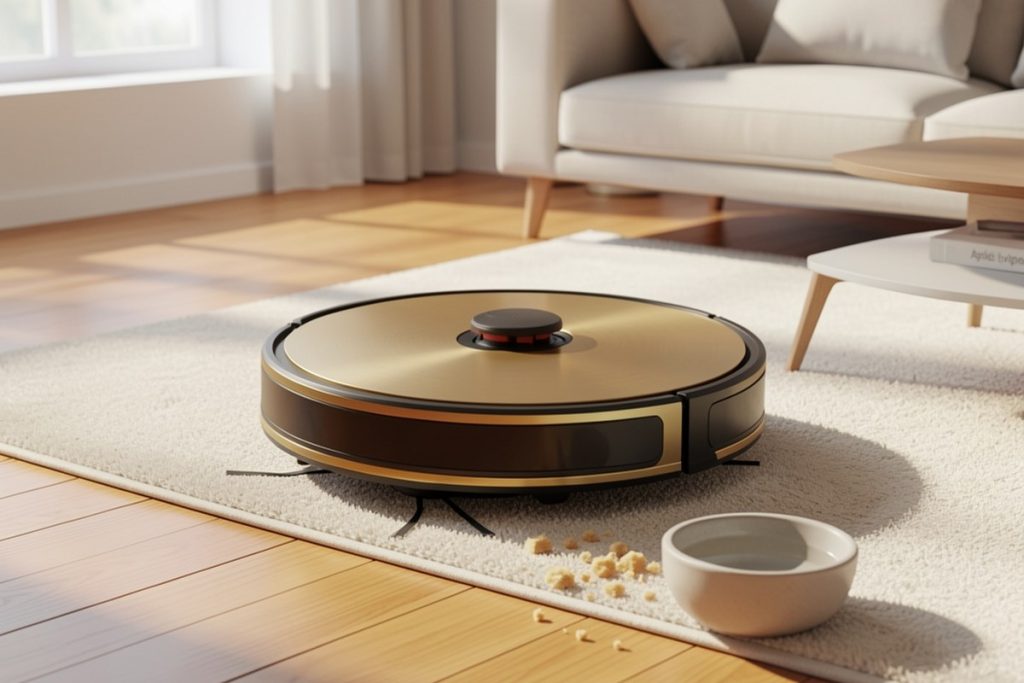
For shoppers who want regular floor maintenance rather than a single all-purpose machine, Robot Vacuum and Mop Combo, 90-Day Self Emptying, 10000Pa Strong Suction, dToF Laser Navigation Smart Mapping, 160Min Runtime, Anti-Tangle Robotic Vacuum Cleaner for Hard Floor, Pet Hair, Carpet is a reasonable candidate to investigate. As an Amazon Associate, GetWitty may earn from qualifying purchases. View the product listing.
The listing presents several features that match common pet-owner priorities: dToF laser navigation, smart mapping, anti-tangle cleaning, self-emptying, and stated compatibility with hard floors, pet hair, and carpet. It also lists a 10,000Pa suction figure and up to 160 minutes of runtime. Those details make it worth comparing with alternatives, but they do not establish how it will perform in your rooms.
Before buying, verify the details that are easy to overlook: whether the dock uses disposable bags, how mop pads are washed or replaced, what happens on carpet during mopping, how high the robot can climb over thresholds, and whether replacement parts are sold separately. If your home has stairs or lots of furniture, budget for a stick vacuum or another tool for the areas a robot cannot reach.
A practical pet-hair buying checklist
- Measure the lowest furniture clearance and the height of floor transitions.
- List every surface: hardwood, tile, low-pile carpet, thick rugs, and upholstery.
- Check brush removal, filter cleaning, bin emptying, and dock maintenance steps.
- Confirm that replacement brushes, filters, bags, batteries, and mop pads are available.
- Read the warranty terms and identify who handles support if the product stops working.
- Decide whether you need autonomous daily cleaning or immediate manual control.
The most sensible choice for many pet owners
There is no universal winner between a robot and a stick vacuum. A robot earns its place when consistent floor coverage is the main problem and your home allows it to move freely. A stick vacuum wins when flexibility, stairs, upholstery, and quick cleanup matter more. If your budget allows only one, choose based on the tasks you perform most often—not the most impressive number on the product page. If you can combine both, use the robot for maintenance and the stick vacuum for the edges, furniture, stairs, and messes that require judgment.
Last reviewed: 2026-08-17